Gardening as Therapy

'Queen of the night' Tulip

‘Queen of the night’ Tulip

Sometimes, things happen. Things that we don’t expect to happen, happen, and life changes… forever. We’re living through that at the moment, and it is really hard to navigate through all of the emotions we are feeling. Gardening is such an important part of my life, and it is in the garden where I feel healing. Please join me for a few minutes to enjoy some peace and tranquility in my garden.
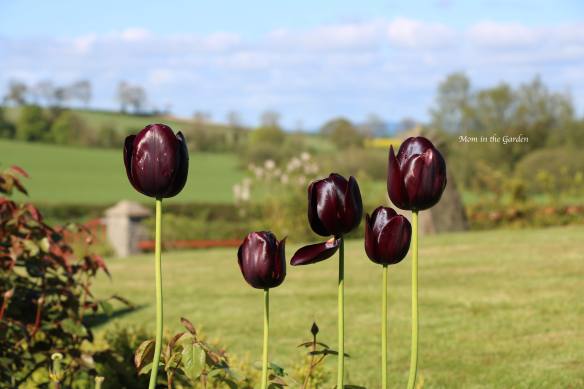
‘Queen of the Night’ Tulips

The Queen of the Night tulips are strikingly beautiful, and for me their darkness also represents the sorrow that we feel. A friend and colleague of ours, and a genuinely super nice guy, Shay, achieved his life long ambition to reach the summit of Mt. Everest last week. Tragically, he fell on his descent. There are no other details, other than he is missing. It just doesn’t seem possible. Not Shay. But this is our new reality, including feeling numb with sadness. Gardening seems so trivial at times like these, but the garden is where I can go to find peace, and beauty, and renew my faith that somehow we, the immense community with whom Shay has so positively impacted, will all somehow get through this sad time. Come walk with me, as we use gardening as therapy…

Viburnum surrounded by Mystic van Eijk (the large tulips) and Don Quichotte (the small purple tulips)

Viburnum surrounded by Mystic van Eijk (the large tulips) and Don Quichotte (the small purple tulips)

The first of my tulips bloomed in March. They are circled around the Viburnum which blooms in May. The Beech hedges along the fence are still wearing their winter browns in this picture.

Viburnum opulus 'Roseum'

Viburnum opulus ‘Roseum’ May 21, 2019 with the remnants of the tulips still showing. The Beech hedge is now wearing sporting green leaves.

parrot tulips

Parrot tulips also bloom early in the season

Princess tulips April 27

Princess tulips April 27

The Princess tulips are just a couple of years old. Tulips can tend to “fade” with time (not look as nice after a few years). These are still young enough to look fresh.
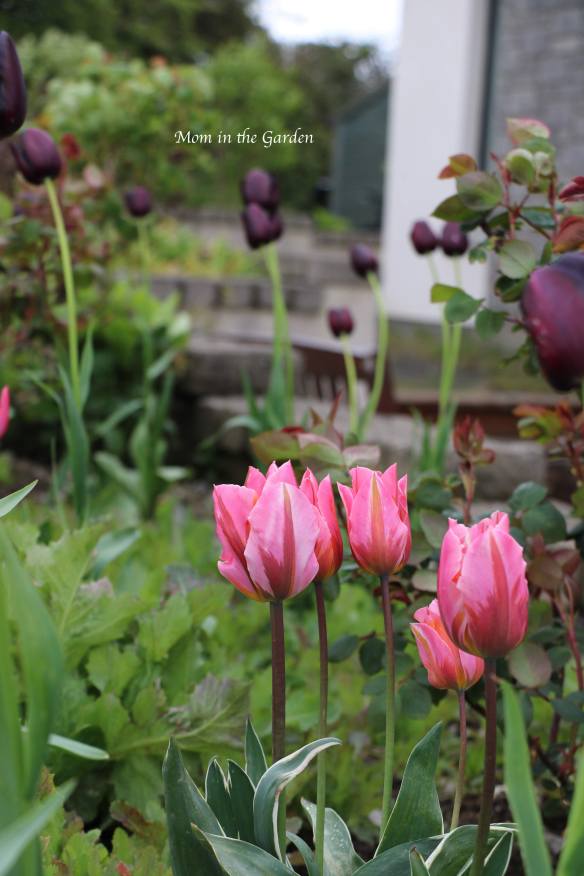
Princess tulips + Queen of the Night tulips

Queen of the Night tulips + Princess Tulips

Queen of the Night tulips + Princess Tulips

I thought the contrast of the dark Queen of the Night and the bright Princess tulips would be nice together.  My only complaint is that the Princess tulips wither much quicker than the Queen of the Night tulips. But they are pretty.

Blushing Lady tulips

Blushing Lady tulips

The Blushing Lady tulips are special to me, because they were one of the first flowers that I planted in our home in Manlius, New York. A number of years ago I planted some in our current garden right next to the playhouse, but they were dug up (unintentionally!) and destroyed in the process.  So these were planted autumn 2018, well away from the playhouse. They are tall and the flowers are huge.
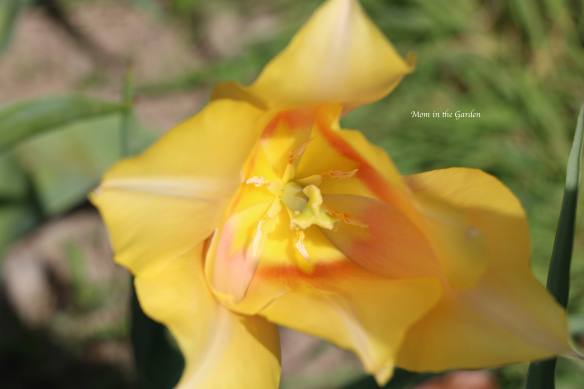
Blushing lady tulip

Blushing Lady Tulip

Merlot tulips + cherry tree

Merlot tulips + cherry tree

The Merlot tulips are also a new addition, planted in autumn 2018.  It is quite a strong color, which I like.

Merlot tulips + aubrietia

Merlot tulips + Aubrietia

The Merlot tulips look amazing with the Aubrietia (this is a second grouping of the Merlot tulips in the same bed).

Merlot tulips

Merlot tulips

Here’s a look at the full bed.  There are 3 groups of Merlot tulips, and 2 spare Ballerina tulips (they are orange) that were supposed to be moved out of this bed last year. The Aubrietia did really well this year. It is ever so slowly making its way to crawl over the wall (hopefully). The Boxwood (Box) has a lot of new growth, giving it a yellowish hue. I have a few Rose plants in here, too.

Merlot tulips open May 14

Merlot tulips open May 14

I do like capturing the inside of tulips.

Double Angelique tulips

Double Angelique tulips

Ballerina tulip fully open

Ballerina tulip fully open in May

Ballerina tulips are a fiery orange.  I have (most of them) at the ditch wall in our garden and they can still be seen from across the yard.

Tulip Ballerina

Ballerina tulips

Ballerina tulips open in May

And that brings us to the end of our garden tour, using gardening as therapy. Thank you for walking with me on this journey of grief. I pray for Shay, and his family, and that all of us will find peace.

In peace,
Dana
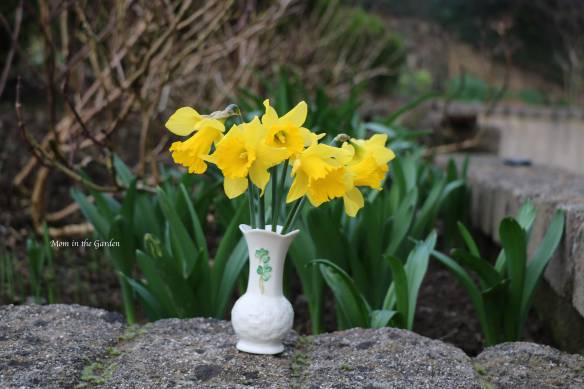
A lifting of spirit as spring nears

Hi there! It has been a while since I’ve written here. I was still posting pictures on my instagram and Facebook accounts, but I just wasn’t in the right frame of mind for writing here. I recently realized, as the weather improved and the days “lengthened” (being brighter for longer), that my overall mental health hadn’t been great. As the sun was shining more, I could feel the weight being lifted from my shoulders. I’d say that since November, I have had a feeling of being run-down. It is funny to notice that now that the weather is improving, I can feel a “lift” in myself.

Daffodils in an Irish made Belleek vase

early blooming Daffodils in a Belleek vase

There is always something to do in the garden, and as is my way, I do a little at a time, and by golly it eventually adds up to a job well done! Or, at least, it is “good enough”! 🙂

Who needs straight lines when you can have wonky?

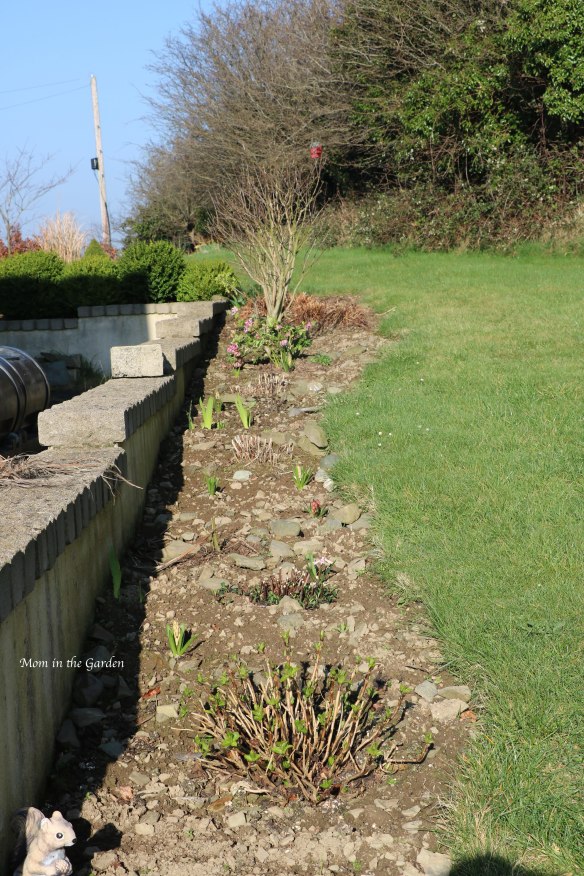
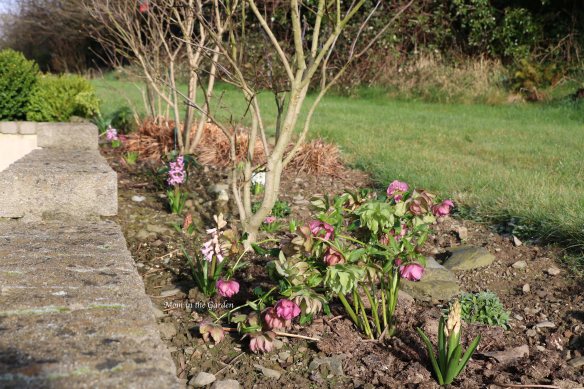
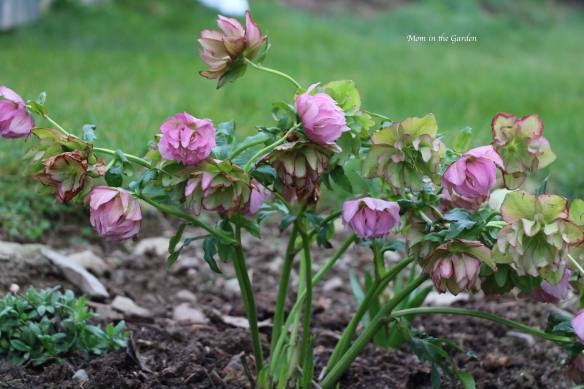
This very odd shaped bed is my favorite at the moment. The odd shape is due to the location – it is right in front of our shed. The choice is to either have the odd shape or have a straight line and anything that I plant in that space will be run over by the mower when it is put in/out of the shed. I’ve opted for the odd shape! There is a hellebore plant (frilly Isabelle) in this bed that has just been beautiful all winter. The hyacinth are just popping up now. The lilac shrubs are full of little buds, as is the hydrangea plant. The iris and hosta are still sleeping, but they have plenty of time yet. And last to bloom, at the end of summer, will be the asters. It is still a work in progress, but I love this strip of garden!

lots of pink!

Hellebore Frilly Isabelle

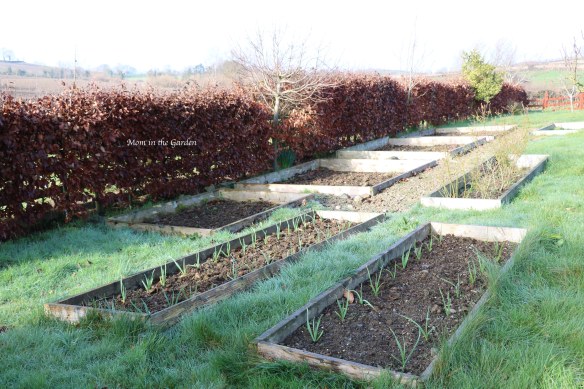
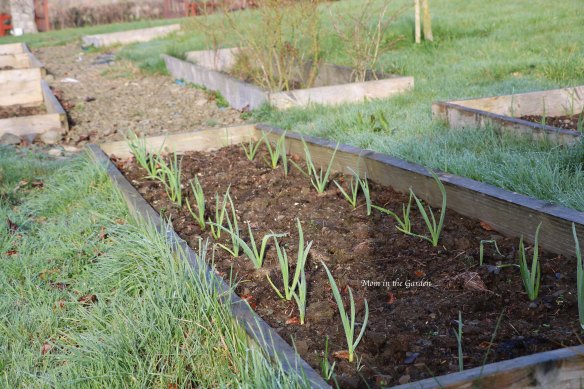
There are two beds of garlic which I’ve also made sure to keep neat and tidy. I really like having something growing over the winter. They should be ready to harvest in July. I’m going to try and grow some flowers down the middle of the beds this year.  We’ll see how that goes!

Our two garlic beds are looking good

garlic up close

garlic up close

The rose bushes were also pruned. I discovered that I am somewhat wimpy at this job, as I probably should have taken off much more than I did from each of the plants. Part of the problem was that I left it rather late, so the plants had loads of buds and growth on them and I just didn’t want to take them off! Note to self: prune earlier next year.

lots of growth on some of the rose plants

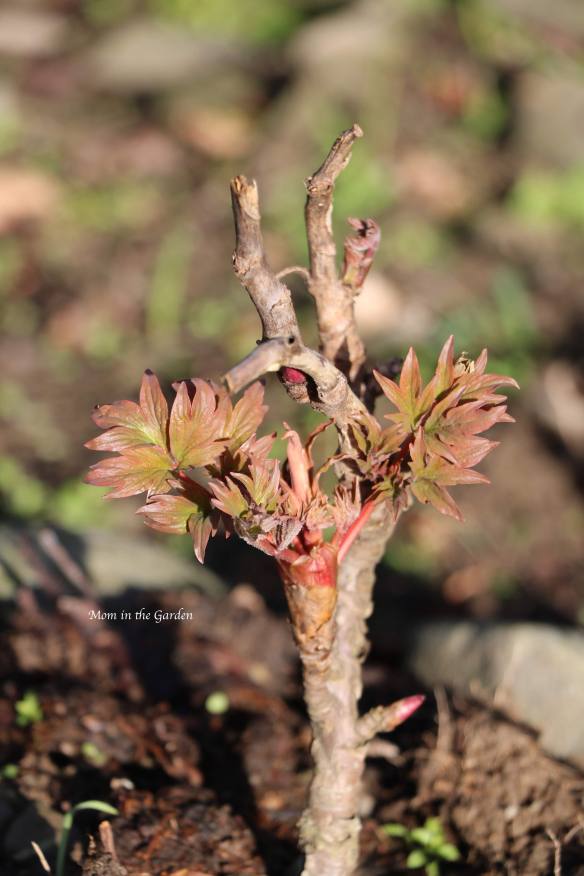
There are signs of spring all around the garden. My tree peony has had a rough time in my garden over the past few years. I moved it to a location which I think it prefers to its former home. I’m hopeful that we’ll have more pretty flowers this year!

tree peony showing signs of life

tree peony showing signs of life

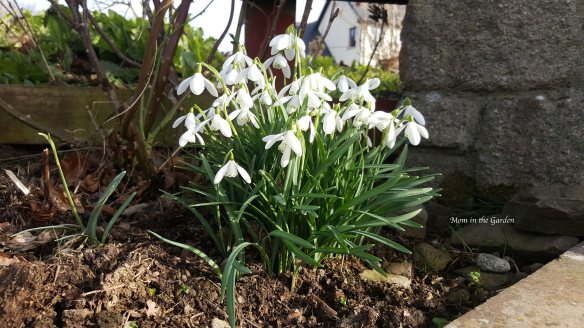
open snowdrops

open snowdrops

We must not have had an insect/slug issue this year, as my snowdrops were in top form. They are so tiny and sweet looking!

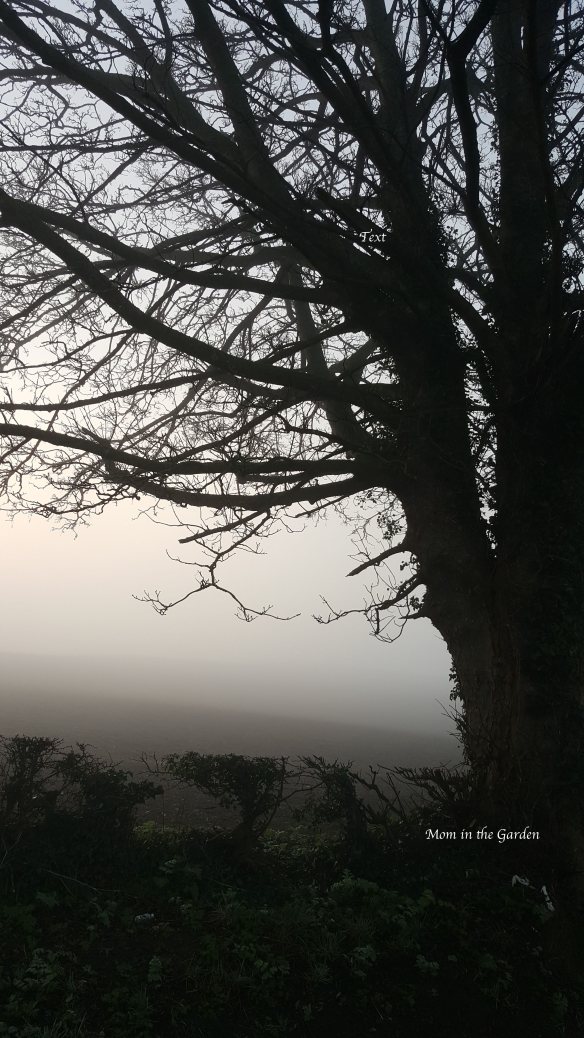
tree in fog

I took this picture on an early morning walk

I have to admit, the past few months were hard. There were many times when I would have normally gone into the garden, but I just couldn’t (energy, desire, time, …). Even when I did get back into the garden, I’ve had to keep it at a “small job” level. That’s life, I suppose. I’m thankfully feeling better now, although still taking it easy on myself. Things will get done when they get done. 🙂

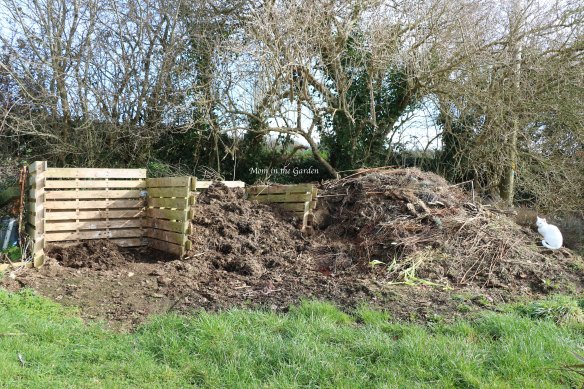
compost "heap" March 1

Compost “heap” March 1

And some things, like my compost, can work on their own! Although it certainly helps to turn and rotate it, the breakdown of the garden materials takes place even when you “just leave it”. The birds love it for all of the worms. Kitty loves it … to get close to the birds.

Hellebore plant Frilly Isabelle

Hellebore plant Frilly Isabelle

I’m so glad to be feeling better, and getting back into the garden (and writing again!).

Happy first of March!

In peace,
Dana
When things don’t go as planned…

beds of garlic in the garden

Visual status update on our Vallelado Garlic (image from Jan 22nd)

Well hello there! I confess that I had not expected to take this long to write my next blog post. I don’t strictly follow a schedule, but I usually work as much as possible in the garden, in my free time during the week, and then I write about what I did.

gardening beds weeded and covered in compost

“Winterizing” the beds: completely weeding the bed and then working compost into the soil

But for the past number of weeks, I have not worked in the garden … at all. This is very unusual for me, as the garden is my happy place! Thankfully, though, I’ve recently started to get back into the swing of things, and I’ve managed to spend some time in the garden.

Most of the beds have been cleared, weeded, and had compost added (most but not all!)

What’s going on in the garden?  I’ve tidied up some beds (read: massive amounts of weeding done!) and covered them with compost. I’ve also started weeding one of my main flower beds so that the winter flowering plants have some breathing room (poppy plants are covering every square inch of free soil!).  And the biggest project is to clean up one corner of the yard for my new adventure which I will start this spring!

a "before" picture of a messy part of the garden

This is the official “before” picture of the corner which we are re-working!

O.K., so the big adventure is that we are going to get chickens! I’m planning to get them in April, but I want to make sure this area is ready for them. Look at that mess in the picture above! The stone path, as well as the two beds, are all covered in an invasive weed (which I have not been able to identify).  The only way to clean this up was to clear it all out.

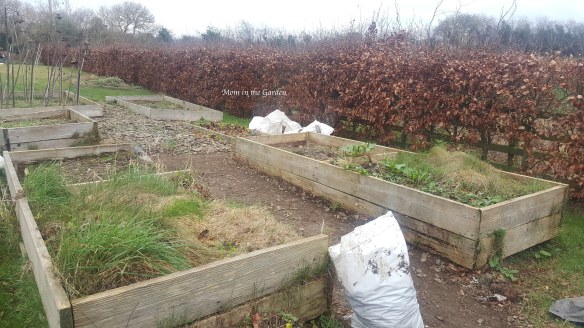
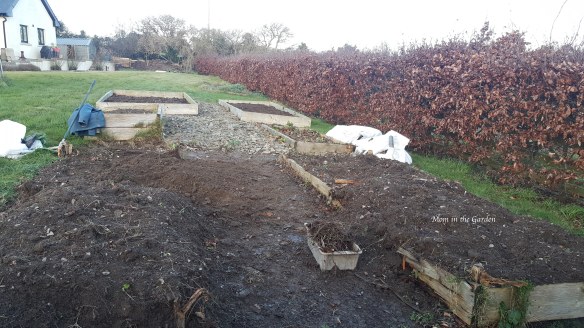
garden beds covered in weeds with cleared path

Progress???

First to go were the weeds on the stones, and then the stones.  The stones in the back section of this corner will probably stay – I’m undecided on this point actually.  I’d like to get rid of them, but not sure where to put them! Oh, did I mention that my son and my husband have been helping, too?  Admittedly, this job is anything but fun. So we’ve been doing it in small sections.

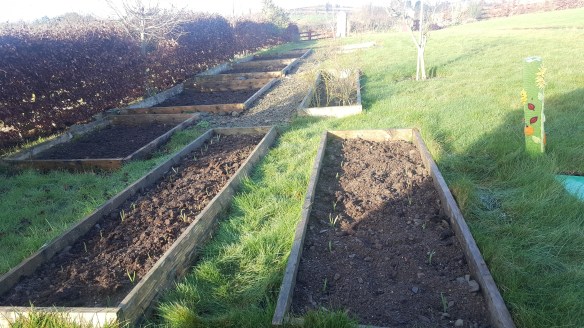
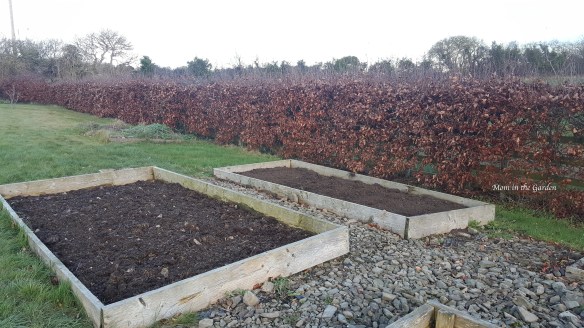
garden beds of soil

definite progress!

Those invasive weeds really worried me.  But we are managing to clear them and their massive roots.  It still needs a lot of work, but we’re getting there!

Hellebore Winter Sunshine

Hellebore Winter Sunshine

What else is on the agenda for this week? Pruning my rose plants.  I’m following my father-in-law’s lead, as his roses are simply beautiful every year (and he pruned his plants last week).  He asked me about mine the other day, and when I started to panic that I hadn’t pruned them yet, he reassured me that I’d have at least another week or two to get it done! 🙂

helleborus orientalis double ellen red

Helleborus orientalis double ellen red

I would like to get a better handle on the weeding, too, or my entire yard is going to have about a million poppies.  I’m not even kidding!

Helleborus frilly Isabelle

Helleborus frilly Isabelle

I’m thankful for the pretty flowers that my hellebore plants are showing off now.  They are really looking lovely, and the 3 different varieties are quite different from one another!  I have made a note to get some more!

snow drops covered in rain water

Snowdrop flowers covered in rain water

I’m so very glad to be back in the garden, and back to blogging! I hope that you have managed to keep doing what you like to do, even if time is scarce!

In Peace,
Dana


Thank you!

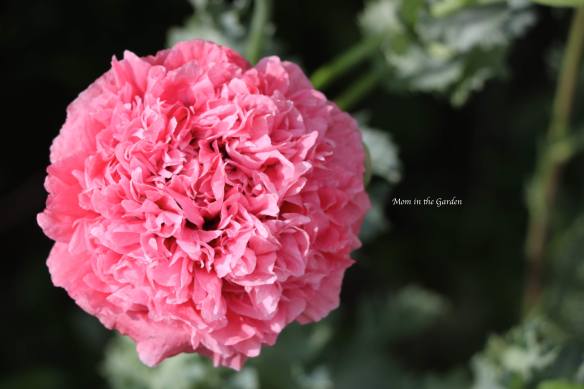
Pink ruffle poppy

a poppy with lots of ruffles

I want to take this moment to thank you for reading my blog. I’m so glad for you to stop by and visit! I thoroughly enjoy writing about my gardening adventures, and I especially love photographing every aspect of it. So I appreciate when others share in my journey.  A special thank you, too, if you are following my blog. If you are not yet following, please feel free to click on the link on the left side of the page. 🙂  I would also like to invite you to leave comments, as I would love to know what you think about the different topics that I write about!

pink tulips

some of my most hardy tulips gifted to me when we moved into our home

The garden is one of my favorite places, where I can go to clear my head, be creative, and marvel at how the circle of life in nature promises that the garden, although dormant in winter, will again bring new life every spring time. For me, the garden is a place of hope (there are no guarantees!). Although I will admit that I work quite hard in my garden, it is never with disdain. I hope that you will continue to enjoy my writings!

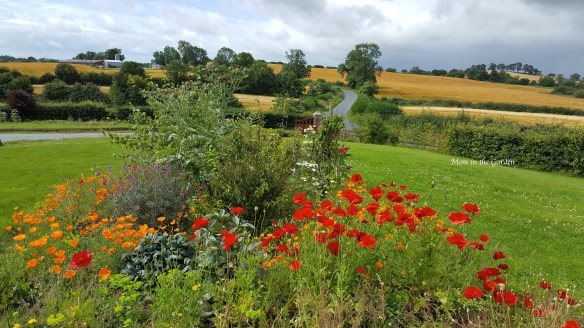
wild flower garden in July

My wild flower garden in July

I have a few new (big-ish) plans for my garden this year!  One section just really needs a change and 2019 is the year to make it happen.  I have already started on that project, so I am quite excited that it will come to fruition! Stay tuned …

October garden with mums and pumpkins

our garden in October with mums, pumpkins and sunflowers

Finally, I’d like to wish you only the best in 2019: Health, Happiness, Prosperity, and fresh organic compost from the garden!

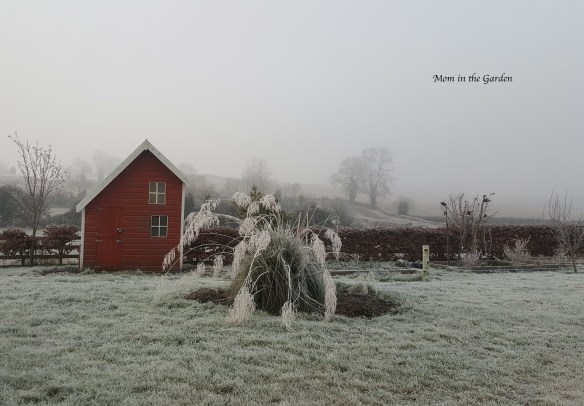
frosty winter garden

Our garden on a frosty, foggy morning

In peace,
Dana

A pleasant surprise in the Compost Heap

compost heap under Elder trees

Compost “heap” mid-summer underneath blooming Elder trees

Hello! This post is about the funny thing I “found” in my compost this past weekend. It made me laugh, so I hope you’ll enjoy my story!

compost in a wheelbarrow

Compost from our garden

First, though, I have to talk about Compost, because you could say that I am a tiny bit “obsessed” about my compost. I have written about it here and here, which you can reference for any “how to” questions you might have. It’s just that compost is sooooo good for the garden, and fairly “easy” to make that it makes sense to do so.

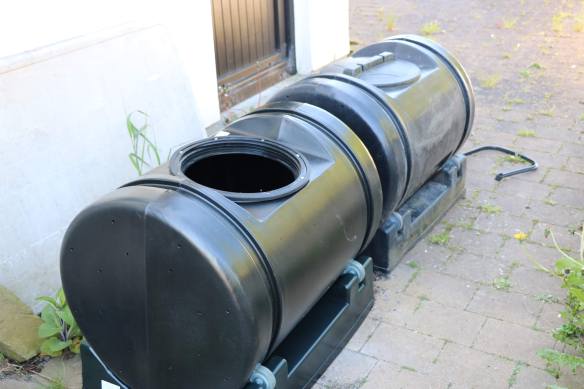
enclosed compost tumblers

enclosed compost tumblers for veggies and fruit

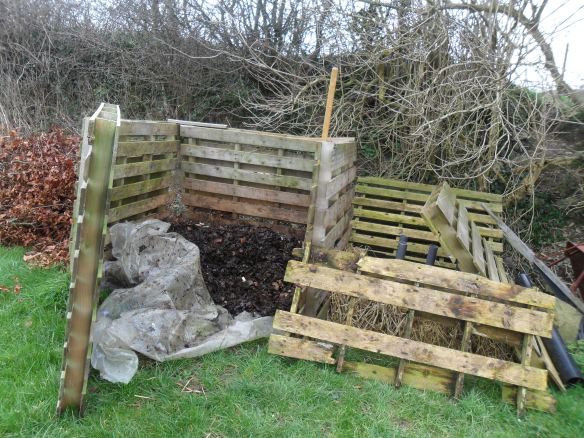
My time in the garden over the past 8 years has been one learning experience after another. Compost is no exception! We started by throwing together some pallets to store the compost. Then we began heaping on all of our kitchen scraps (uncooked vegetables, fruit, coffee grounds, tea) and everything gathered from the garden (grass, leaves, weeds).  What.A.Mess. But we now have two enclosed “tumblers” for our kitchen scraps. The idea is that I don’t want to attract unwanted animals, so I try to keep food off of the open heap.  Also, we still have the pallet set-up, but we no longer throw nasty weeds on it.

wooden pallet compost enclosure

We built our first pallet compost enclosure back in 2012

Wow, that was really neat and tidy back in the beginning!

different piles of compost based on different ages

Different sections of the compost are at different stages of break-down

O.K., so I used quotation marks around the word “easy” earlier, when I described making compost, because although heaping on the garden materials is indeed easy, I have found that the compost breaks down best when “turned”.  “Turning” the pile, basically just digging and mixing it up, can be a bit of work. It’s not the most glamorous of garden jobs and quite honestly, I don’t do it often enough. I do turn our “tumblers” every week, which really helps with that breakdown. The goal is to get dark brown, crumbly consistency, broken down compost material.

dark compost

compost breaking down into a crumbly consistency and of a dark brown color

This leads me to my story of what happened this past weekend. I went out into the garden to get my couple of hours of “garden time” and decided that the compost needed some attention. One section is breaking down really well, and is full of worms and is turning a lovely dark brown color. I worked on that pile first, because it was easy to turn! Then I started to tackle the MESS!

broken down compost and unbroken down compost

The left side is well broken down compost while the right side is a huge mess that hasn’t been turned

I started on the right side of the heap, but almost immediately, my garden fork went through something and got stuck. When I pulled it up, I found a huge potato on the fork!

potatoes in compost

Potatoes in the compost heap!

I put the fork down, and used my trowel to gently clear some of the top layers of compost away. Then I just used my (gloved) hands to dig in the soil and I found potato after potato after potato! The soil under the compost was amazing! Of course it was, it was broken down compost.

A huge Sarpo Mira organic potato!

So, what’s the story here? Well, we planted organic Sarpo Mira, main crop potatoes last year. Unfortunately, for a number of reasons, it was a disaster, and we ended up digging up the entire bed, without harvesting any edible potatoes. We cleared out the bed and heaped it on …have you guessed? … the compost pile! Those “seed” potatoes, must have enjoyed the amazing organic compost because they grew HUGE!

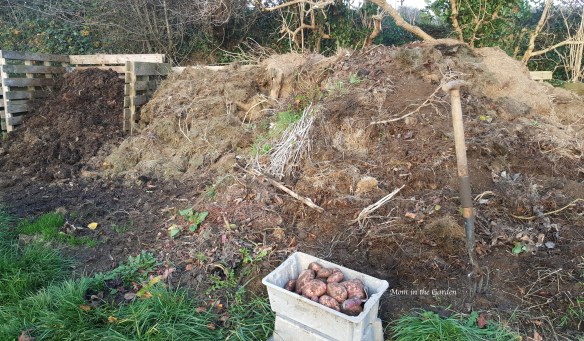
potatoes in compost pile

Most of the potatoes from the compost pile were huge!

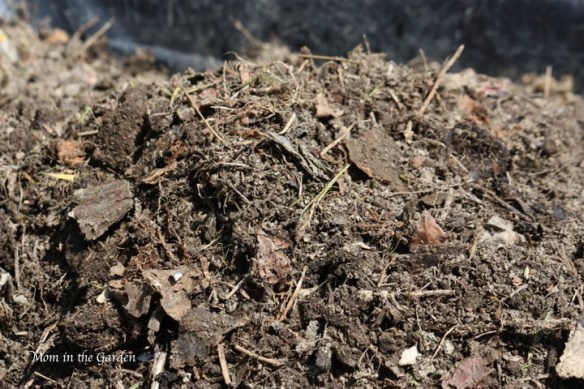
soil from compost heap

A close-up look at the soil the potatoes were growing in

Of course, after my discovery I remembered seeing potato plants and flowers in the compost this past summer, but I didn’t really pay them any attention as I didn’t think they’d really grow. Boy was I wrong!

container of potatoes from compost pile

That’s a lot of potatoes dug up from our compost pile!

It was just the funniest thing for me to find all of those potatoes. We’ve grown potatoes a few different years, and we’ve never had them grow this big. Just goes to show that my garden bed needed a lot more compost than I was putting in it!

bowls of potatoes in front of compost pile

The red bowl is filled with extra large potatoes, the strainer is filled with normal sized potatoes, with the compost pile in the background.

It wasn’t enough to just find the spuds in the compost, though. I had to see if they were actually edible!

potatoes on cutting board and in a bowl

The potatoes peeled just fine and were perfectly firm!

Organic Sarpo Mira potatoes are known to be blight and slug resistant, so it wasn’t too surprising that the spuds were in really good shape. The funny markings on the outside also appeared when I grew them in my beds, and doesn’t affect the taste. I’m happy to say that we ate two big potatoes today, and they tasted delicious!

The bottom line is, of course, that compost is amazing!

Do you compost? 🙂

In peace,
Dana
2nd Place Award for “Easy to Grow & Adds Color to the Garden” goes to Pumpkins!

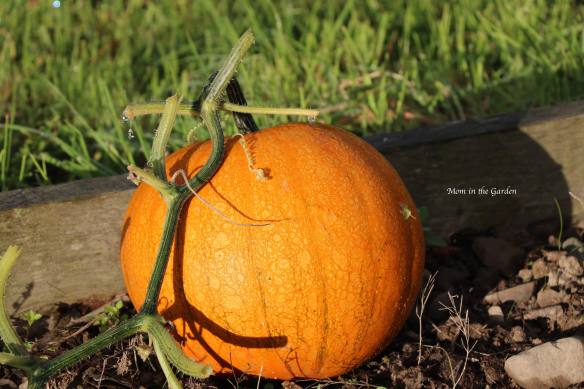
pumpkin in vine

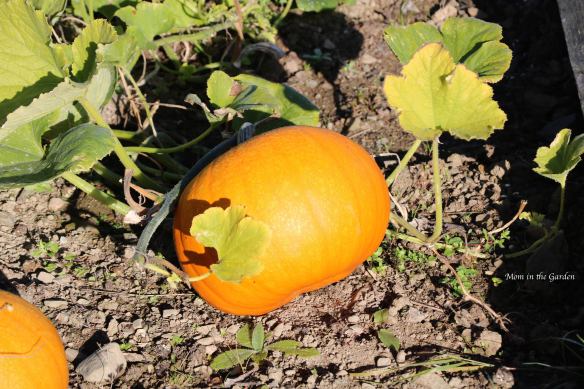
A nearly ripe pumpkin still attached to the vine (with all of the leaves removed)

Hello there! This post follows on from a previous post about what I think is easiest to grow in the garden. Since time is precious, we only plant what is easy to grow in our garden. In my view, the first place award of the “easiest to grow” contest belongs to garlic, but this is followed quite closely by pumpkins. We have found them to be very easy to grow, love how they brighten up the garden with their orange blossoms and the actual pumpkin, and especially love cooking and baking with them!

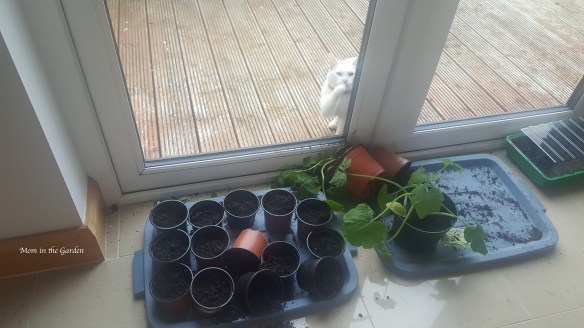
plant pots inside with cat

Potting up our seeds in a sunny hallway in April. The cat *usually* leaves them alone…

In late April, I usually start my seeds inside as we have a sunny hallway where they do well. The seeds are the seeds which I washed and saved from my pumpkins the previous year. The original purchased seeds were organic (of course!). In the picture above, my pumpkin plants on the right are well on their way, while my sunflowers on the left (shhh, those are my 3rd place winners for the “easy to grow” award!), have been planted later as I want them later in the season. Despite Kitty knocking over the plants, they survived just fine.

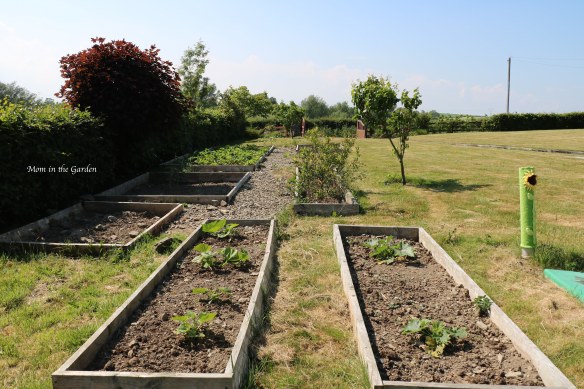
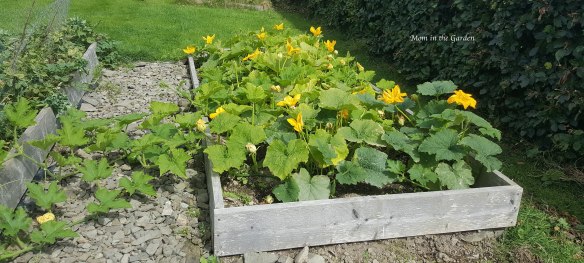
Four Pumpkin plants (in left bed, the right bed have yellow squash) in early June of our very dry, warm summer this year

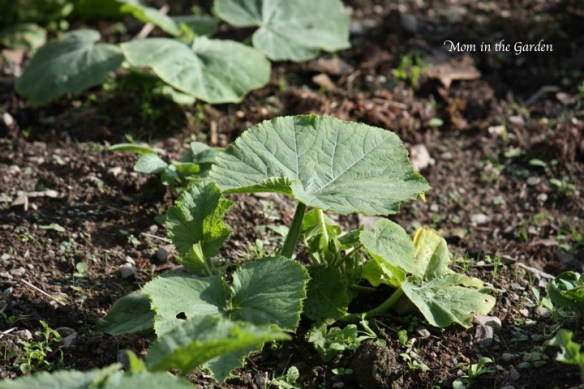
a young pumpkin plant

a young pumpkin plant (2016)

bed of pumpkin plants and blossoms

Bed of pumpkin plants and their bright orange blossoms (from 2017)

I have only grown baking pumpkins, although there are many different varieties of pumpkins. Basically, I want pumpkins for soup and pumpkin bread, so I tend to stick to what I like. 🙂

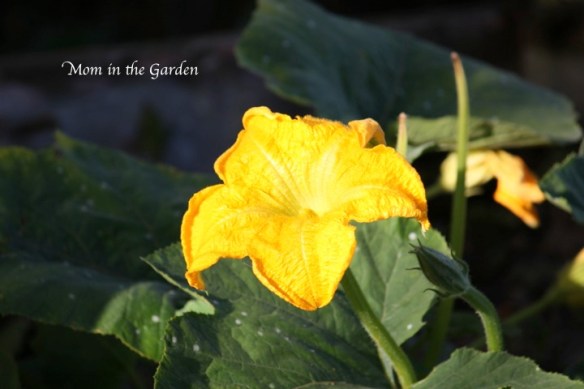
Did you know? There are male and female pumpkin flowers. This one is a male, standing high above the plants.

When it comes time to move your new potted plants outside, it’s important to not just throw them out into the wide open world without first acclimatizing them. It takes about a week. I’ll usually leave them outside during the day and bring them in at night. By the very end of May, after all chances of frost are gone (hopefully!) and we’ve given them their daily-dose of ‘outside weather’ for a week, I’ll plant them in a sunny spot in the garden.

compost in a wheelbarrow

Compost from our garden

Pumpkins love compost. Sure, what plant doesn’t? I work LOTS of compost into the soil. From what I read, they also like water, but I’ve never had an issue with needing to water them any more than other plants (haha! I do live in Ireland though…). We did have a very warm and dry summer last year, actually, and all of my pumpkins matured by the end of August! I’d never had that happen before. They are normally still green in October!

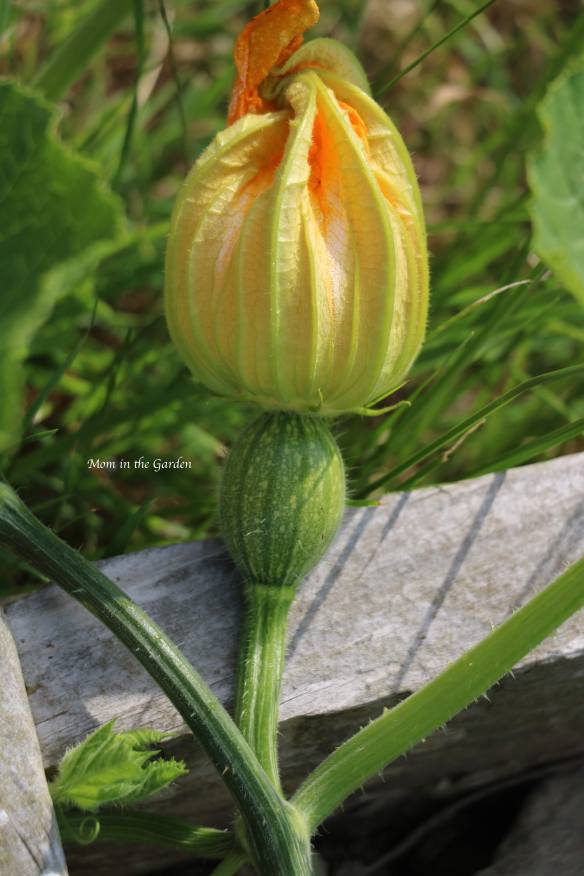
female pumpkin flower atop of baby pumkin

A female flower atop of an immature fruit

After they’ve settled in to the bed, the first flowers to appear will most likely be male. There are normally more male flowers than female, and the female flowers will bloom later in the season. But honestly, I don’t pay attention to any of this (or I haven’t in the past), and everything just falls into place when it should. I’ve always had between 6 to 12 pumpkins per season, which is fine by me.green baby pumpkin

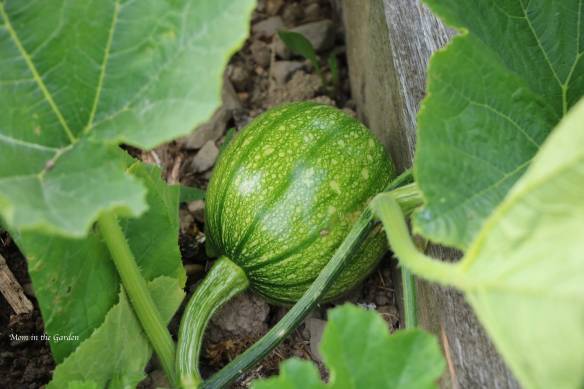
Pumpkins start out (very) green!

small pumpkin hanging from the vine

pumpkins prefer a sunny spot to “hang”

pumpkin growing in an ornamental grass

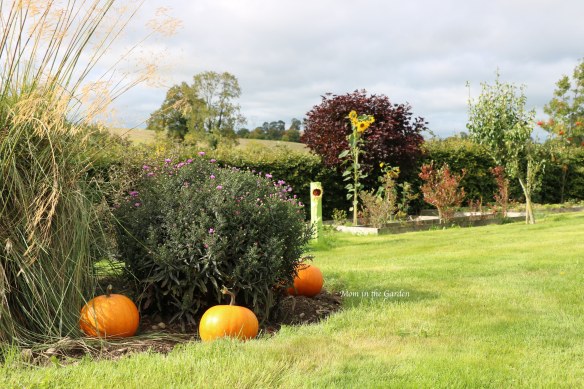
This pumpkin wasn’t fussy about where to grow… Can you see it in the ornamental grass???  It’s not like I planted it there!

different sized pumpkins

pumpkins grow in all shapes and sizes

Normally, near the end of the season I cut off all of the leaves of the vines to help the sun to ripen the pumpkins from green to orange. This can also happen after they are cut from their vines. To prolong the life of the pumpkins, you should leave them a bit longer in a sunny spot, after cutting from the vine. It is best not to leave them sitting in the soil though, especially at this stage. I’ll either have them sitting on flat rocks or I’ll bring them onto the front porch area.

pumpkins and yellow squash in garden

Pumpkin bed (on left, yellow squash on right) in August

pumpkins and sunflowers

Cut free from their vines, the pumpkins can end up anywhere in the garden for photo shoots! (2017)

Oh! I forgot to say that I also like using pumpkins in my photographs! That orange (and even when they are still green) is just fabulous!

pumpkins, apples, pears, sunflowers in the garden

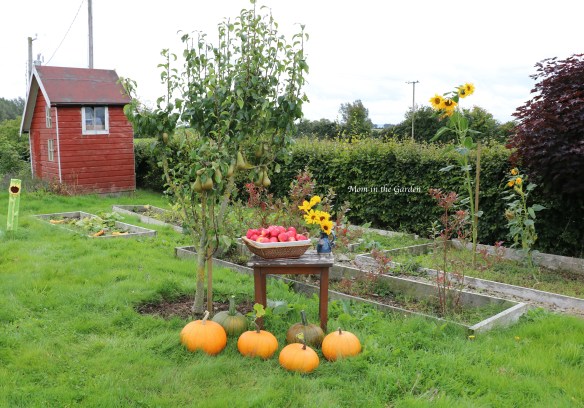
Our fall garden (2018): pumpkins, apples, pears, and sunflowers!

pumpkin in sunlight

Isn’t that beautiful?

pumpkins and red apples

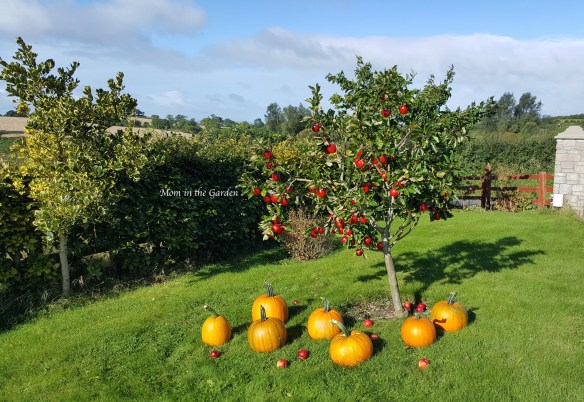
I love the colors of the red apples and orange pumpkins!

I really like having pumpkins in the garden. It is great fun to see how many we’ll get, and how fast (or slow) they turn orange. Pumpkin is a taste that I think people either love or hate, there is no in between! There is also nothing like the taste of fresh, homegrown pumpkin!

pumpkin cake on a plate

We call this “pumpkin bread” but really, it should be called “pumpkin cake” as it is so delicious!

I’ve linked our pumpkin bread recipe, but I need to update it to include the crumb topping we now always add.  The original recipe is still awesome, it is just that bit more awesome now!

pumpkins in the garden

pumpkins can be found anywhere in the yard for photo shoots…

I keep our house decorated with a fall harvest theme until Thanksgiving.

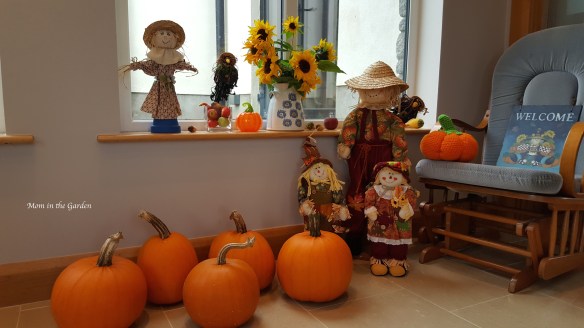
pumpkins and scarecrow decorations inside house

We have a fall harvest theme in our house until after Thanksgiving!

Only after Thanksgiving do we start to decorate for Christmas.

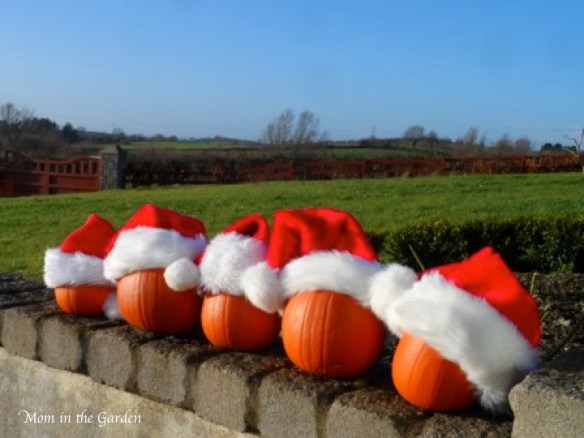
pumpkins with santa hats

Christmas pumpkins (No way! It’s too soon!)

Haha! Sorry, I just had to use the picture with the santa hats!  🙂 Back on topic; What about you? What do you think are the easiest things to grow in the garden? I’d love to know!

In peace,
Dana


Garlic wins as Easiest, most Rewarding item to plant in the garden!

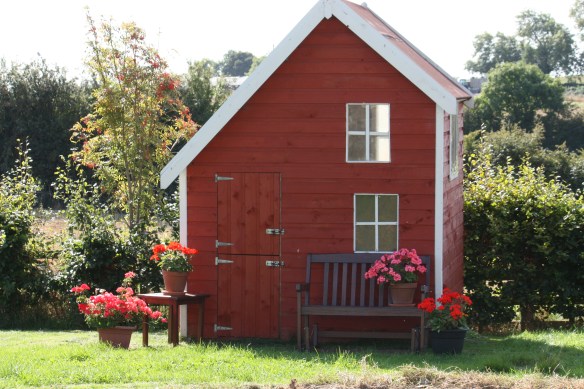
playhouse with geraniums

In 2014 I had geraniums around the playhouse. Today, I have lavender, roses and bleeding hearts because I find perennials easier than annuals.

Hi there! This post is about conveying that gardening doesn’t have to be an “all or nothing” past-time. We started out spending quite a bit of time in the garden (read: Every.Spare.Minute.). But as our family is growing-up, and our interests are growing (can you say that?), we are spending less time in the garden. Given how precious time is, it is important that we only grow what we have time to care for. That means that we grow what is easy!  And the top of that “easy to grow” list is garlic.

freshly harvested (Cristo) garlic

Freshly harvested organic Cristo garlic (from last summer)

I am still a stickler about not using chemicals in the garden, and I source organic seeds/plants. Fruit Hill Farm, based in Cork, has been a great resource for organic growing, and I’ve been quite happy with the garlic which they have provided. I’ve only used two varieties: Cristo and Vallelado. I like garlic that is planted in the fall and harvested in the summer. It is nice to have some growth in the garden over the winter, and it requires very little maintenance. The rewards are huge, as the taste of home grown garlic is far superior to store-bought garlic, if I do say so myself. 🙂

organic Vallelado Garlic label

Fruit Hill Farm, based in Cork, is where I buy my organic seeds and plants.

“Winter garlic” can be planted any time in the fall. The rule of thumb is to get your cloves in the ground before Christmas, to ensure (in Ireland) that they get enough time in soil that is cold enough. My husband enlisted the help of our youngest daughter to assist with planting. We’re using different beds for the garlic this year,  and since I had cleared the two beds of weeds following our pumpkin harvest a while back, they could set to work straight away.

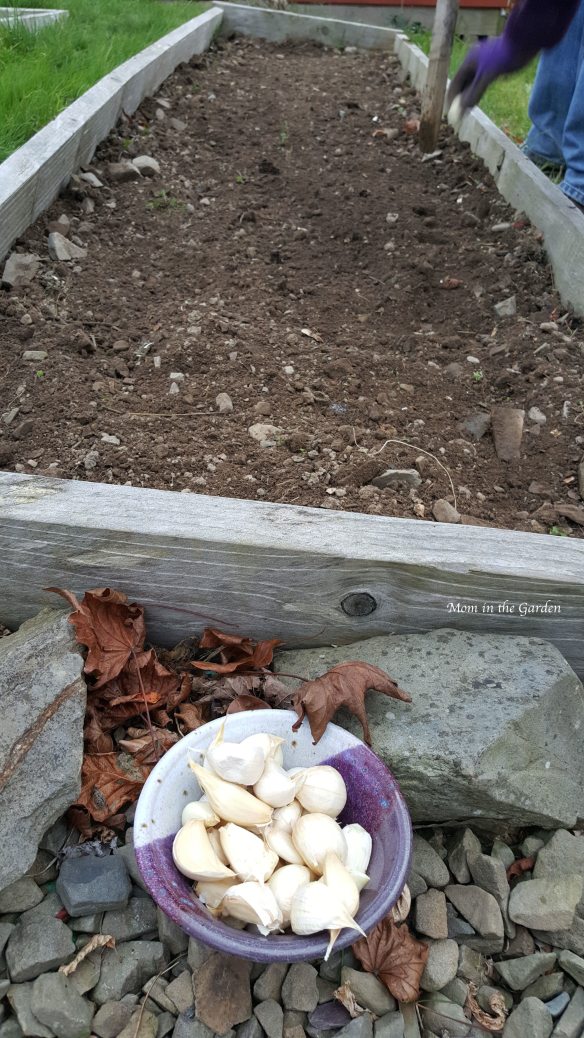
bowl of garlic cloves on cleared planting bed

a bowl of organic garlic cloves and a prepared bed

My husband made the holes in the soil and my daughter placed in the cloves (pointy side up). It is nice to get the kids involved. (I hope they think so too!)

soil with holes for planting

not too difficult… although I hope they turned that clove pointy side up!

If you’d like more step-by-step instructions, you can click here to my earlier post about how easy it is to grow garlic. We planted Vallelado this year.  It is good for storing, which I can attest to. After harvesting and drying out in the summer, I keep mine in a paper bag in a closet in our (somewhat cold) utility room. It will last all winter long, and you will have plenty to give away to friends, too.

freshly planted garlic beds

Two freshly planted garlic beds.

garlic and geranium sitting on wall

a throwback to 2013 🙂

Sometimes, I can get all caught up in life in a too serious kind of way. This is never a good idea! There is something to be said about getting older and wiser, though. Thankfully, I do find myself recognizing when I’m getting a bit too serious, and I can work on changing gears. A lot of this has to do with balance, or being out of balance. You know: work/family/house/garden/…me! 🙂 And that is why we only plant the easy stuff in the garden!

wreath made with garlic, dried artichokes and dried roses

Garlic wreath with artichokes and roses

And if I find myself getting too serious, I go and make a wreath with anything and everything I can gather from the garden!!! Because inevitably, that puts a smile on my face.

Will you join me in planting garlic this fall? There are still a few more weeks left to do so!

In peace,
Dana

Reduce, Reuse, Recycle

fall garden with ornamental grass, aster, pumpkins, sunflowers and playhouse

Our garden in 2017 with sunflowers, pumpkins, aster, ornamental grass, but no rain catcher / water butt / water barrel

Hi there! This post is about how I wanted to “Reduce, Reuse, Recycle” in the garden and how my family helped to make that happen. It all started, really, with what I saw was a “need”. Even though Ireland typically gets a lot of rain, there are many times when plants in the garden need watering. I would prefer to use “caught” rain water, since it does rain so much. Also, we don’t have an outside faucet (tap) and I have plants all over the garden. This means that when the plants need watering, I have to fill watering cans from our utility room and walk around the yard. It would just be nice to have water “stations” around the place. If you’re gonna dream, might as well dream big!

rain catcher - water butt

Our first rain catcher / water butt

More than a few years ago we purchased a water butt (or rain catcher / water barrel) and placed it at the back of the house. I wrote a post about it here. It is pretty, but it was expensive, and I’m always looking for more water after I’ve emptied it. I didn’t really want to spend a lot of money on another one. So, last year for my Christmas gift, I asked my son and husband to come up with an economical solution, that would still look ok. 🙂

in-progress assembling Water butt

My son and husband in the planning stage of setting up the water butt on a very mild day in December 2017

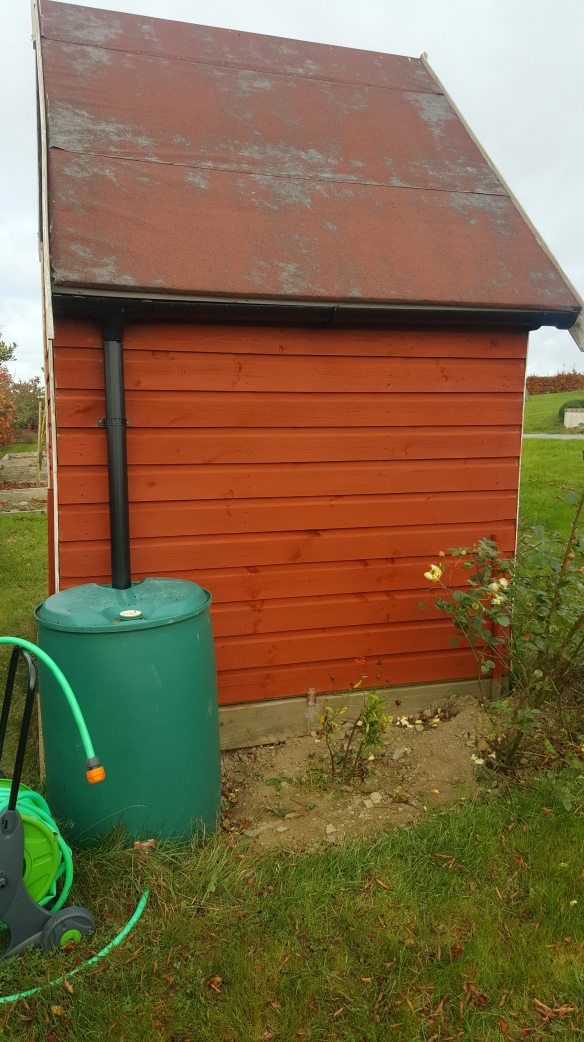
I requested that the location for the water butt be on the side of our playhouse. They were fairly creative and spoke with my sister-in-law’s husband, who is a dairy farmer, to see if he had any containers which might be recyclable. Lo and behold, he did have containers available that could be converted and used to catch rainwater. (I double checked, there weren’t any chemicals used in them!) My son and husband measured the roof of the playhouse, and bought the piping. Then they set about in assembling my water butt / rain catcher / water barrel.

water butt and hose attached to playhouse

A view of the water butt all assembled (please do ignore the terrible state of the roof … that is on the never ending “to do” list)

Thankfully, it wasn’t too much work for them and they had it set-up in no time. They inserted a faucet (tap) at the bottom of the water butt. This makes it nice and easy for me to access the water and fill the watering cans. I usually try and hide the hose, and hose extension behind the playhouse, because that bright green really stands out (in a bad way!) in pictures.

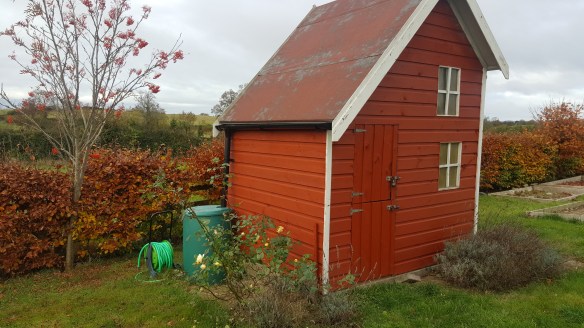
side view of playhouse with water butt

Side view of the playhouse with the water butt in sight

My daughter did a great job with giving the playhouse a couple of coats of red paint this summer, which really looks nice … despite the desperate state of the white trim and roof (says she who always seems to have more things on the “to do” list than there is time or volunteers to do them!).

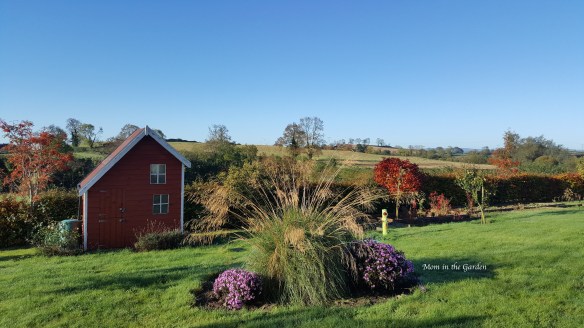
fall view of garden with ornamental grass, aster, playhouse and water butt

Fall view of the garden in 2018, including the water butt

I have to say that I was so pleased with this Christmas gift last year. We managed to recycle the water butt container, we now get to reuse rain water, and there is another water station in the garden! Win – Win for everyone! There are plans to set-up another water butt on the other side of the yard (and if it doesn’t happen soon, it will be this year’s Christmas request!).

Thanks for stopping by.  I hope that I’ve inspired you to Reduce, Reuse, Recycle in some way or another!

In peace,
Dana
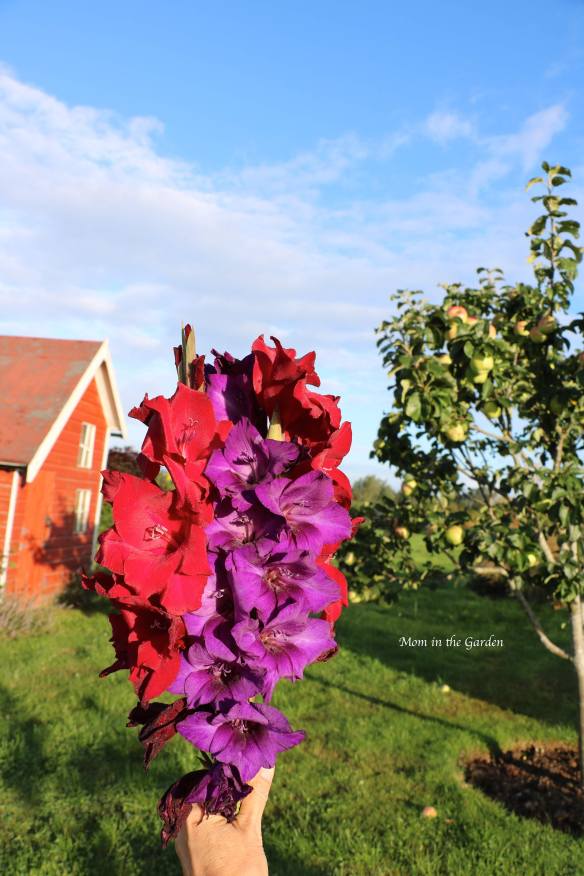
gladiolus flower and roses

These gladiolus, the Dark Knights, and David Austin roses, Teasing Georgia, have already benefitted from our “new” water butt

September’s beauty is tempered only by the gardening to-do list…

We are still enjoying warm weather, not quite ready for the chilly days of fall just yet …

September can be such a beautiful month. Although the temperatures tend to dip slightly in August, inevitably, when the kids head back to school in September, the weather turns warm again! We have been lucky to enjoy rather mild weather of late. The garden, having been quite patient all summer while I left it to its own devices, is now demanding that I pay her some attention. I love working in the garden, don’t get me wrong. We were just busy with life!  So little by little, we’ve managed to extend some time and effort to get (some) things done in the garden.

If I could draw your attention to the green leaves along the edge of the railroad ties, those are Bergenia, a deep pink flowering variety, which have spread a bit more than I’d like.

Bergenia flowering in May

These Incrediball hydrangea were a lovely white in August, but turned a rusty brown quite quickly, unfortunately. The Bergenia, on the other hand, have done really well! This was the clump (on the left) before we separated them.

One of the items on our “to-do” list was dividing up plants. I think it is pretty safe to say that Bergenia plants, also known as elephant’s ears due to the foliage, are extremely hardy! These guys are so happy in my garden, and they have just flourished (read: multiplied exponentially!). I wanted to remove a few to prevent them from clumping too much. But before I knew it, my husband had dug them all up! So we’ve spread them out, and moved them around the yard.

The Bergenia plants needed to be separated as they had clumped together.

A little more breathing room after we divided the Bergenia plants (my rusty looking Incrediball hydrangea plant in the background)

Staying in this same bed, my Iris ‘Benton Storrington’ are also quite happy here. My original purchase of two plants has yielded more than a few!

I originally bought two plants and now I have, well, LOTS!

I actually had to move them because they were spreading into one of my hydrangea plants. I’ve simply moved them to the other side of the same bed (hey, if they are happy here, I don’t want to rock the boat!). But first I untangled their roots to separate them. That worked with most of them, while a couple of them had to be cut apart. There was quite a clump!

quite a tangle of roots! This is why you have to separate them!

I forgot to remind my husband that the rhizomes, in order to get exposure to the sun, need to be at the surface, and not buried in the soil. So when I noticed his mistake after he’d planted a few, there was a teeny tiny moment where he just stopped and looked at me, shook his head, and then proceeded to re-plant them, correctly this time. Good thing he’d only done a few! 🙂

A row of freshly planted Iris, and in front of them are freshly planted Bergenia plants.

Iris Benton Storrington – which you can see is growing into the hydrangea!

Iris Benton Storrington

There was one more plant which we divided, another Iris actually, although this time not a bearded variety (so no rhizomes to keep at the surface!). I don’t have any pictures of what the area looks like now. But, here is a picture from before we moved any, when they were in bloom. The perspective is “higher” as I was actually leaning out of my bedroom window (being very careful though!). 🙂

non-bearded Iris

Lots of Iris and Lilacs!

They are very pretty, and apparently they, too, are very happy as they have spread like crazy! My idea was to separate them and spread them about the yard. But for now, we’ve taken one clump out of the mess and moved it further down the bed, and we moved another clump to the “Center Garden”.

our “Center Garden” is expanded again with the addition of Iris on the right

I am really happy with how our Center Garden is taking shape. I wasn’t sure if I should add anything else to it, but I think the Iris will be really pretty.

Pears, Apples and Sunflowers from our garden

My gardening takes lots of patience while I figure out how to get it just right, and watching as things mature and fill in spaces and provide structure. I LOVE this process! It is so neat to watch the garden throughout the entire year as it changes from one season to the next. I am constantly thinking of “what’s next” in the garden. I have a list in my head of all of the plants I want to add, and changes and additions to the garden. But right now, I am completely happy with exactly how it is, weeds and all! As for the gardening “to-do” list, let’s just say that I am happy that we are making progress!

In peace,
Dana
Good Enough

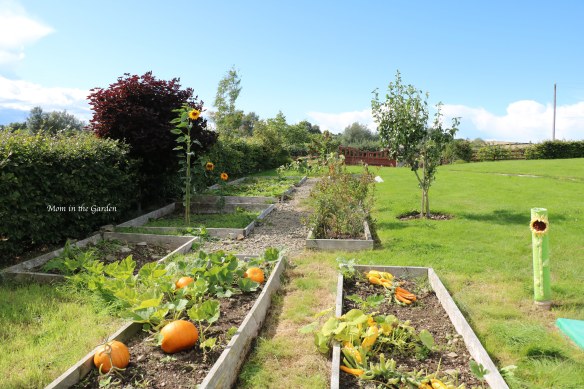
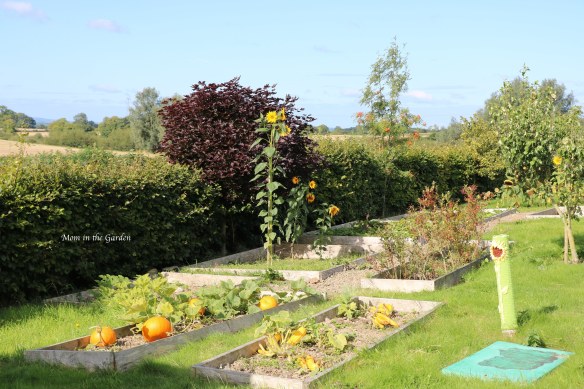
My veggie / fruit section of the garden

I haven’t written about the garden in a while. I’ve been beating myself up that it isn’t good enough to photograph, or talk about, or inspire.  Not.Good.Enough.  What??? Over the past eight years I’ve created a garden that brings me right to my happy place. How can that not be good enough? Admittedly, five years ago, this same patch of garden looked somewhat different, and perhaps more inspiring:

Purple Brussels sprouts, pumpkins, and squash in my 2013 garden

In fact, when I visited that blog post recently, the garden blew me away! Seriously, have a look. That did NOT help my feelings of inadequacy for my current garden! But so much has changed since then. The biggest change was that four years ago I went back to work after being a stay-at-home mom for 16 years. 16 years! Wow! I was lucky. I loved it. And now I am glad to be back working (outside the home) too… except that means a lot less time for taking care of the garden. It means that my view of what is Good Enough has had to change. And today I am stopping myself from saying it isn’t good enough, to saying it most certainly is Good Enough!

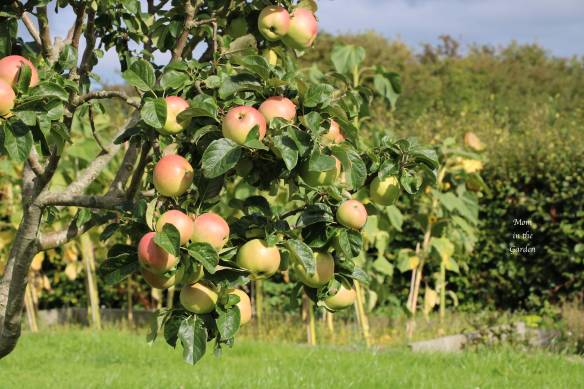
a cluster of our pears – almost ready for picking

our pear tree with a few handfuls of pears

I will focus on the good stuff: Our fruit trees.  We have one pear tree, one “eating apple” tree, and one “cooking apple” tree (Arthur Turner), and they are all filled with fruit this year! I must give credit to my husband for tidying up the base of our trees.  Ideally, the clearing should match the width of the branches, so every year as the tree grows, the clearing should be widened. It had been a few years since this task was done, so it was a big job this year. After all of his digging, he then worked a lot of our compost into the soil.  I think the trees look neat and tidy, and rather pretty if I do say so myself! (although perhaps slightly tilted?!)

funny, my husband doesn’t think this tree is leaning ever so slightly …

Fabulous combination of pretty and delicious!

I don’t have a variety name for the eating apples. They are sweet, and delicious tasting.  The cooking apple variety, Arthur Turner, are not sweet, and definitely need sugar when used. They are usually a greenish yellow color, but this year they have a pink hue.

do you also see the slight tilt on this tree too???

a pink hue to our Arthur Turner cooking apples

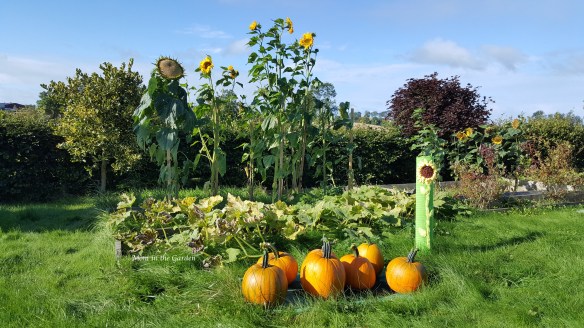
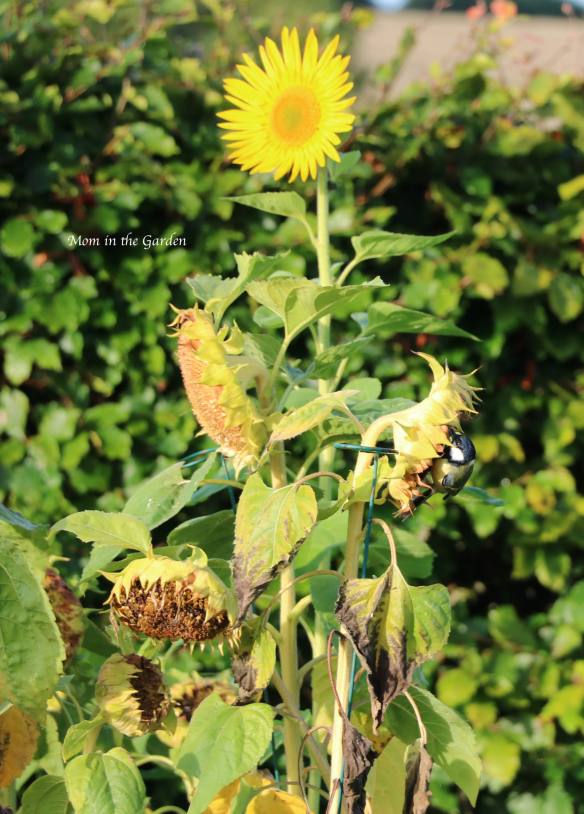
This year I planted pumpkins, squash, and sunflowers. As surprising as it is to hear, Ireland experienced a drought this summer. So some things in the garden didn’t quite thrive.  My sunflowers bloomed very early and died very quickly!  I cut off a few large heads, and have dried them to use the seeds next year. The rest are still in the garden for the birds to enjoy.

My daughter was helping me take pictures of my lavender wreath (which is in her hand) when I took this picture of the sunflowers. Kitty also enjoys being in pictures, just not posing for them… Off to the right you can see my leaning gladiolus The Dark Knights. I sense a leaning theme.

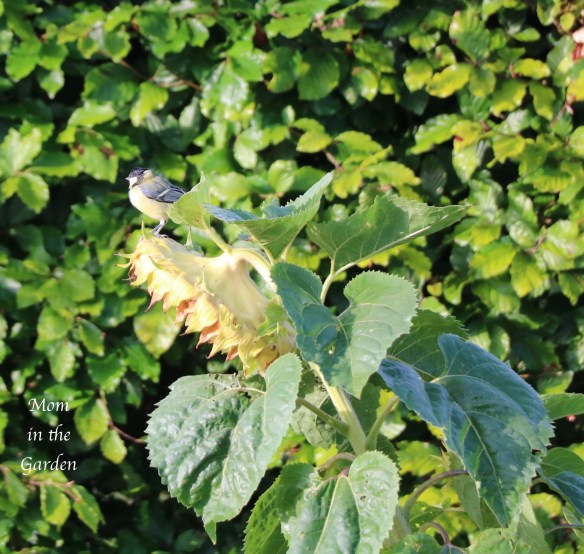
A bird eating the seeds from a sunflower

It is worth leaving the dying flowers for the birds to feast on the seeds, even though the plants look unsightly!  I love seeing the birds in the garden. It is worth having the dead plants there just for them 🙂

a common Blue tit sitting on one of my sunflowers

this is what the flower head looks like when you leave it in the garden for the birds to eat – lots of seeds missing!

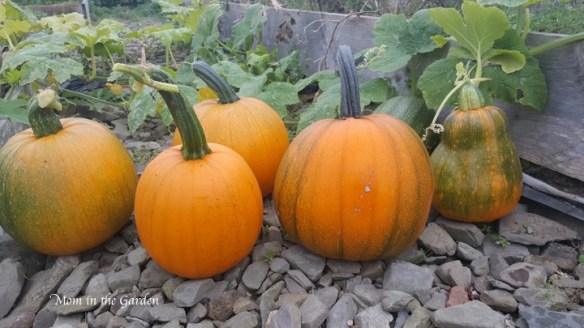
The pumpkins also had an unusual growing situation this summer. Similar to the sunflowers, they ripened much quicker than usual.  Honestly, it is usually around Thanksgiving time (November) when mine finally turn orange!  This year they turned orange in August…

Four pumpkins completely orange in August…

They have provided a lovely splash of color in the garden, along with the summer squash.  (I stopped picking the squash many weeks ago, but they still provide beautiful color!)

nearly ripe pumpkin … in August!

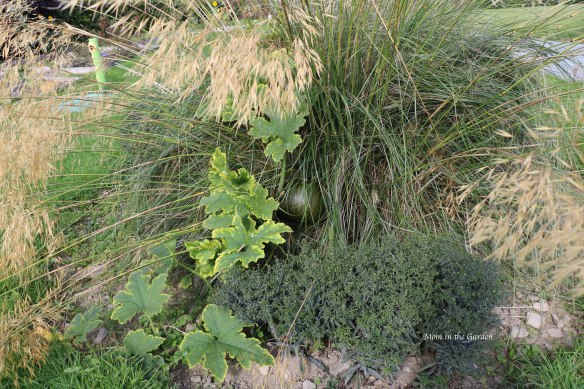
There are two more pumpkins in the garden, but they have chosen to grow and ripen at the normal rate for us albeit in an unusual place:

this pumpkin is growing in ornamental grass (this was not planted by me!) and will hopefully turn orange right around Halloween 🙂

I tend to be rather hard on myself. When I stop and pay attention, I do of course appreciate that I have worked quite hard to create my happy space of a garden.  “Good Enough” was never an expression I would have accepted years ago.  But now I know that it is much more important to appreciate what is in front of me.  I might need reminders of that every now and again, but I do now accept that Good Enough is Perfect!

I hope you have enjoyed the views in my Good Enough garden!

In peace,
Dana

There were only a few gladiolus stems this year (due to the drought) but they were still pretty!