Celebrating St. Patrick’s Day with Guinness Stew.

Back home, in America, everyone is Irish at this time of year!  St. Patrick’s Day is a fun time, with fabulous parades, music and parties with friends.  Where we lived in Syracuse, New York, the parade was three hours long!   We loved seeing the Irish dancers, the pipe bands, the fire trucks, the firemen and policemen. When we moved here four years ago, we experienced some culture shock when we first attended our local parade and it was over within an hour and there were no Irish dancers!!!  We did, of course, still have fun!  It was just a different experience than we were used to.  Instead of Irish dancers, there were hip-hop dancers, and there were scouts, and tractors, and local theater groups.  Without a doubt, everyone enjoyed themselves!

Our Irish connections are a bit closer since I married a man from Dundalk.  “Authentic Irish” we like to joke.  We met in Dublin while I was in a “study abroad” program in college. It’s been quite an experience!  The Irish and the Americans are really two different cultures.  We lived in America for ten years, and during that time I would have been conscious of how things were just that little bit different for him.  We’re now living in Ireland, and thankfully he is aware of how different things are for me!  It’s necessary to have some cultural sensitivity, especially in our relationship.  I’m thankful for friends who appreciate that as an American  I think a wee bit differently than the Irish.  (I expect quite a few of my friends to be smiling to themselves right now!)

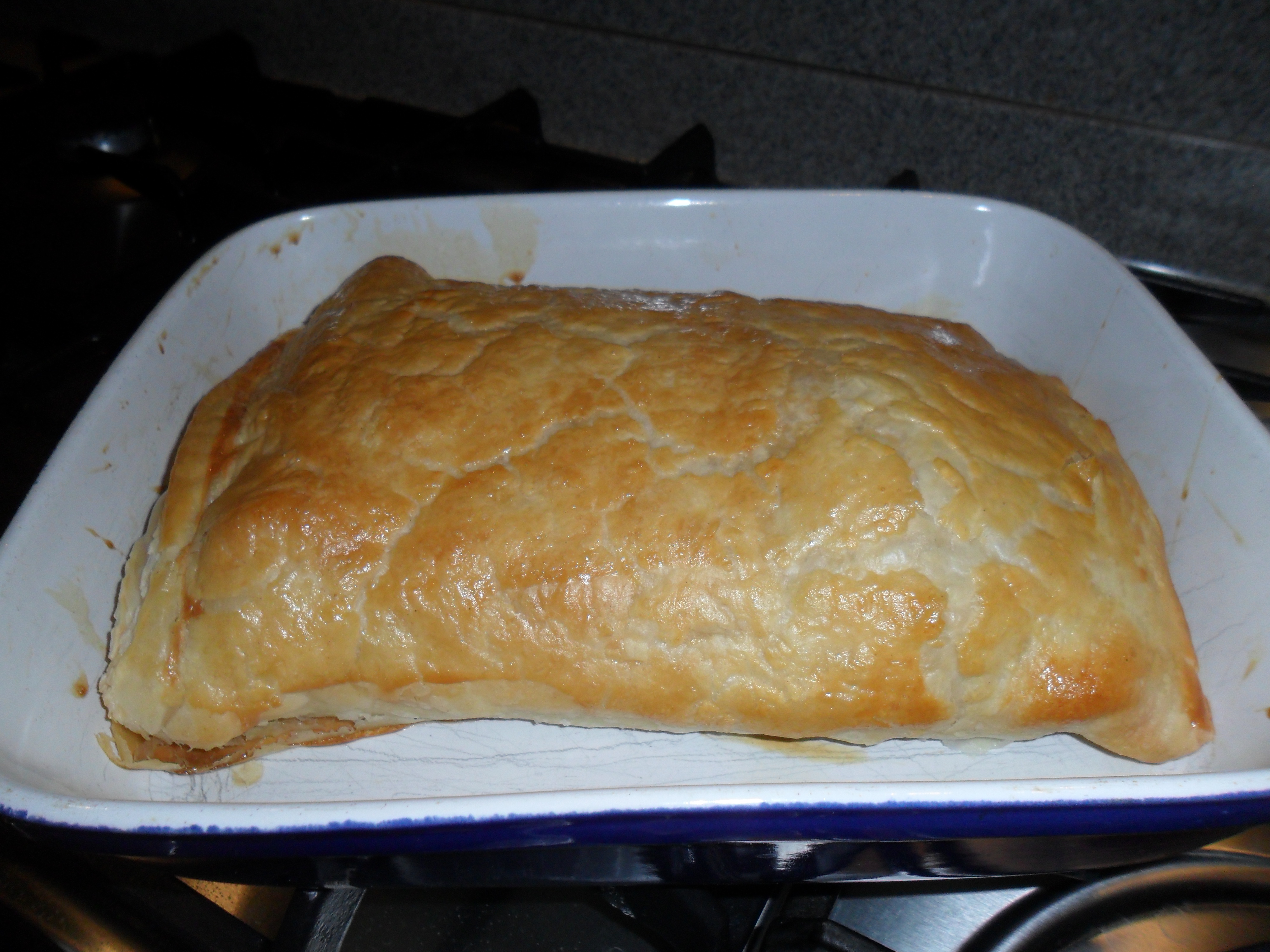
My husband has always enjoyed Irish cooking, even more so while living abroad.  One of the  first cook books he bought was Darina Allen’s Irish Traditional Cooking.  This has become one of my favorite cookbooks for traditional Irish cooking.  Beef & Guinness Stew is one of the tried and true recipes that we love and is easy to make.

For all of my Irish, and non-Irish friends, I wish you a Happy St. Patrick’s Day!

Dana

Beef & Guinness Stew

2 lb (900 g) lean stewing beef
3 tablespoons oil
2 tablespoons flour
salt and freshly ground pepper and a pinch of cayenne
2 large onions (about 10 oz/285 g), coarsely chopped
1 large clove garlic, crushed (optional)
2 tablespoons tomato puree, dissolved in 4 tablespoons water
1/2 pint (300 ml) Guinness
8 oz (225g) carrots, cut into chunks
sprig of thyme

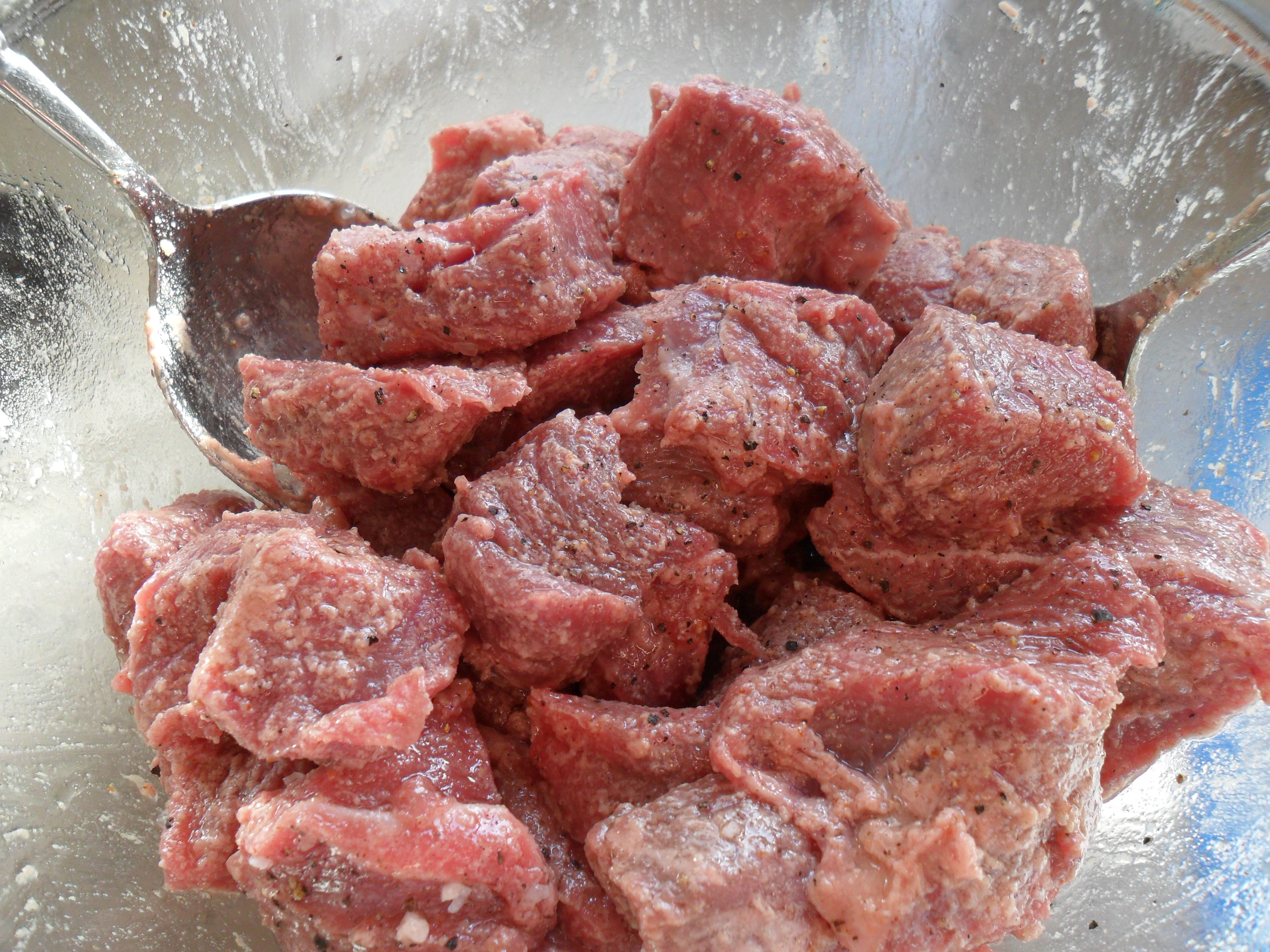
Trim the meat of any fat, cut into cubes or 2 inches (5 cm) and toss them in a bowl with 1 tablespoon oil. Season the flour with salt, freshly ground pepper and a pinch or two of cayenne. Toss the meat in this mixture.

Heat the remaining oil in a wide, frying pan over a high heat. Brown the meat on all sides. Add the onions, crushed garlic, and tomato puree to the pan, cover and cook gently for about 5 minutes.  Transfer the contents of the pan to a casserole, and pour some of the Guinness into the frying pan. Bring to the boil and stir to dissolve the caramelized meat juices on the pan.  Pour on to the meat with the remaining Guinness; add the carrots and the thyme. Stir, taste, and add a little more salt if necessary.  Cover with the lid of the casserole and simmer very gently until the meat is tender – 2 to 3 hours. The stew may be cooked on top of the stove or in a low oven at 150 degrees C/300 degrees F/ gas mark 2.

Scatter with lots of chopped parsley and serve with potatoes.

(Dana’s adjustments to this recipe: I used two large pinches of cayenne. I sweat the onions on their own before browning the meat.  I also used an entire small can of tomato puree (150g), and the entire pint of Guinness. I cooked my stew on the stove.)
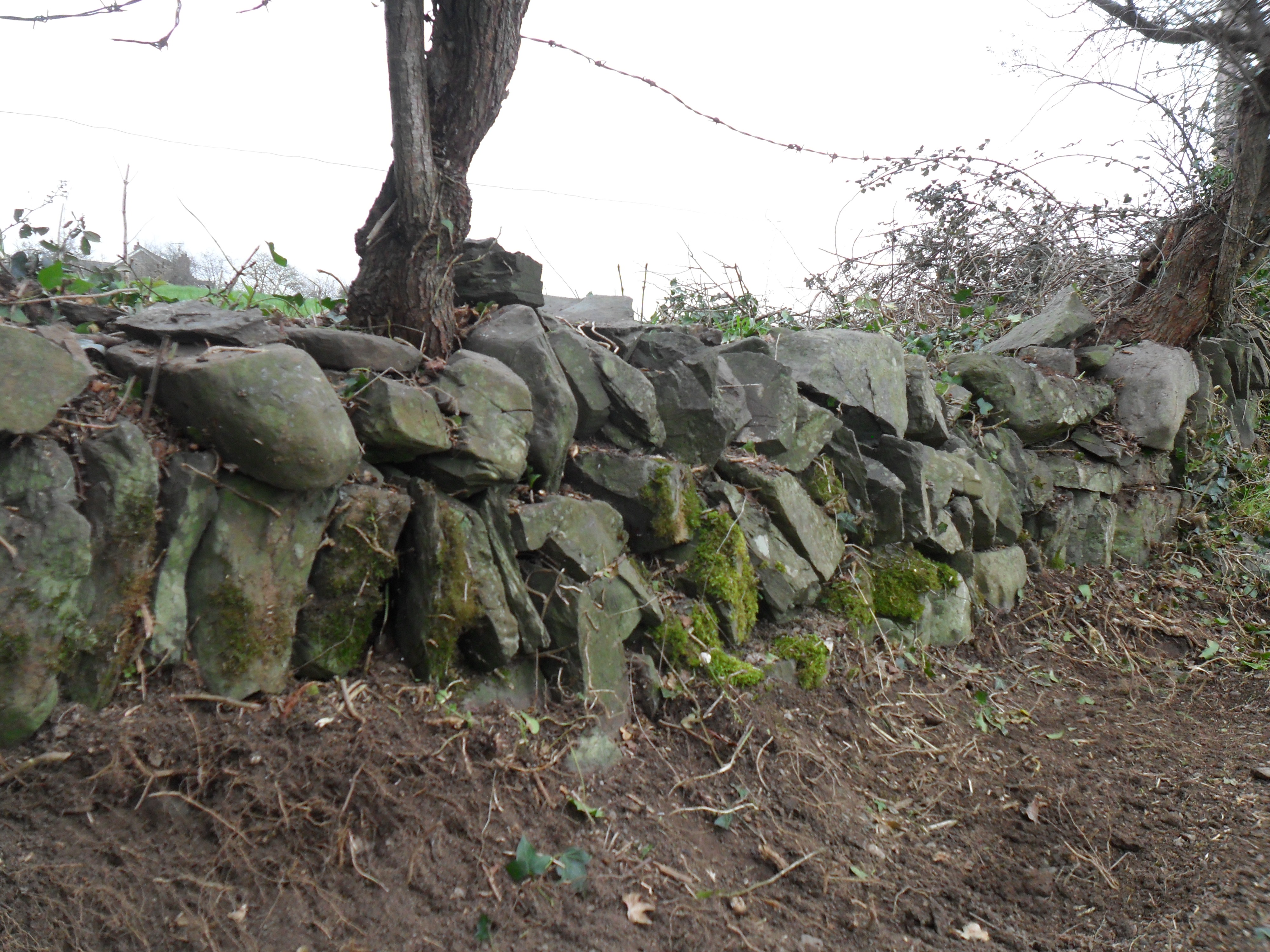
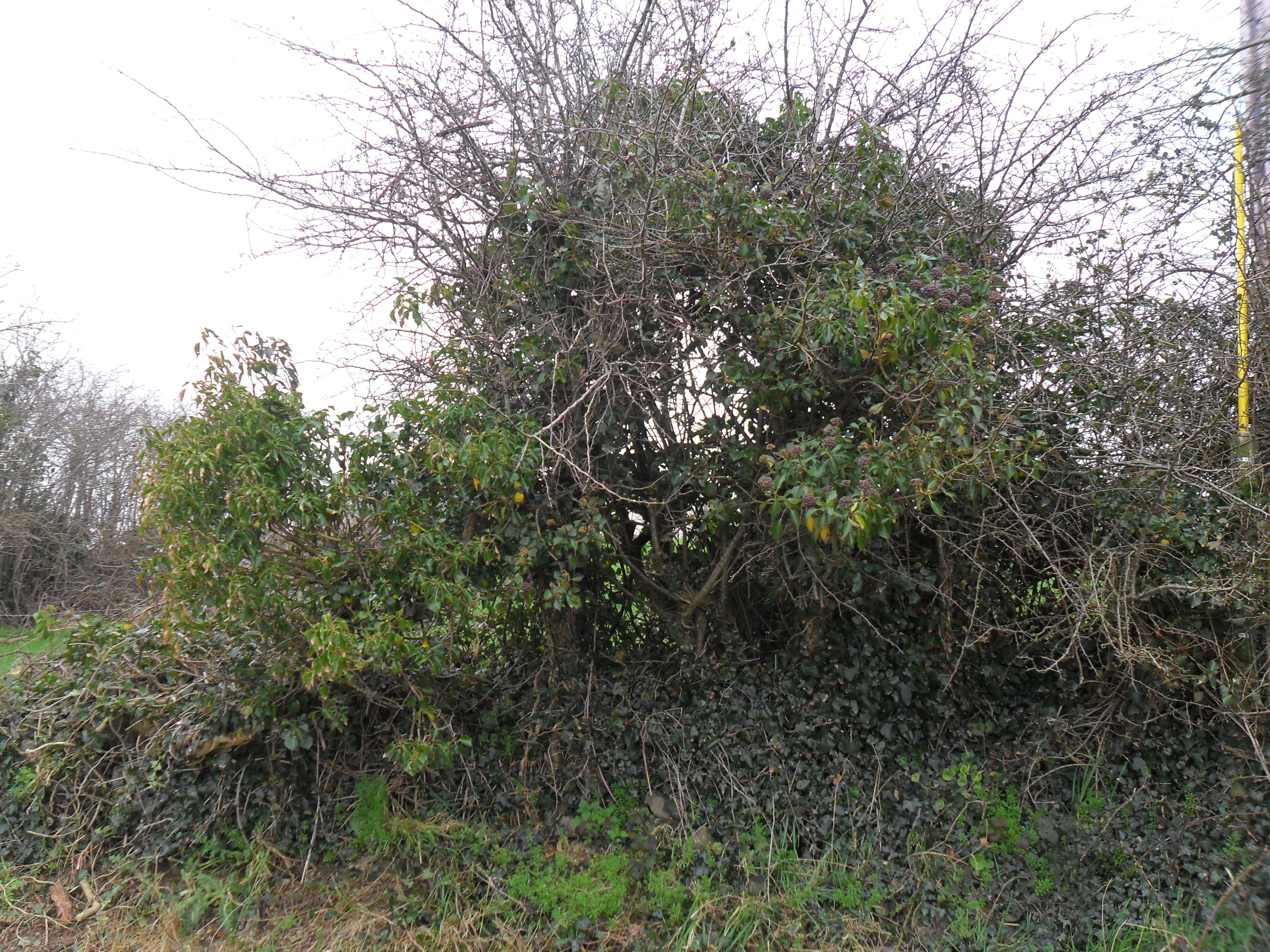
Ivy, ivy everywhere! Finding a lovely little rock “ditch wall”… under the ivy.

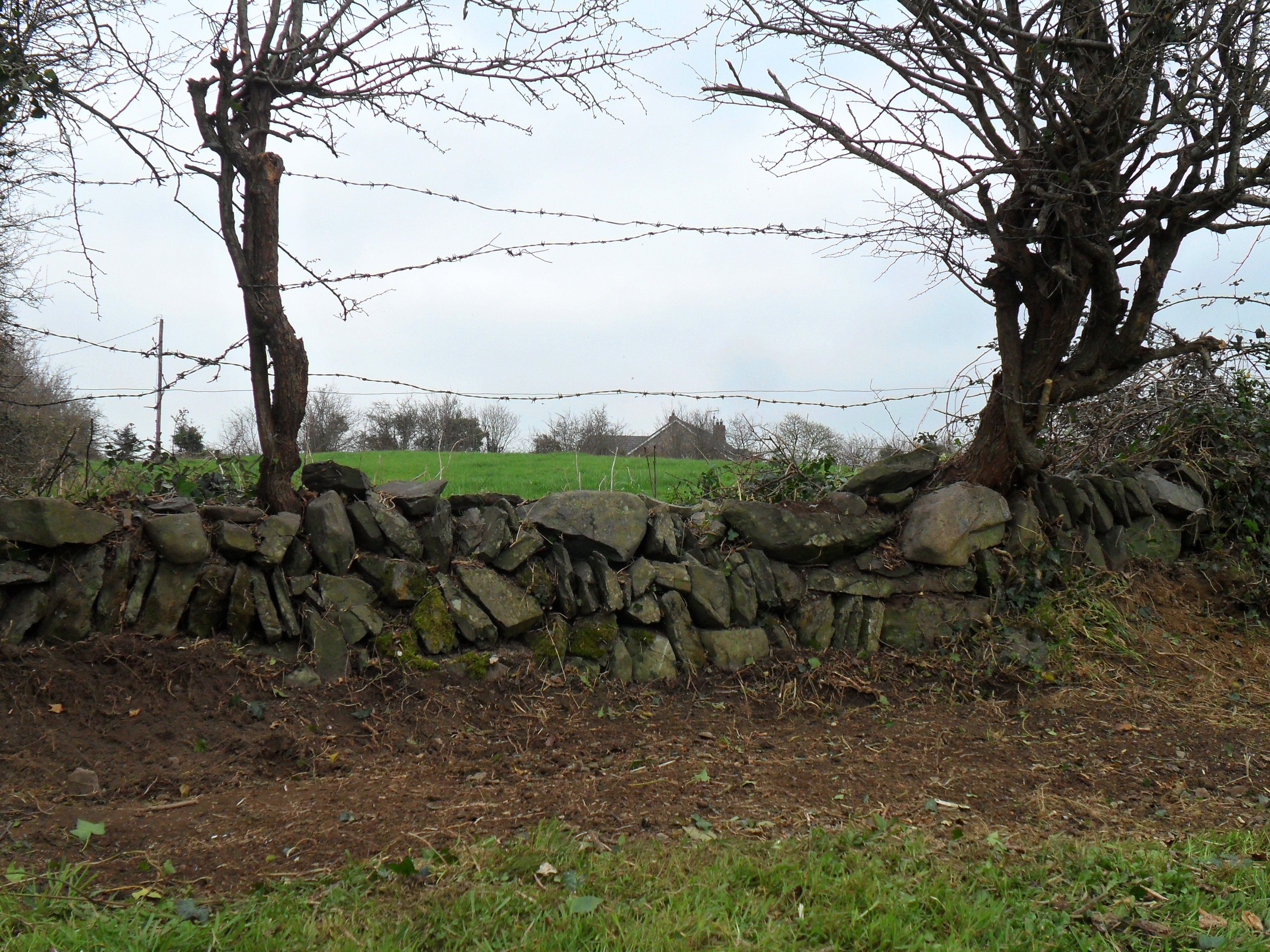
I love rock walls.   It was great to discover that the house we bought had a small rock wall along one property line.  My neighbor James, that wonderful guy who gave me fantastic manure,  told me it is called a ditch wall.  Not a very nice name, really.  To be honest, it didn’t look like much either.

The ditch wall is part of our traditional Hawthorn tree hedging, which is very common in Ireland.  The trees are planted all along the wall.  The row of Hawthorn trees are planted close together  which forms a thick barrier that prevents animals from getting through. I’d say the many thorny branches help keep them away, as well.  I live in an area that is still mainly fields. It is not uncommon for us to see cows on the other side of these trees.   The Hawthorn is covered in 5 petaled white flowers from May through June. In Ireland there is a strong connection with these traditional Hawthorns and fairies.   I read that it was once believed that putting a cutting of Hawthorn in your milking parlor  would give you more milk and it would be creamier.  Legend also claims that bad fortune from the fairies would befall anyone who took down or damaged a Hawthorn tree.  There are some very strong beliefs in fairies!

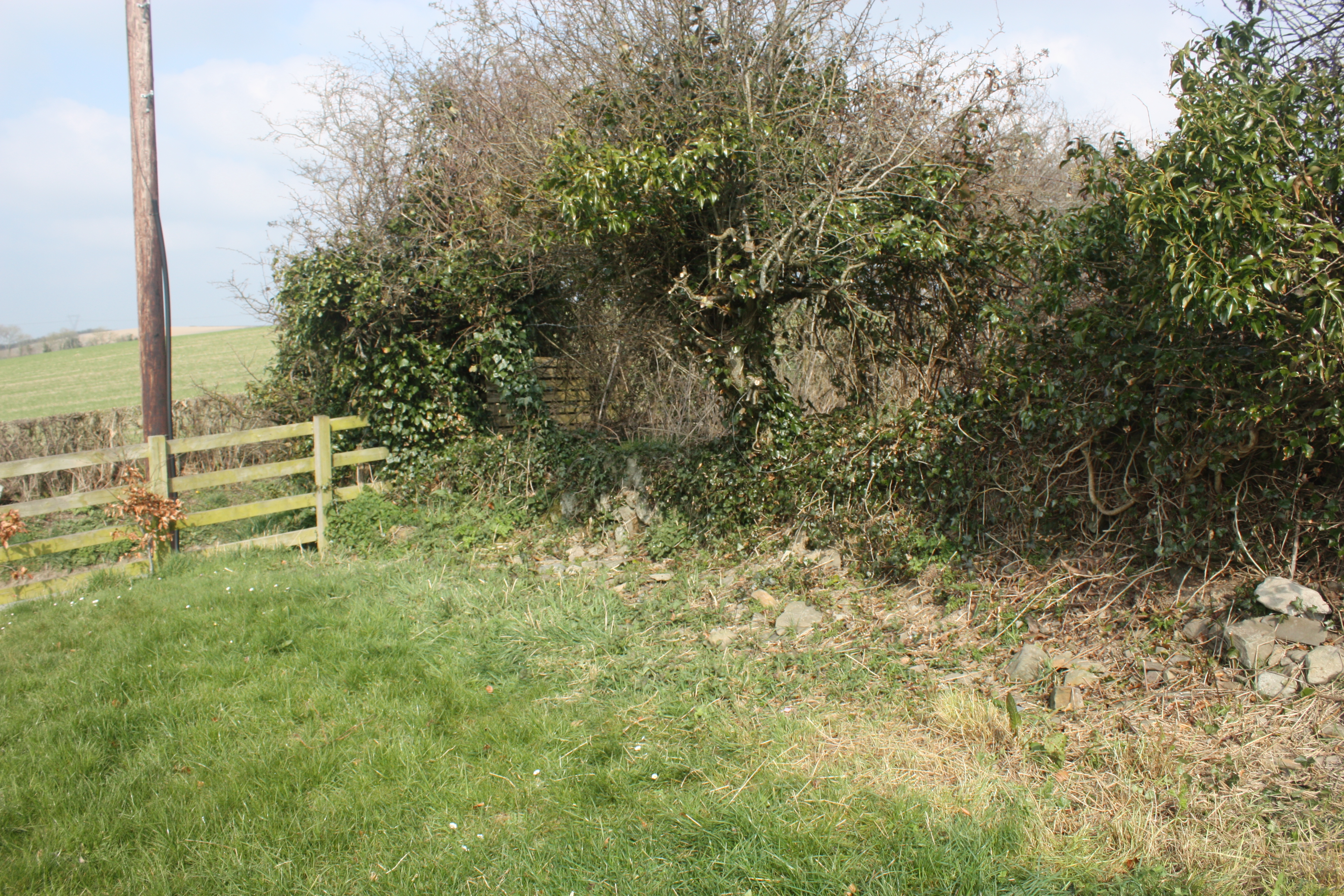
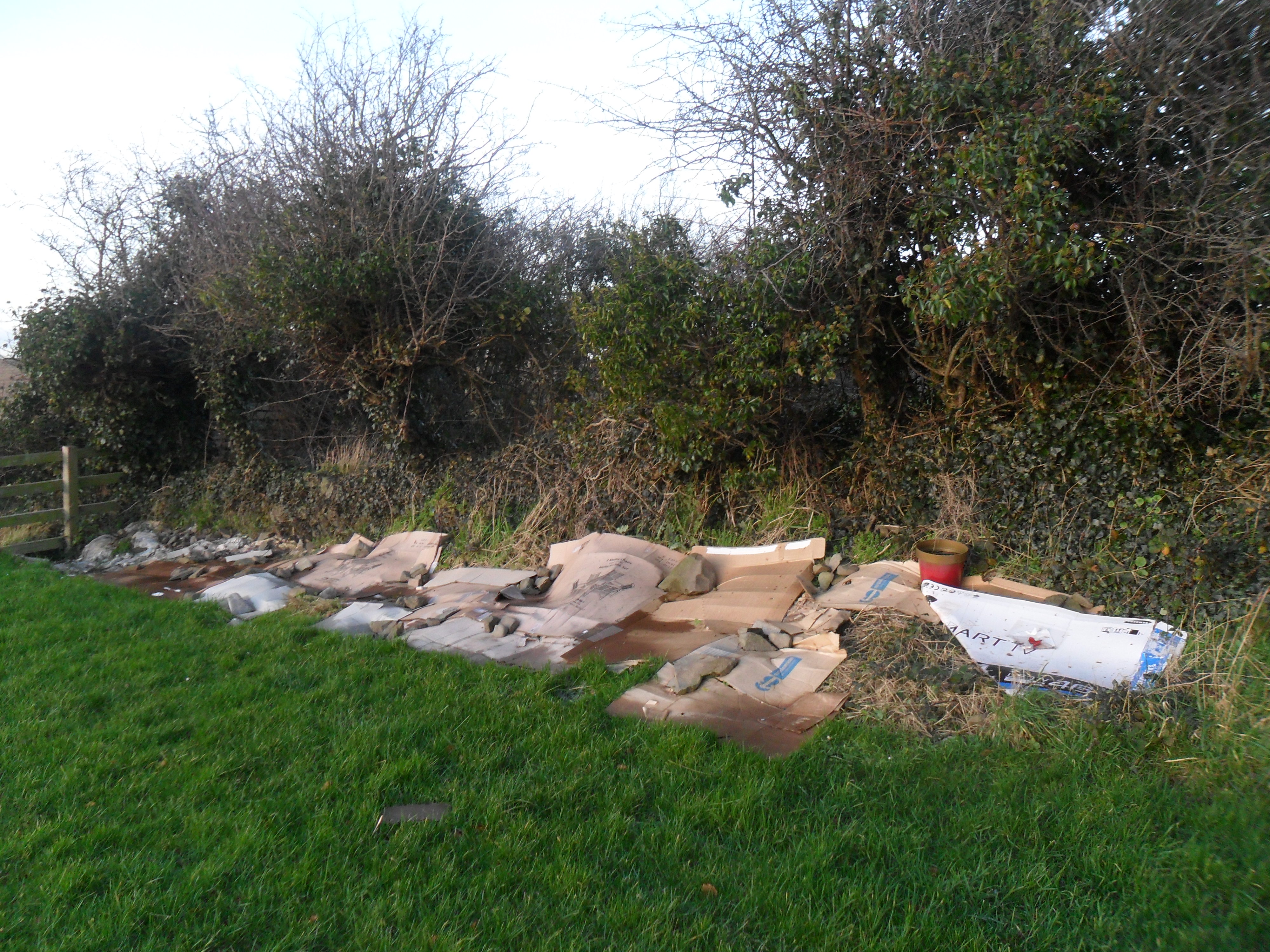
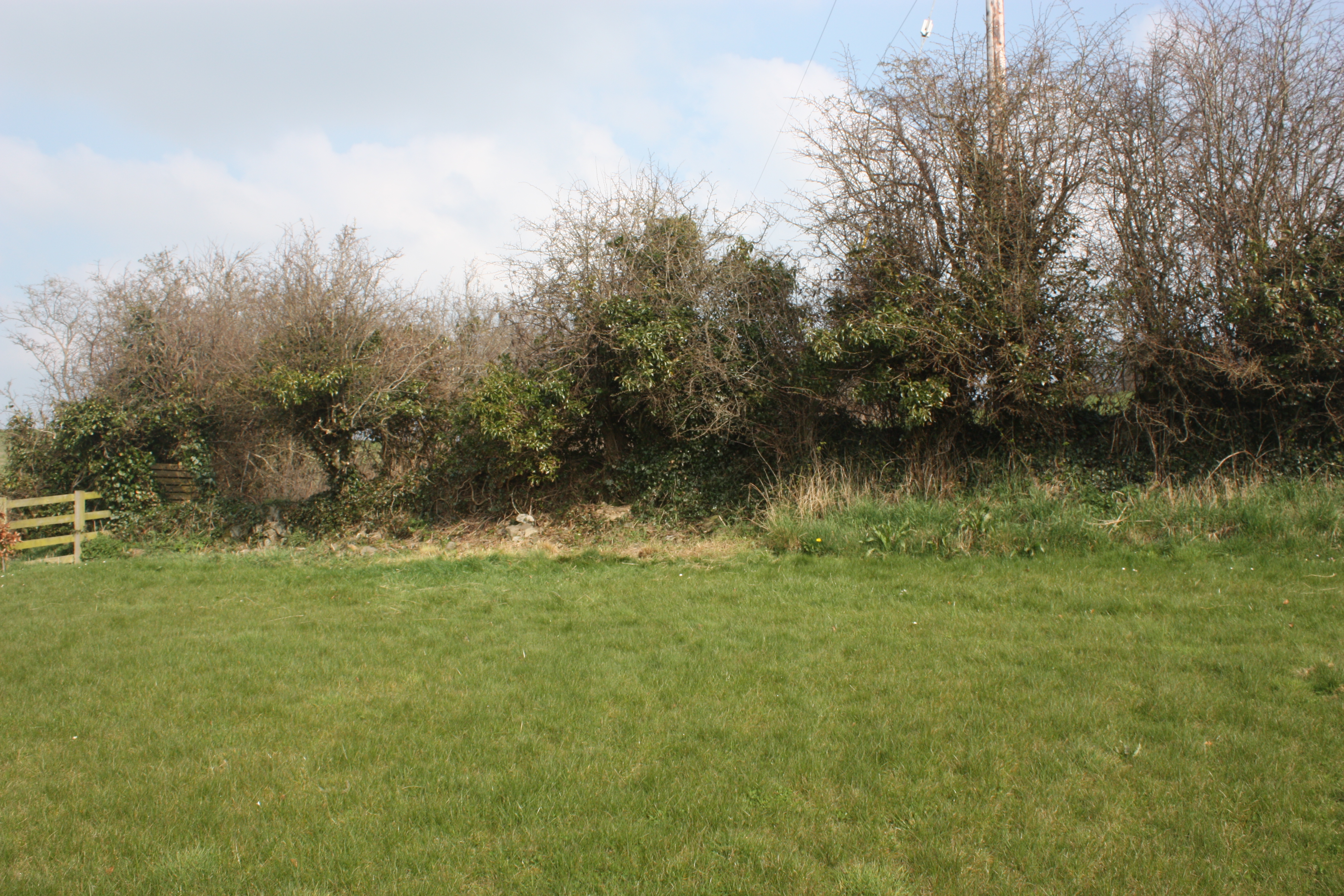
The first year here, I spent a lot of time cutting away brambles.  Piles and piles of brambles.  We could, sort of, make out the wall after I cleared the brambles. Our row of Hawthorns, and the ditch wall, are completely covered in ivy and whatever brambles that weren’t cut down last year.  This year, I’ve taken on the challenge of attacking the ivy.  This is quite an undertaking! Ivy can take on a life of it’s own and completely attack trees and the surrounding area.  I’m taking it one step at a time.  I have the eye on the prize: I want to grow wild flowers along the stone wall; the small, stone, ditch wall, that I think is just beautiful!

Here are some before and after pictures so far (actually, the order of photos is more like after and then before!).

Happy home-made gardening, one step at a time!

Dana

Here are pictures of what I’ve done so far and what I still have to do!

Creole seasoned salmon, spicey black bean salsa & the company of great friends.

I really enjoy having friends over.  It’s something I don’t do nearly enough (how do I fit that in with my husband’s and the kids’ busy schedules???).  But when I do manage to make it happen, it is such a wonderful feeling!  I love connecting with my friends.

I wanted to make something special for our  friends Catherine & Paul.  It’s funny how we met them, actually.  Nearly 4 years ago, they bought the house we wanted to buy!  We are so glad they did though, because we would not have met them otherwise.  Thankfully, we ended up finding a house much closer to my husband’s work, too.  As the saying goes “it all works out”!

I started simple with an appetizer of brie wrapped in puff pastry.  This had apricot jam in the pastry which gave it an extra (lovely) flavor.  I turned to my favorite food blog for this recipe: the gourmand mom.  http://thegourmandmom.com/2010/08/06/cheese-please/    I’ve tried quite a few of her recipes and they are all delicious!

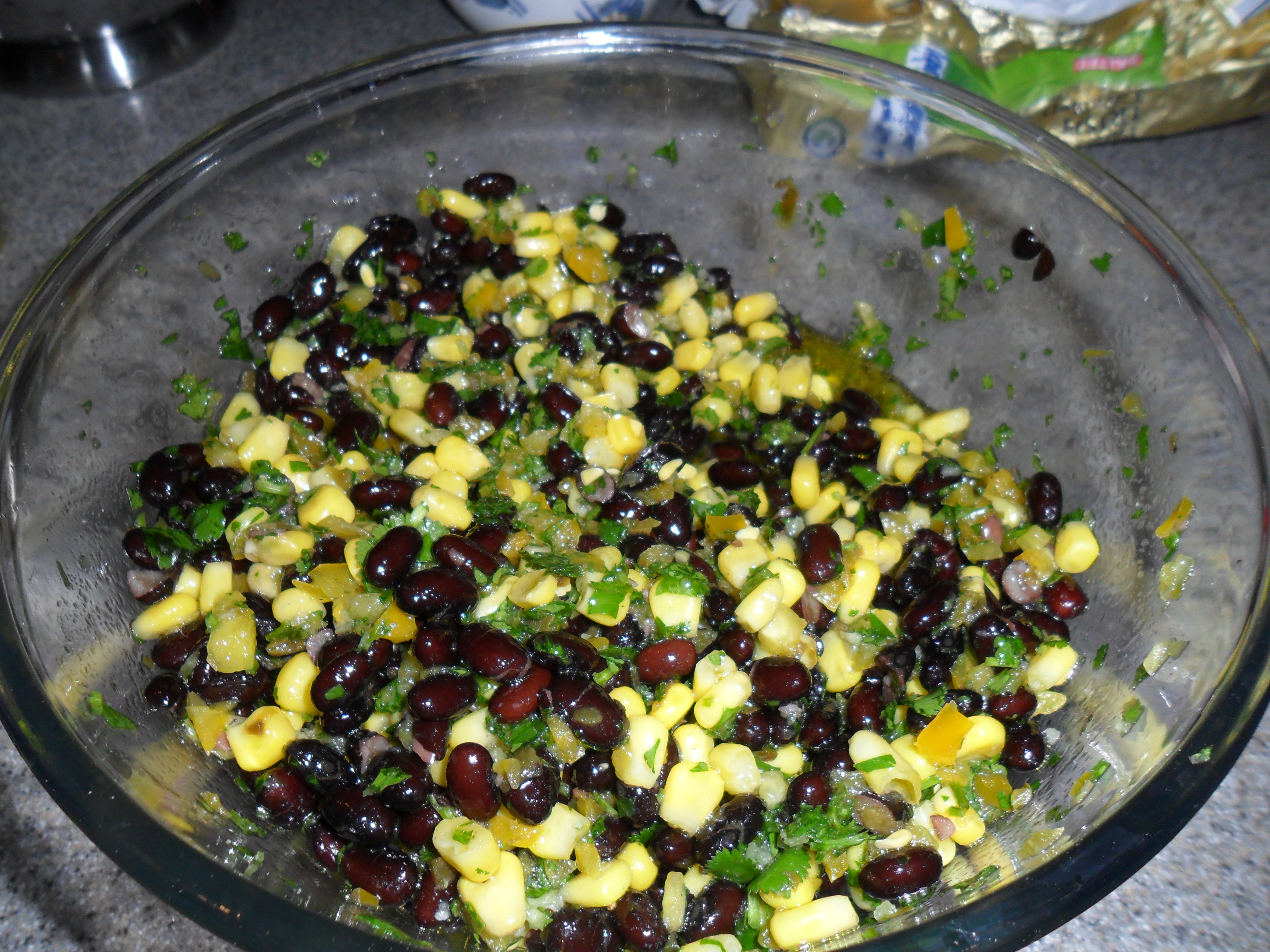
The salsa & salmon recipes are from Emeril Lagasse and were perfect for something a little different, yet simple to prepare (you should note a theme here!). They had enough kick to liven dinner up, but not too much, which is always my fear when using hot spices.

The salsa was my favorite!  The fresh lime juice, fresh cilantro (called coriander in Ireland), and the jalapeno just made the taste perfect for me.

These two recipes I found on the foodnetwork.com site.  They were super easy and super delicious.  I hope you get the chance to enjoy some special time with friends!

Enjoy,

Dana

Ingredients

  • 4 cups cooked black beans, drained and rinsed
  • 2 cups cooked corn kernels, cut from the cob
  • 1 red  or yellow bell pepper, finely chopped
  • 2 large cloves garlic, minced or 1 teaspoon minced garlic
  • 2 jalapeno peppers, seeded and finely minced
  • 1/2 bunch scallions, minced
  • 1/4 cup chopped cilantro (coriander)
  • 2 limes, juiced
  • 1/2 cup extra-virgin olive oil
  • Salt and freshly ground black pepper, to taste
  • 6 (6 ounce) salmon fillet pieces
  • 1 tablespoon Essence, recipe follows
  • 3 tablespoons canola oil

Directions

In a large bowl combine first 9 ingredients and stir to mix well. Season the black bean relish with salt and pepper, and set aside at least 1/2 hour before serving with salmon. Finish the black bean relish with the chopped cilantro.

Season salmon steaks with salt and pepper and dust with Essence.

Heat 1 large or 2 small skillets over high heat, add oil and sear salmon 2 to 3 minutes on each side for medium rare. Serve with the black bean relish.  (We baked the salmon in the oven – it’s just our preferred way of cooking it.)
Essence (Emeril’s Creole Seasoning):

  • 2 1/2 tablespoons paprika
  • 2 tablespoons salt
  • 2 tablespoons garlic powder
  • 1 tablespoon black pepper
  • 1 tablespoon onion powder
  • 1 tablespoon cayenne pepper
  • 1 tablespoon dried leaf oregano
  • 1 tablespoon dried thyme

Combine all ingredients thoroughly and store in an airtight jar or container.

Yield: about 2/3 cup

Recipe from New New Orleans Cooking, by Emeril Lagasse and Jessie Tirsch. Published by William and Morrow, 1993.

Simple pork & ginger recipe.

One thing I love about Ireland is shopping at the local butcher.  There are two that I always shop at; one in our village (Gus Kelly), and one in town (Tony Kieran in Dundalk).  I’m a frugal kinda gal, but I just like having the butcher there for us. They are great butchers, and I like their team.  It’s a personal thing.

On Thursdays we have morning swimming from 6:30 A.M. to 8:00 A.M, which means a 5:00 A.M. start to our day.  By dinner time, I want something quick and easy.  Tonight’s dinner was just that.

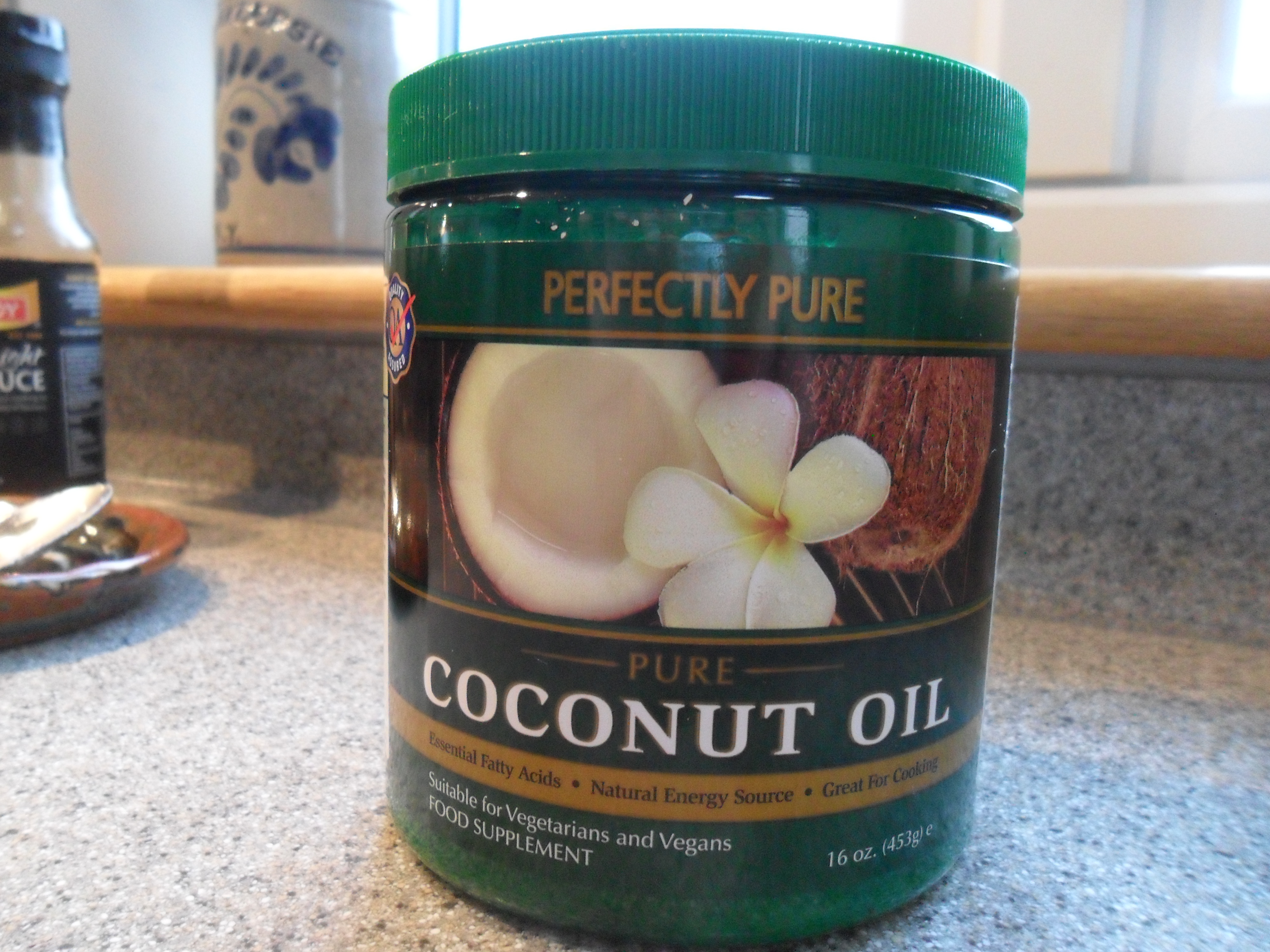
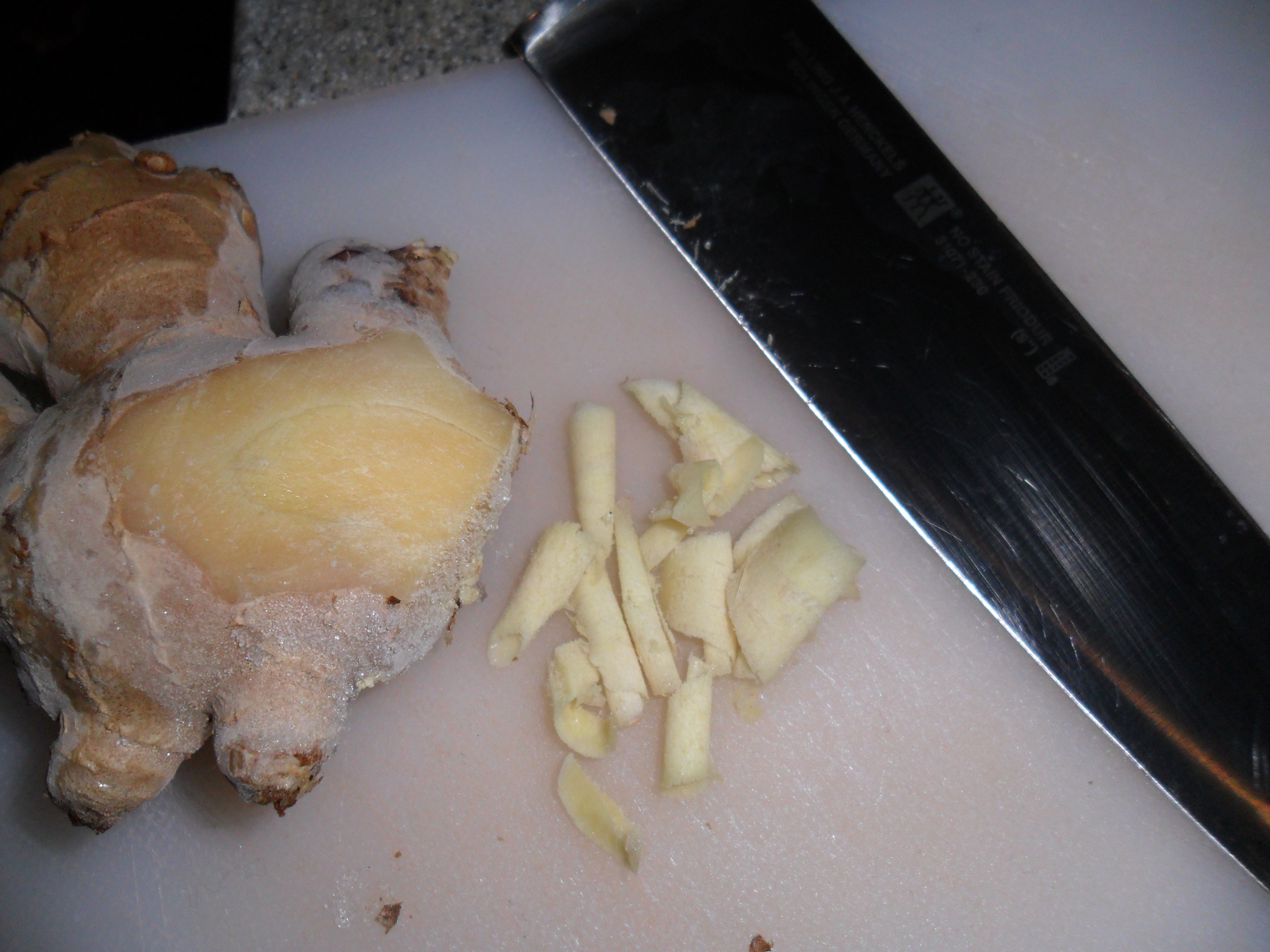
I used coconut oil with soy sauce to brown the cubed  pork.  Then I shaved some ginger, that I had in the freezer, and added it with garlic to the pork.


In no time I had mashed potatoes, broccoli & pork for dinner.  Glad  to say that everyone was happy!

Happy home-made dinner to you, too!

Bright and cheerful daffodils & other blessings.

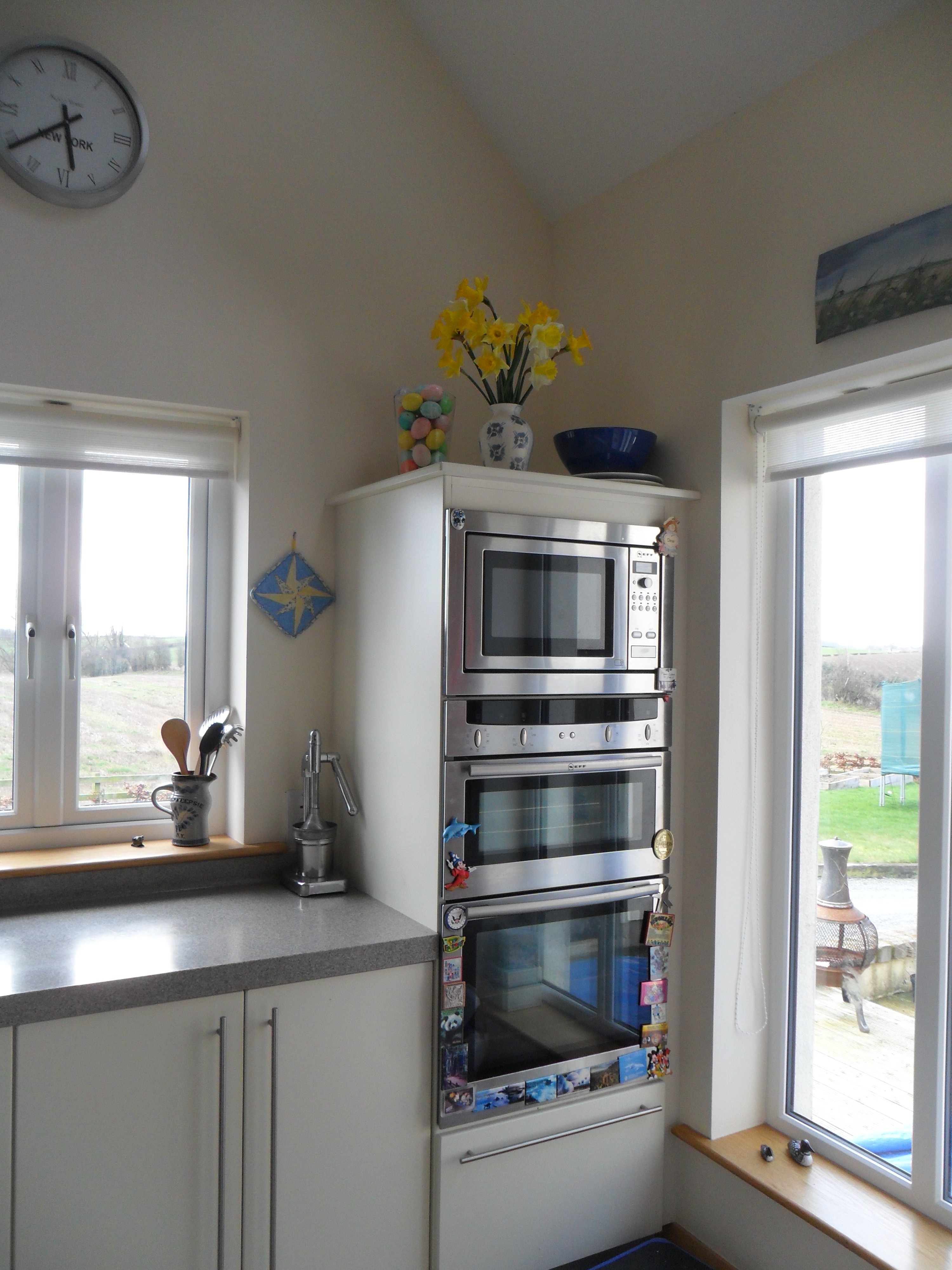
I took this picture to share my daffodils.  They make me smile.  They are special to me because they are “Pat’s” daffodils.  Pat is 94 years old, and a “regular” at our village’s Monday Morning Senior Tea time.  He is a real gentleman and a sweetheart.  I go to help out;  wash-up after the tea, sit and talk with the folks, and sometimes I call out the bingo numbers.  I love being with the group!  Pat always brings in daffodils to give to the ladies.  But Pat has not been well lately.  These flowers came from his garden, per his request, but he didn’t bring them in.  So I look at them and think of sweet Pat.

Then I look around my kitchen and see some other things that make me smile. The beautiful quilted pot-holder was made by my then 80 year old neighbor.  Betty is her name, and at 84 she keeps in touch with me, in between her gardening and quilting,  via facebook!

The pottery plate hanging above the window to the right is Highland Stoneware.  I loved the scene so much I decided to hang it instead of use it as a plate. I bought that on a get-a-way weekend to Scotland  with my husband.  It just so happened that 80,000  people were with us on that romantic rugby weekend!  (It was brilliant and Ireland won, so all happy memories go along with that plate).

This last picture was take this morning.  It makes me feel so peaceful.  I love it.  There was a lot of rain today, but in between we had gorgeous sun.  I hope you have some kind of a rainbow in your day today!

Pin It

Using Nettles for liquid feed (fertilizer).

I have been doing quite a bit of weeding the past week. I have to say that I am very happy that I’ve managed to avoid the many nettles along my fence-line where I’ve been working.  I’m happy because they call it a “sting” when you touch them – but it pretty much hurts the entire day afterwards! I was on high alert this year to avoid being stung, after being tortured last year.  Now that I’ve avoided them, and weeded all around them, it’s time to go and pull those nettles out, carefully, to use them.

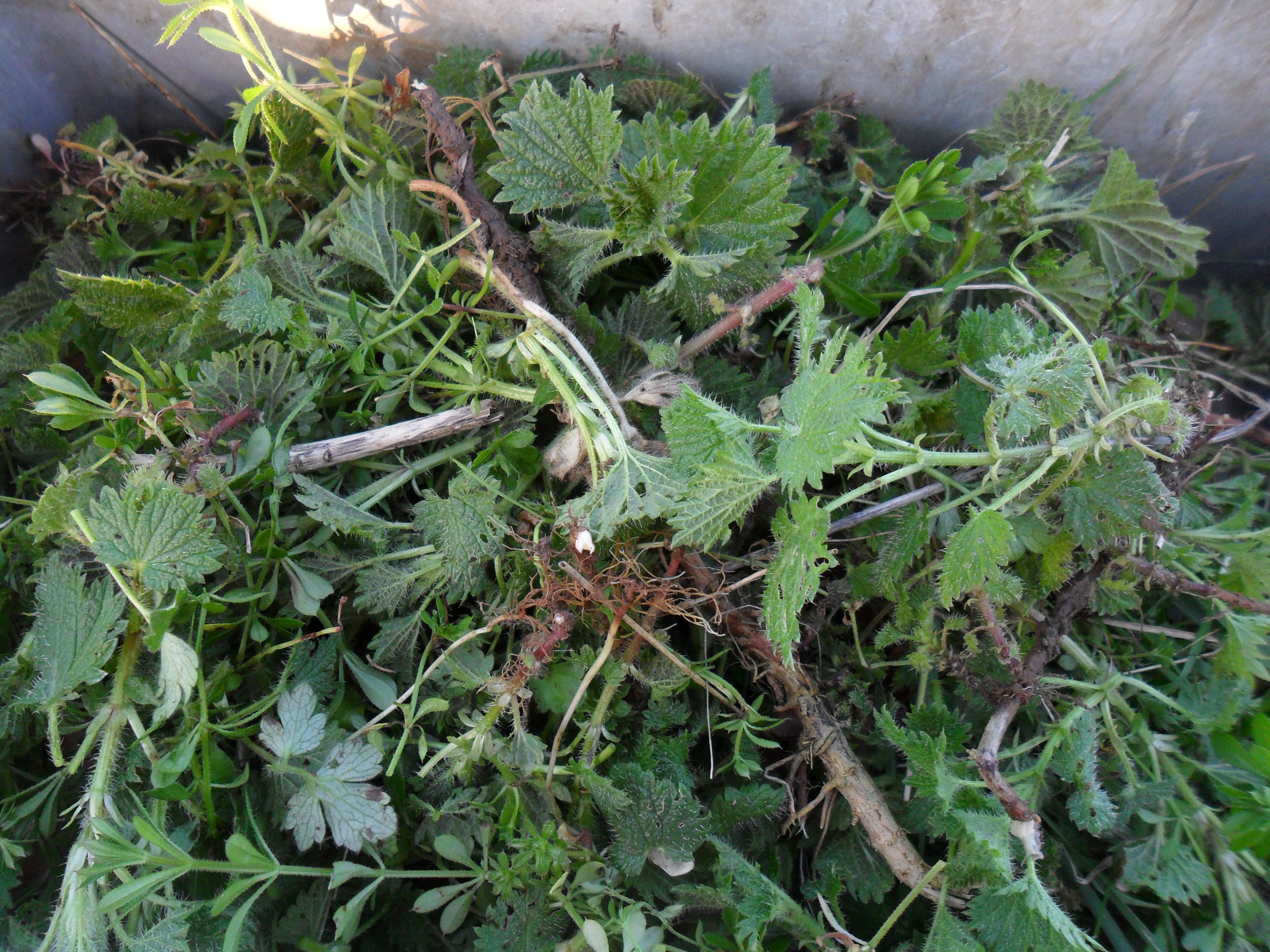
Nettles are a pain to touch, but they are also wonderful to have as an ingredient for making homemade liquid feed for your garden.  Frugal gardening at it’s best!  Free liquid fertilizer! It’s easy enough to do, too.  Fill a barrel/container half way with nettles, cover with water, and leave for a couple of weeks to ferment.  Dilute to “weak tea consistency”  (maybe they use that description because they drink so much tea in Ireland?).  This should be about one part nettle to ten parts water.  Spray on leaves of plants to use as a natural pesticide.  You should spray on dull, non-sunny days so as not to scorch plants.  Use as a plant feed every couple of weeks.

I’m going to reference Pamela Whitaker from Groundswell again.  I spoke of her in a previous post. She gives wonderful Organic Gardening workshops in Carlingford, County Louth,  to kids as well as adults and is overflowing with useful information.  From her workshop I learned that Nettles supply nitrogen, magnesium, sulphur and iron.  Sounds good!

I did learn a few things through trying this last year.  Be aware that this liquid feed gets stinky! Make sure you have it off to the side.  I had to move mine mid-summer last year to keep the smell at bay!  I’ve read of putting the nettles in a sack of some sort to avoid the mess it makes in the water, but this doesn’t bother me and I want to keep it as simple as possible.

I enjoy my homemade garden. I hope you do, too!

Dana

Building raised beds for vegetables.

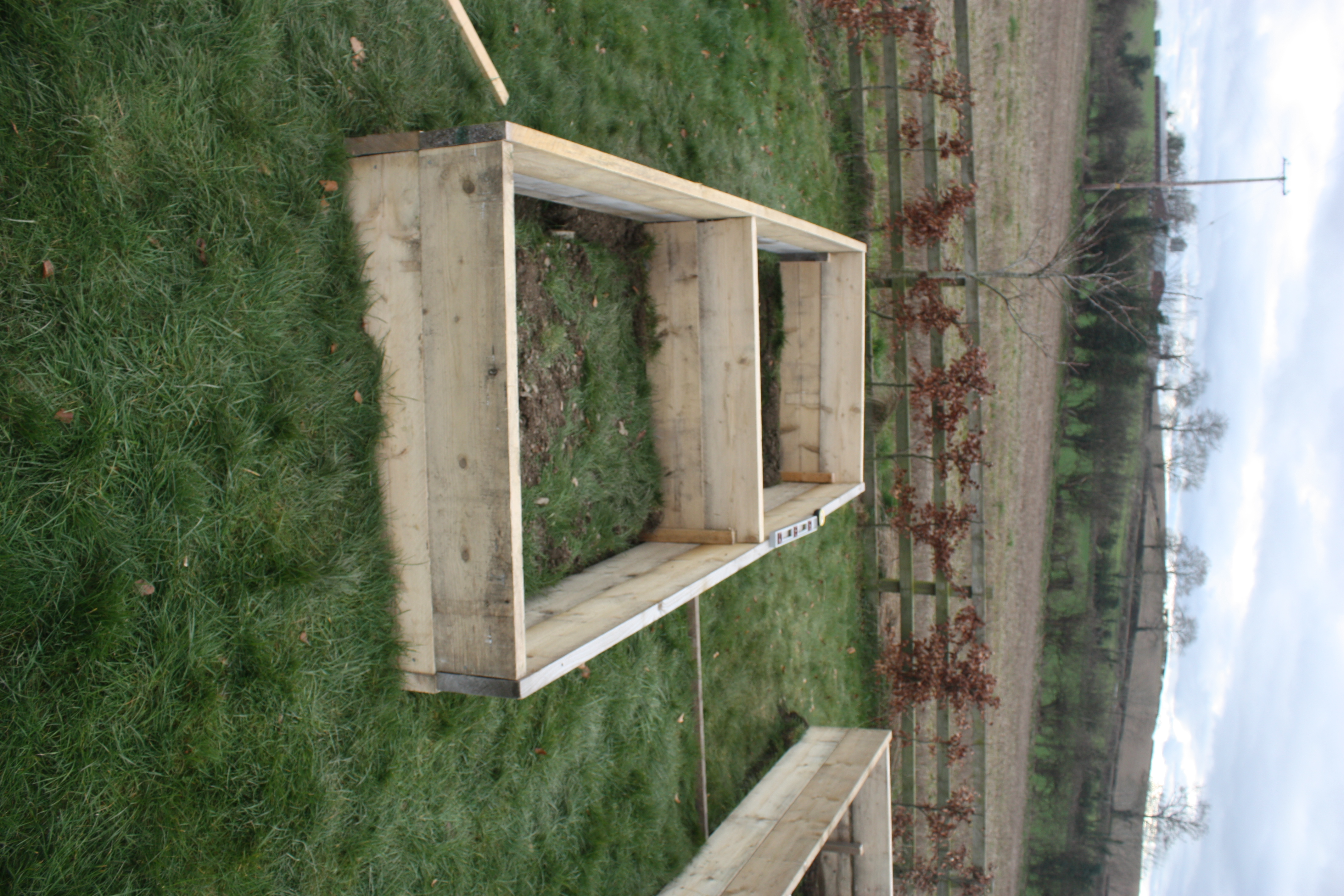
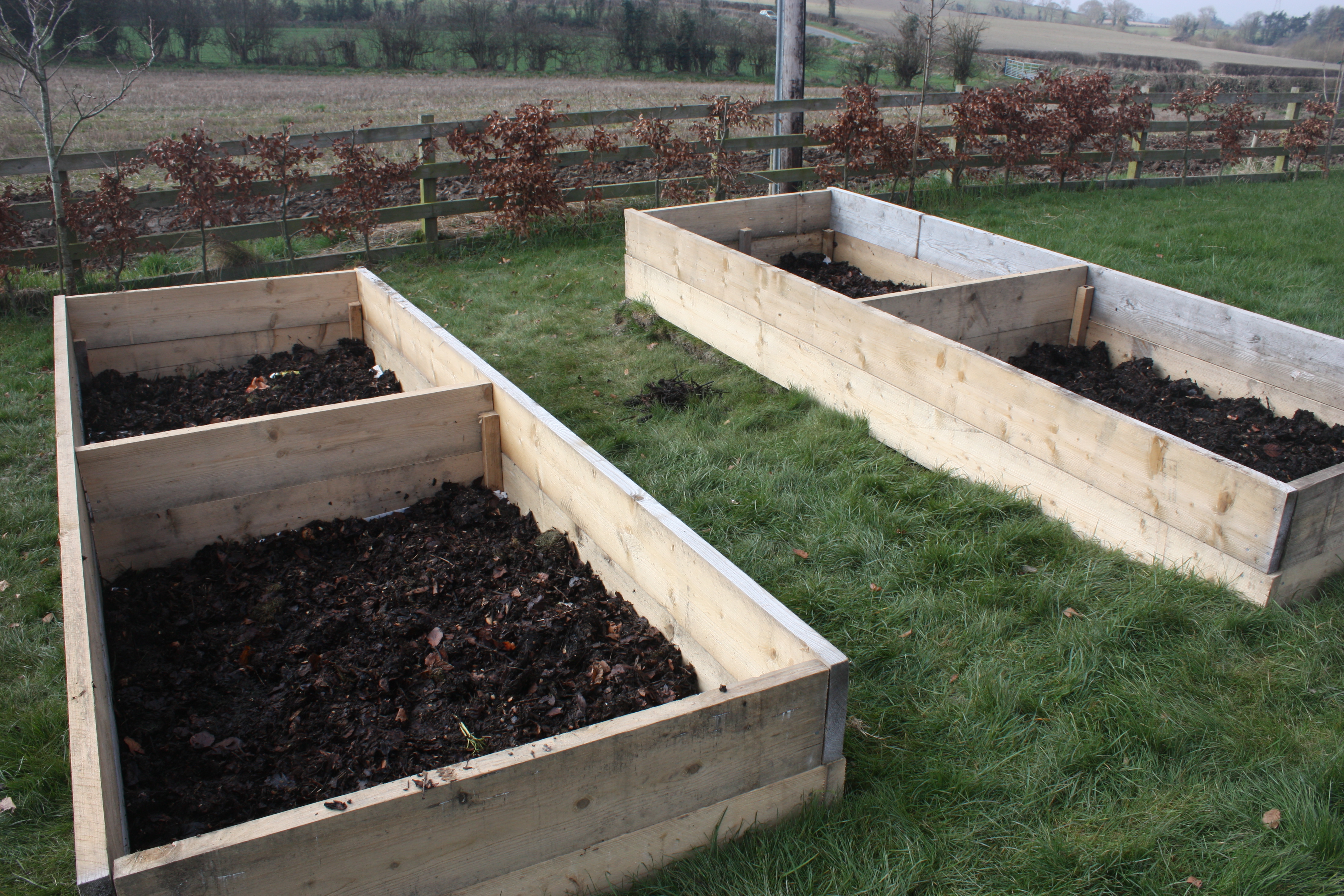
Last March is when we (my husband and my son) built our raised beds for vegetables.  There was a helpful program on t.v. at the time which went through six weeks of getting a garden started. It was a nice motivator to keep us on schedule for having the beds ready for late spring planting.  I had taken a few organic gardening courses,  watched the gardening program, read a few blogs, bought and read some books, done everything bar get my hands dirty.  So it was finally time to just dig in and give it our best shot!

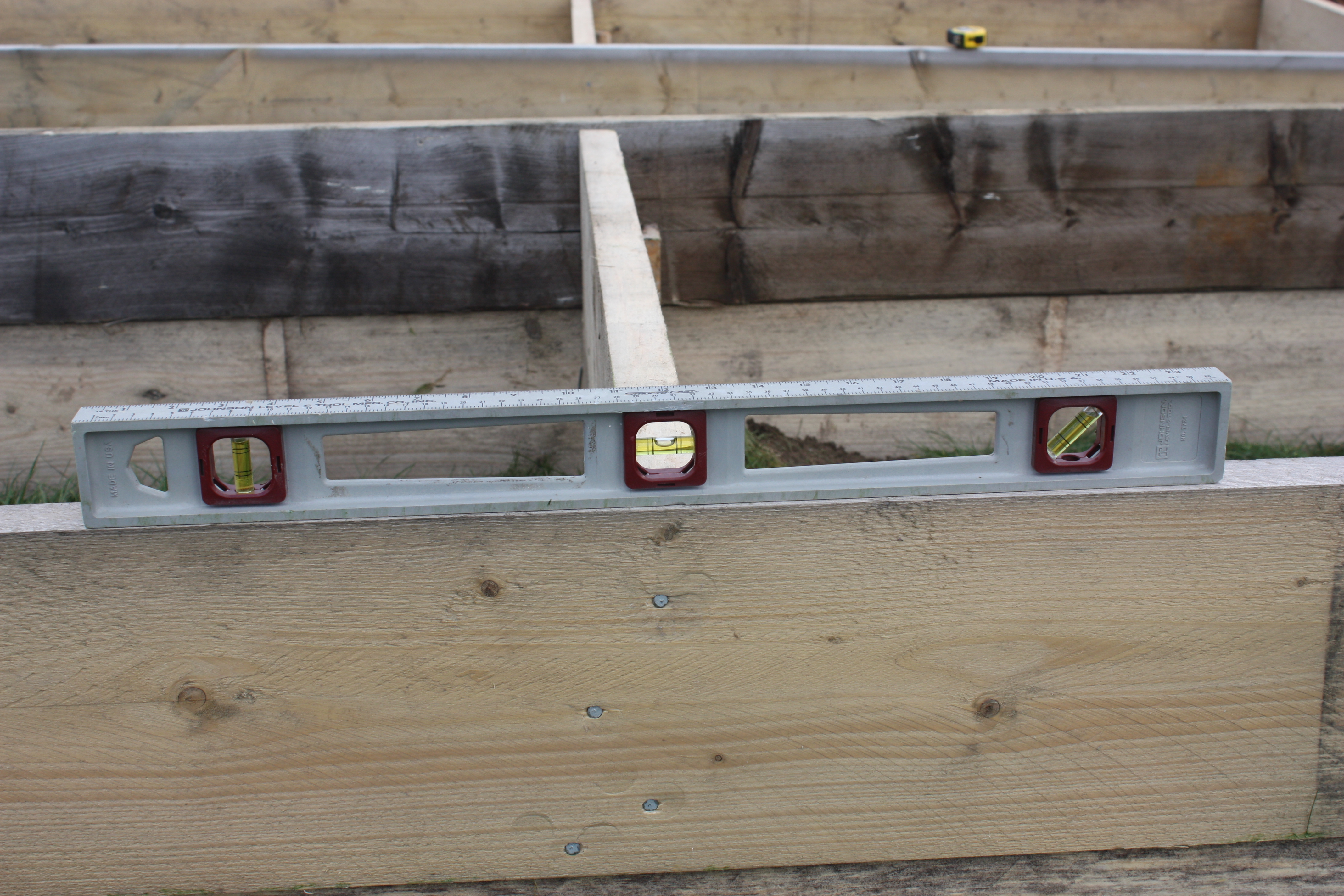
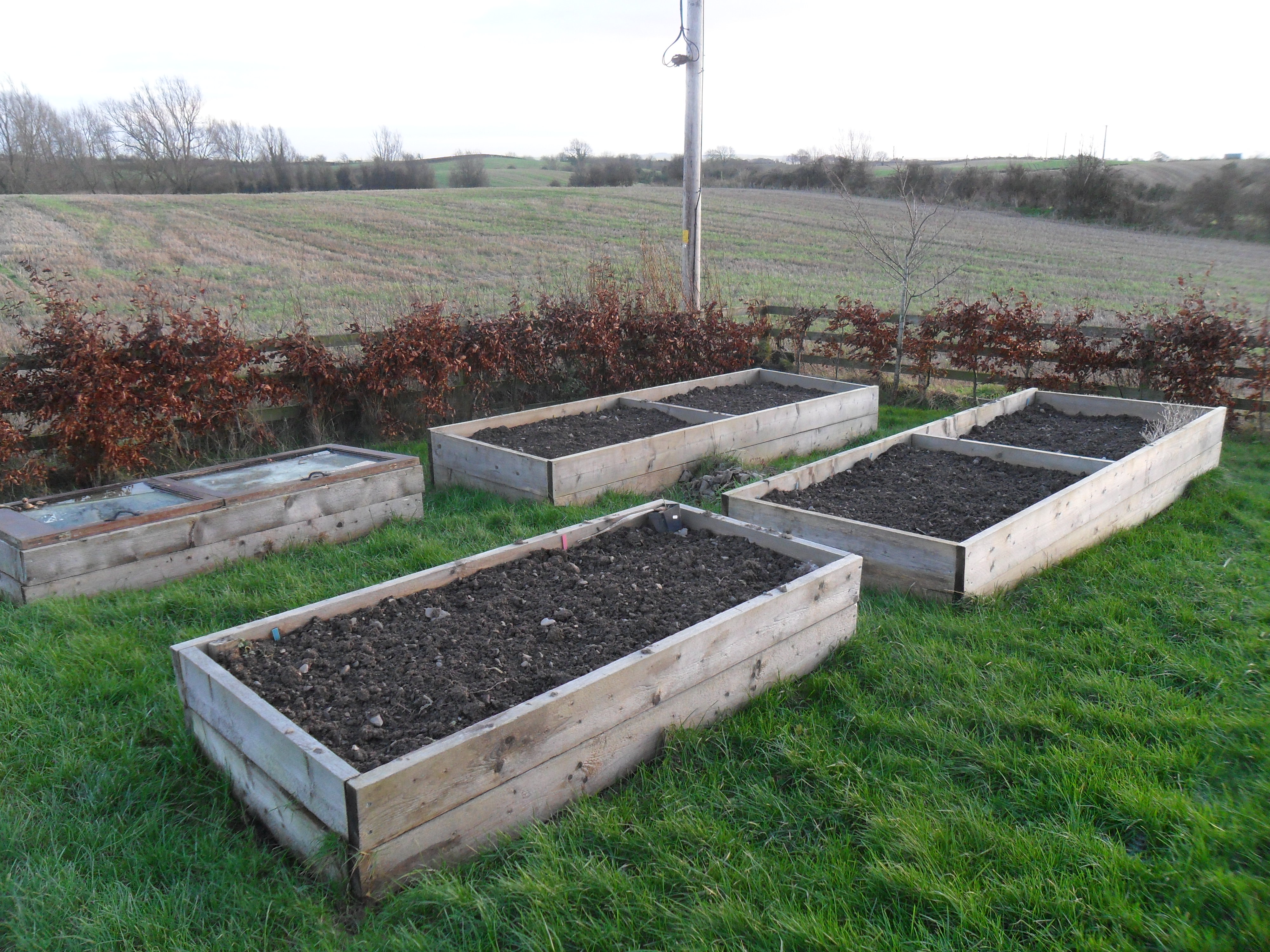
To work comfortably in the garden I didn’t want to have the beds wider than 4 feet. The height worked out to 18 inches with stacking the wood by two.  We decided on 12 feet long and divided them in half to give us 4 plots of 6 feet by 4 feet.  We bought rough untreated wood, despite the lumber yard worker’s insistence that I needed to have treated wood.  I’d rather skip the chemicals seeping into my vegetables!  There were some stakes bought as well at the lumber yard.  It cost about 140 euro for the wood, while our topsoil cost 50 euro.   Now it was time to build the beds!

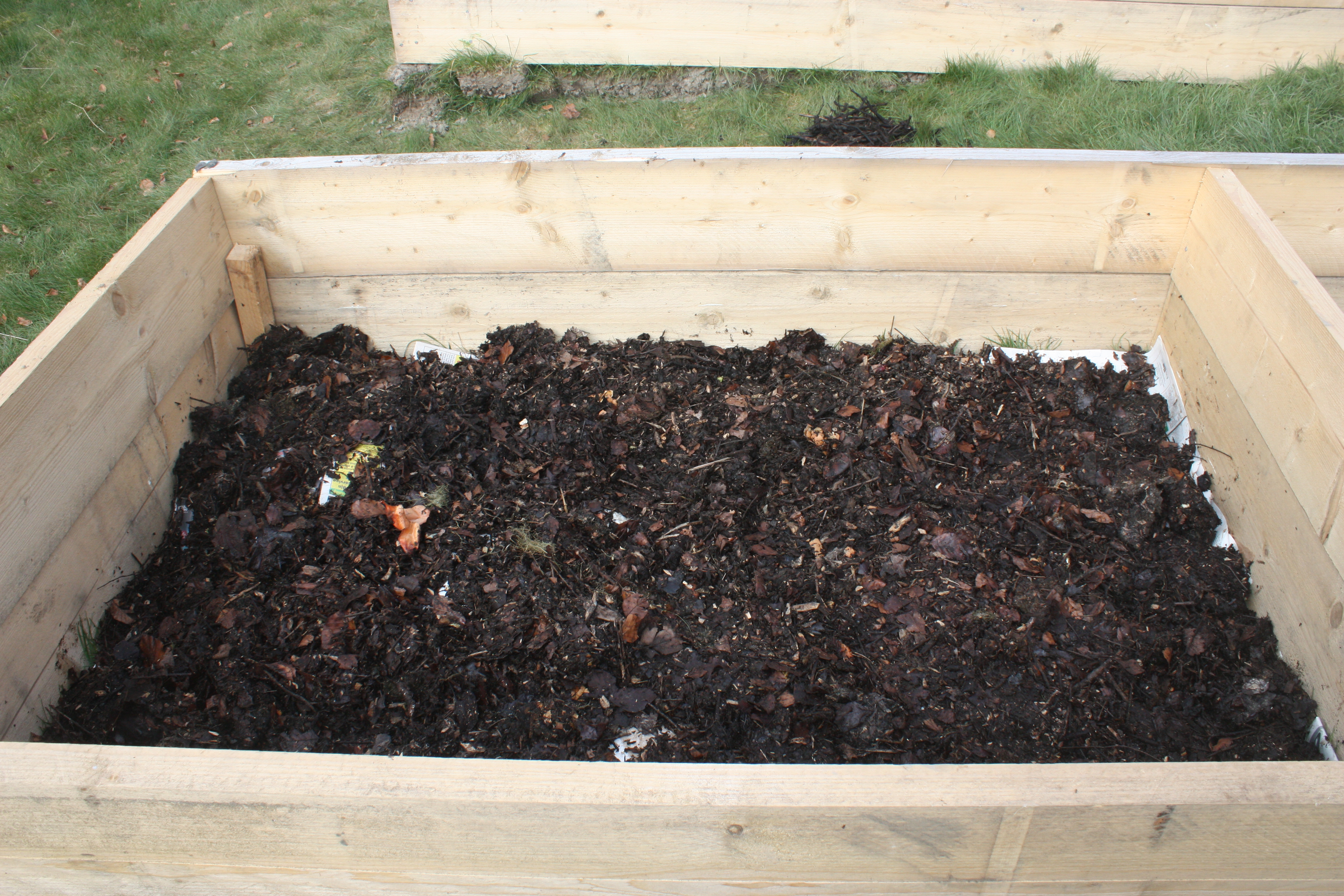
After they were built, we laid out a bunch of newspapers and cardboard  on the ground to kill the grass and keep it down.  On top of cardboard we layered compost and then put on the topsoil. We finished it off with a final layer of compost.   Voila! Raised beds ready for planting!

Since last year we added a cold frame for starting plants. We used an old door with glass for the lid.  We also added a smaller raised bed (for all of those extra seeds I bought!).

Quinoa in the Morning: Pack a Punch for Breakfast.

Quinoa, pronounced Keen-wah, is good for you.  Plain and simple.  I only discovered it a few years ago,  and  I was intrigued.  I want to eat healthy foods, so I  checked on-line and found a great site for lots of health information about quinoa.  whfoods.com is the site.  They have everything you want to know and more.  For me, I found it interesting to learn that quinoa is commonly considered a grain, but is actually a relative of leafy green vegetables like spinach and Swiss chard.  It’s high in protein, and the protein it supplies is complete protein.  This means  that it includes all nine essential amino acids.  That was enough for me, I wanted to try this super food.

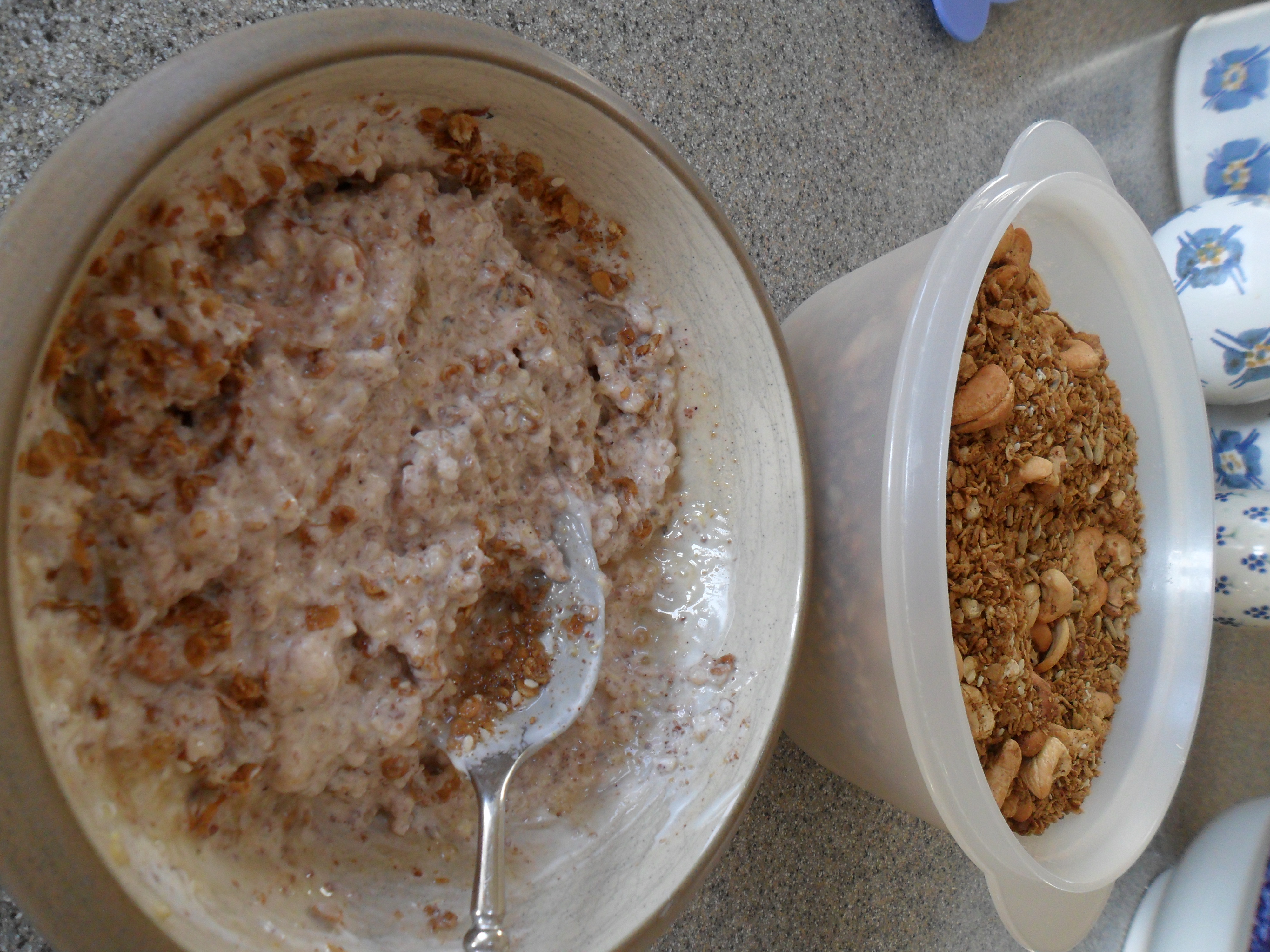
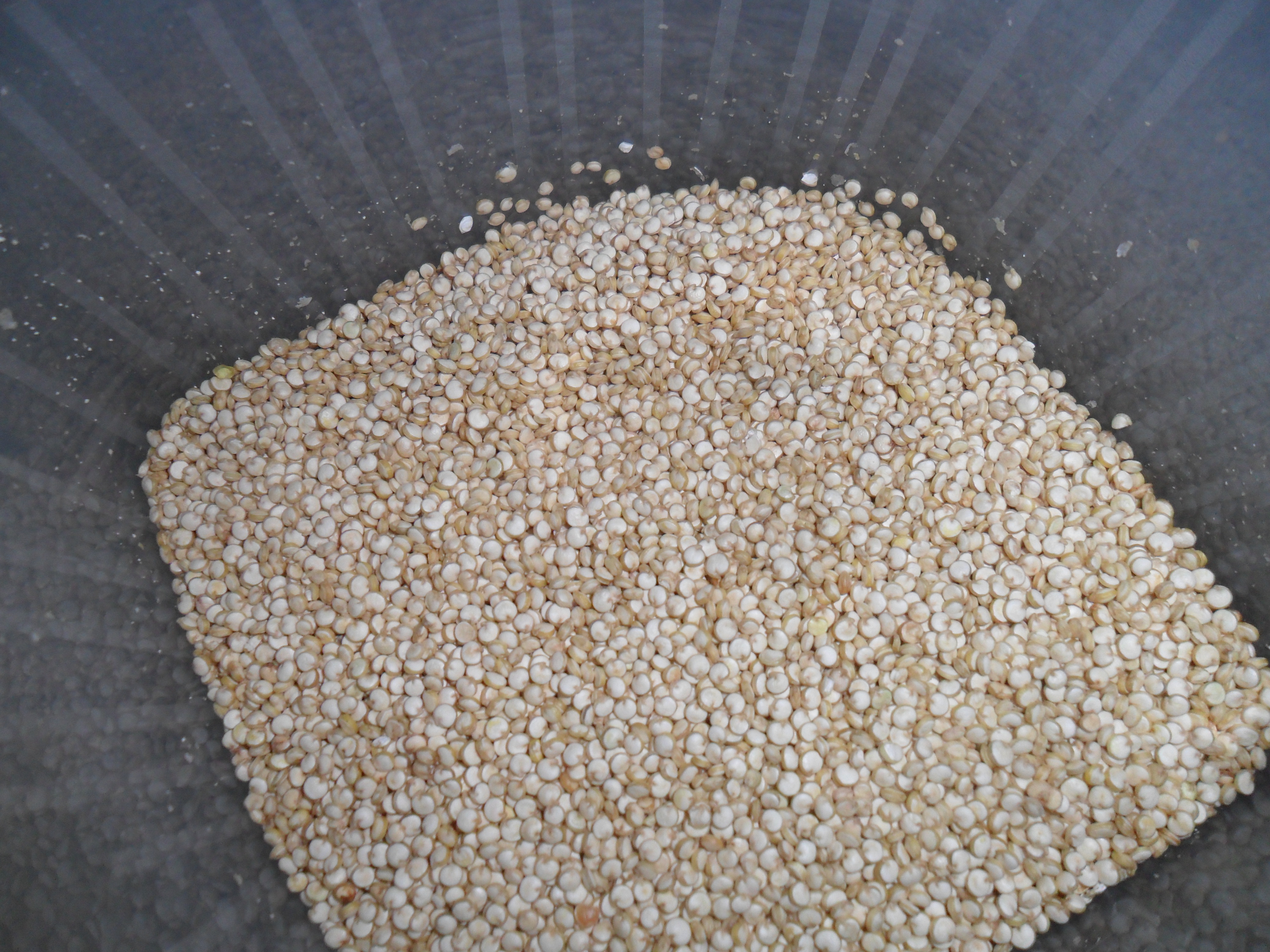
Breakfast is where I’ve worked it into my routine.  I eat a seriously substantial breakfast!  I tend to like things sweet, so I use maple syrup. I like it for it’s taste, and the fact that  it is a natural sweetener.  Quinoa is easy to make. Boil one cup of dry quinoa with two cups of water for about 10 minutes (until the water is absorbed).  Unless your quinoa says otherwise, you have to rinse it.  I find it easier to cook it first and then rinse.  I cook it once a week (about one cup), and then take what I need everyday.  For my breakfast  I use 3 heaping tablespoons of quinoa, (I heat it in the microwave), and add about 1/2 cup of Glenisk Greek Style yogurt, two teaspoons of Linwoods Milled flaxseed wtih cocoa & berries, a tablespoon of pure maple syrup, and a few tablespoons of my homemade maple granola (see my previous post on making granola https://mominthegarden.wordpress.com/2012/02/11/mom-in-the-kitchen-making-granola/ ). Since I’m going for that power punch in the morning, it’s nice to know that milled flaxseed is a good source of Omega-3 essential fatty acids.  I like breakfast!  Have fun with this!

Dana’s Quinoa Pack a Punch for Breakfast recipe:

  • 3 tablespoons cooked & rinsed quinoa
  • 1/2 cup Greek Style yogurt
  • 2 teaspoons milled flaxseed (any variety)
  • 1 tablespoon pure maple syrup
  • 1/4 cup granola

Getting seaweed for the garden, and enjoying the views.

I love that we are just a 15 minute drive to the Irish sea.  It’s great to go and have the kids run on the beach. I tend to look for pretty rocks, while they usually find some shells to bring home.  They love writing in the sand, too.  It’s just fun.  It’s always a treat when we make the time to do this.  Now that I’m obsessed with my garden, there is a new “fun” thing to do at the beach: collect seaweed!

Over the past couple of  years, I’ve attended a few Organic Gardening courses through Groundswell, in Carlingford, County Louth. Pamela Whitaker ran the courses.  She is just a wonderful woman who is overflowing with information on Organic Gardening!  She first introduced me to using seaweed in the garden.  It makes sense to use what you have around you (as long as it’s a clean beach!).  Seaweed can be used as a mulch, or can be added to your compost.  It is a plant growth stimulant, and contains a range of trace nutrients such as plant hormones and carbohydrates.  You should only used washed up seaweed that is no longer attached to rocks.  Also, depending on where you live and how much rain you get, it is recommended to rinse the seaweed before using.

I took these pictures yesterday.  I was lucky that the tide was out – way out! I was able to gather up a few bags of seaweed in no time.   I’ll be adding some to my compost pile, and the rest will be used as mulch.

The bottom picture shows some yellow gorse growing in the hill above the sea. It gives great color to sweeping landscapes!   I found this information about gorse:  U. europaeus is a very spiny and bushy shrub with blue-green branchlets and leaves reduced to small scales or thorns. It can grow to more than two metres tall. It is found throughout Ireland, especially in the east on lime-free soils in rough pastures, heaths and rocky places, but not in woodlands.

Hellebores in the garden, and planters of daffodils showing signs of spring.

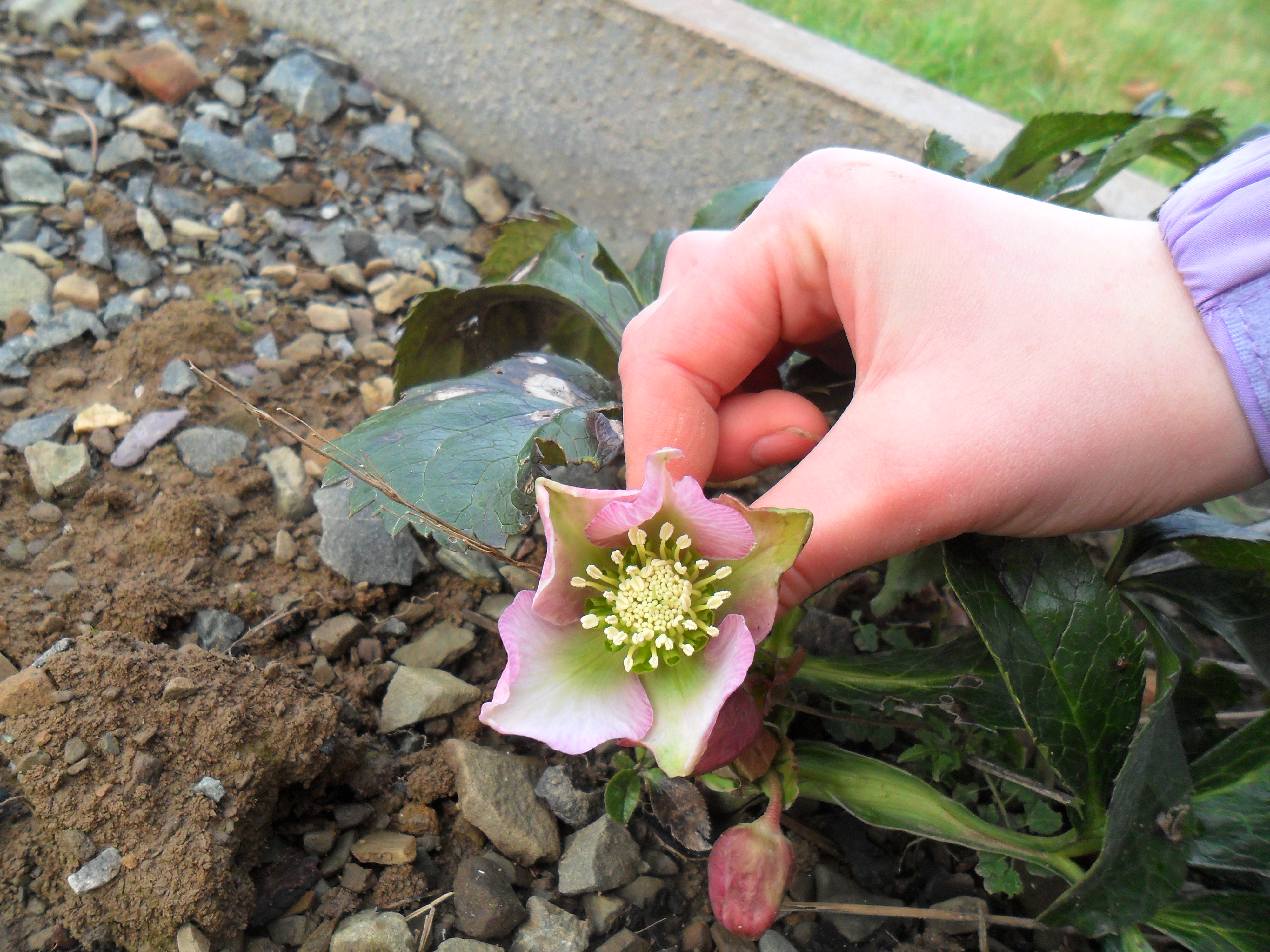
I am  lucky enough to have a very good friend who loves gardening as much as, if not more than me.  I love visiting her and seeing what her garden is doing throughout the year.  Better still, she shared a bunch of plants with me last year.  I think she felt badly for my naked garden!  She gave me the hellebore in the picture above. It bloomed in early February, when everything else was looking very much dead, or at least in sleep/winter/mode.  I’m taking notes from her, to plan my garden so it will have something colorful throughout the entire year; either through flowers, or bushes, or trees.

From my kitchen, I can see these planters of daffodils.  Just a few containers with greens coming up is all it takes to brighten my day!

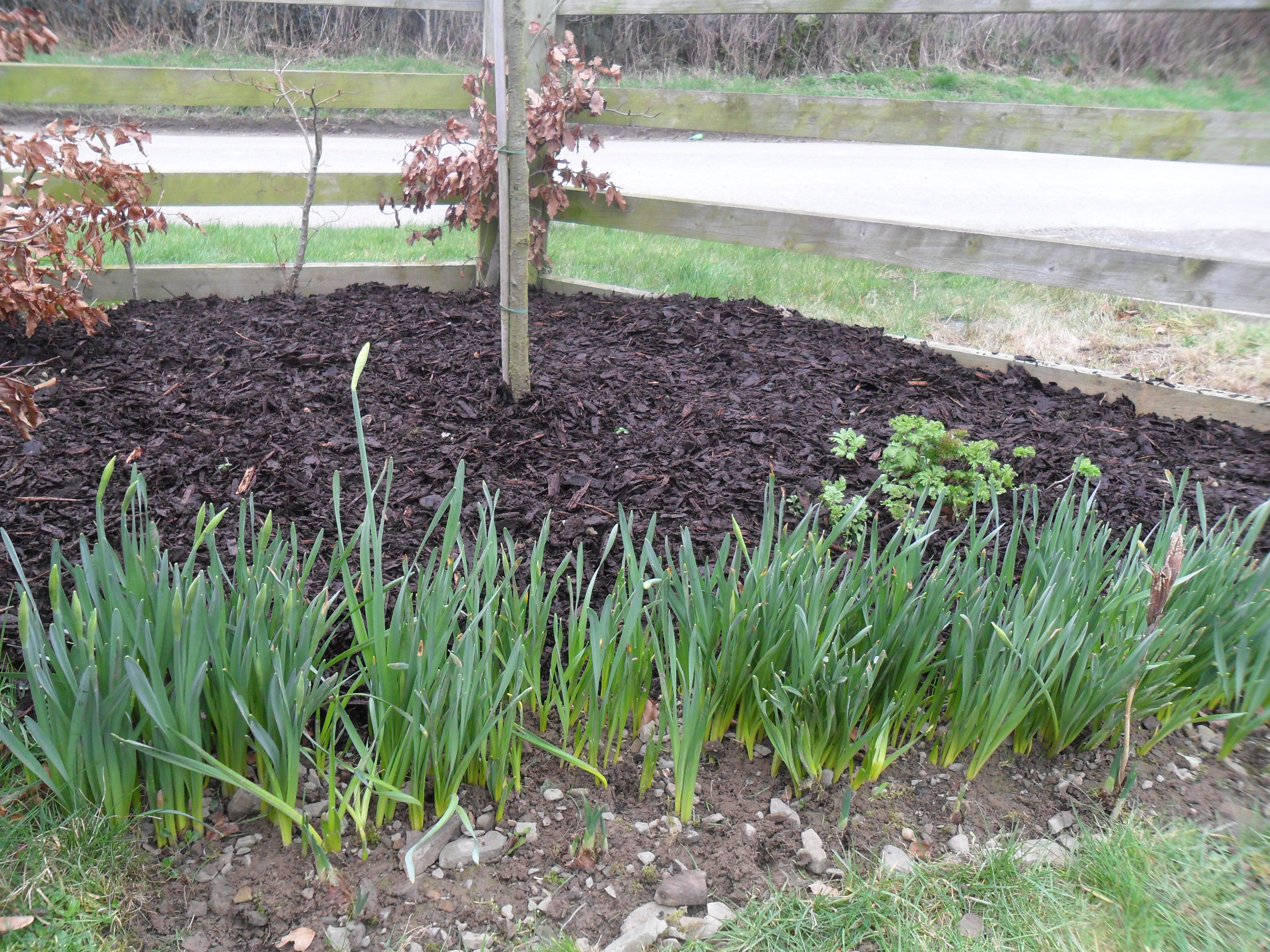
This past weekend I worked on clearing out this little garden (weeds grow so easily, and really make themselves at home just about anywhere!).  We put down some mulch to hopefully keep the weeds in check.  In front I have a row of daffodils almost ready to bloom.  In front of the daffodils I have Dutch Iris, given to me by another garden loving friend!  These will bloom after the daffodils have died.   The daffodil greens have to be left until they are completely and totally dead (that’s right, really really dead!), as this helps with the bulb life in subsequent years.  So it is nice to have something to (hopefully) detract from the dying greens.