Character in the garden with Leycesteria formosa (Himalayan Honeysuckle)

Leycesteria formosa

Leycesteria formosa

Having something interesting to look at in the garden during the winter is something that most gardeners set out to achieve.  One plant that gives character to a garden throughout the summer and winter is the Leycesteria formosa, also known as Himalayan Honeysuckle or pheasant berry.  I hadn’t heard of, or taken notice of this lovely plant before seeing it in my friend Susan’s garden.  It’s funny what happens sometimes when you compliment someone’s garden … they just might share some of it with you!

A young Leycestria formosa plant

A young Leycestria formosa plant

When I first planted the Leycestria formosa, it appeared to be just a stem with some roots.  I was not sure how it was going to survive. Not only did it grow, but it has done well in my very windy garden.

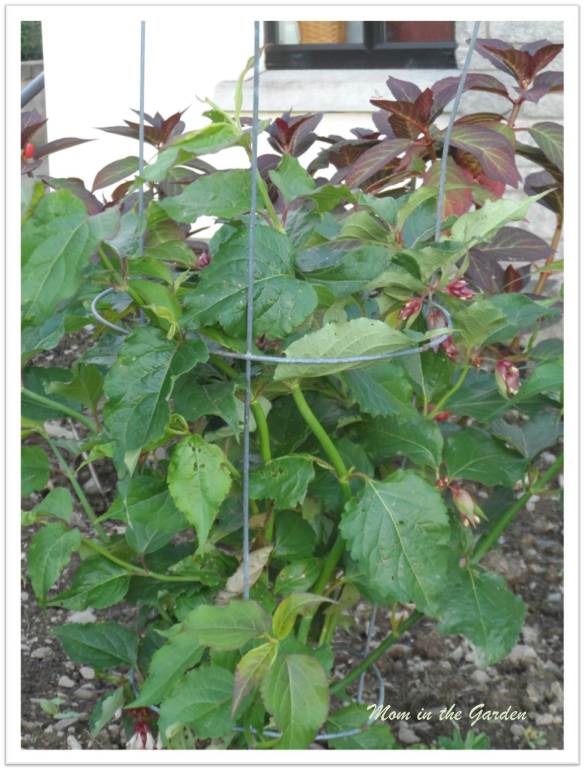
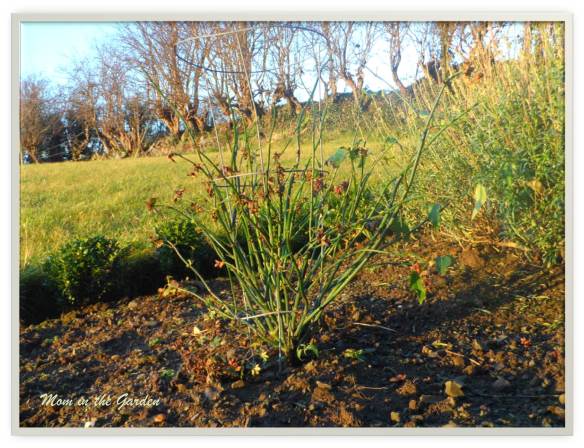
Leycesteria formosa supported

Leycesteria formosa supported

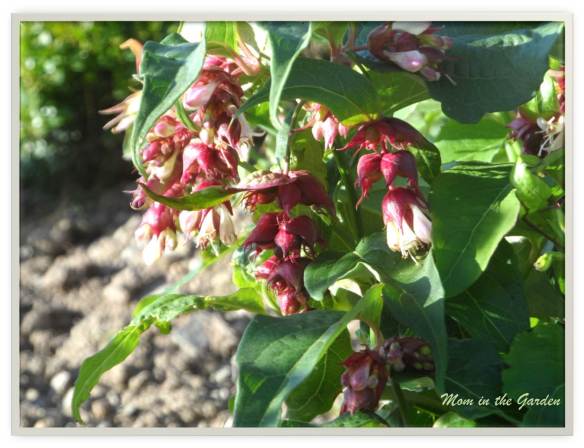
The flowers are pretty, and hang down in clusters.

a cluster of drooping flowers

a cluster of drooping flowers

Still young Leycesteria formosa

Still young Leycesteria formosa

After the flowers are finished, the plant is adorned with lovely berries.

Berries late in season of Leycesteria formosa

Berries of Leycesteria formosa late in the season

While walking through a park in Dublin this past July, I noticed some mature Leycesteria formosa plants. They were beautiful and nearly as tall as me!

Mature plants in the park

Mature plants in the park

Close up in the park

Close up in the park

At the time, I was still unsure of the name so I appreciated the tag. For this post I’ve typed the name what feels like a hundred times so hopefully now I will remember it! 🙂

ID tag

ID tag

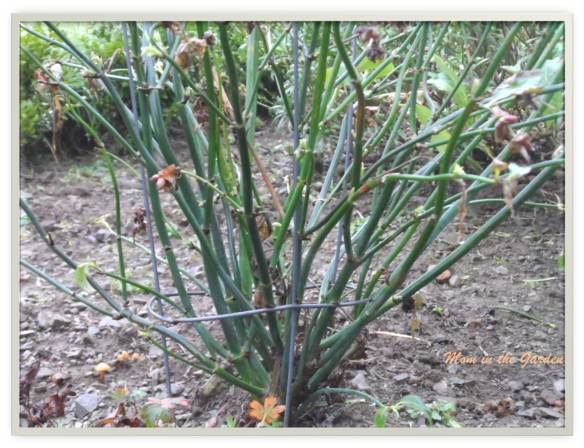
The plant still has character in the winter.  Look at these stems:

Close up of the stems

Close up of the stems

Winter garden

Winter garden

They remind me of bamboo.  The stems are hollow and can grow as tall as 6 feet (1.8 meter) in one season.  The plant grows in moist, fertile soil.  As for maintenance, it should be cut back to the ground in the spring.

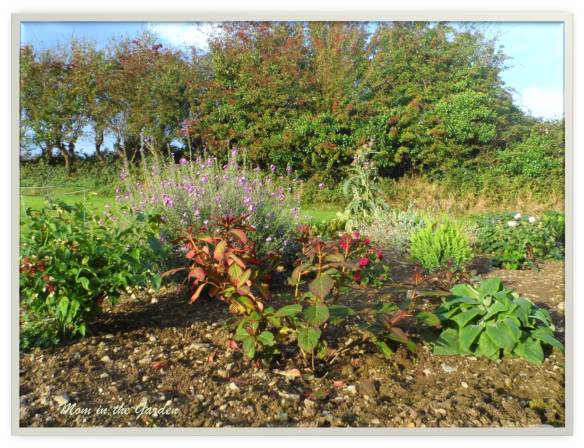
Late summer garden

Late summer garden

The Leycesteria formosa is on the left in the full garden photo above.  I’m really happy with it and how it changes throughout the seasons.

Are there any plants that you like to share?  I was able to share some of my strawberry plants recently.  What a great feeling, especially knowing that they are appreciated. A special thank you goes to Susan who has shared so much of her garden with me!

I hope your garden has lots of winter character.
Dana

Pruning Roses in my new Bradley’s Gloves

Summertime blooms

Summertime blooms

My roses had a spectacular year in 2013.  They had beautiful blooms all throughout the summer and into the fall.  I confess that I didn’t prune them last year. While I’m confessing, I’d might as well add that I had no idea how to prune them.  So this year I decided to figure it out.  Really, Google makes learning new things so much easier.

Roses throughout the summer

Roses throughout the summer

A garden full of roses

A garden full of roses

It is funny how some things just fall into place. I was at a craft fair in December where I picked up a fabulous pair of pruning gloves, at an even more fabulous price.  I love a bargain!  That was the final push to prune the roses.

Leather Bradley pruning gloves

Leather Bradley’s pruning gloves

The leather for the hands is so soft. I love them! You can buy a pair here: http://www.bradleysthetannery.co.uk/gardening/gloves/leather-pruning-gloves

Bradley pruning gloves

Bradley’s pruning gloves

Here’s a look at the roses before I started:

Rose bush before pruning

Rose bush before pruning

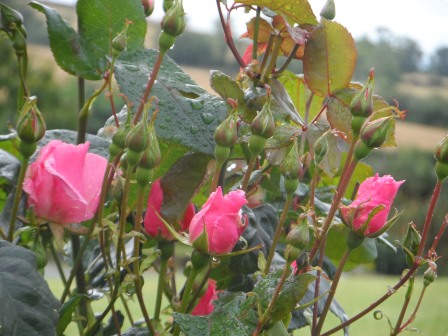
They looked really bad.  They should be pruned every year, during their dormant time; late fall through February for me.  Here’s the hard part, I had to cut… a lot.  I found it quite daunting!  From what I learned on-line (via Steve McShane’s Nursery), I first cut-off any dead branches.  Then I cut the branches at a 45 degree angle about 6 to 8 inches from the base of the plant.  There should only be between 3 and 5 canes when finished pruning (that is the hard part!).

Rose plants before being pruned

Rose plants before being pruned

There was a great deal of cutting to do!  I just had to think positive that it is good for the plants. 🙂  What a difference in how they looked after I had finished.

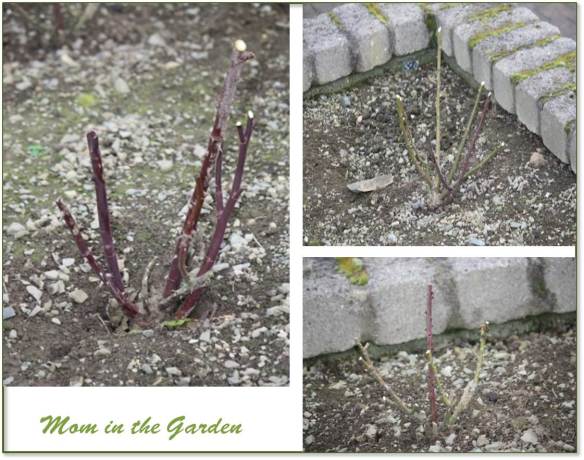
Three pruned rose plants

Three pruned rose plants

Pruned to 6-8 inches above the base

Pruned to 6-8 inches above the base

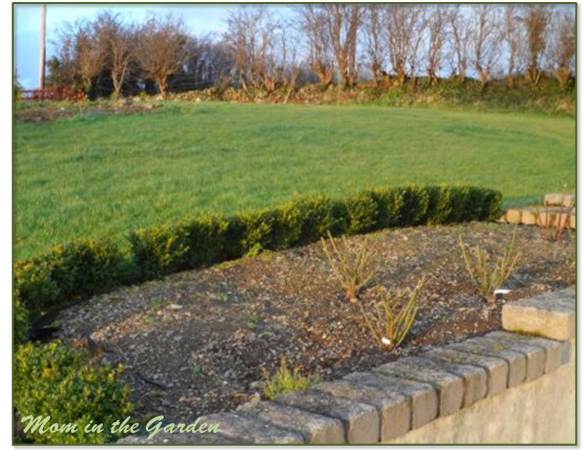
After pruning them, I finished clearing away all of the leaf litter.  The plants had black spot this year, so it is really important that I clear everything away.  I still need to add an organic fertilizer to finish this up.  But for now, I’m happy with how the plants look.

Pruned rose plants

Pruned rose plants

Pruned rose garden

Pruned rose garden

There will be another post on organically treating of rose plants in early spring, before any signs of black spot appear. This will be a new adventure for me, which I am looking forward to since I really don’t like the use of harmful chemicals! But that is another blog post…

I hope you enjoyed seeing my roses again.  Going through all of my photos from summer just reminds me of how quickly the seasons change. Before we know it, it will be spring again!

Happy New Year!
Dana

Roses to look forward to...

Roses to look forward to…

Orange & Clove Pomander Wreath

How it all begins...

How it all begins…

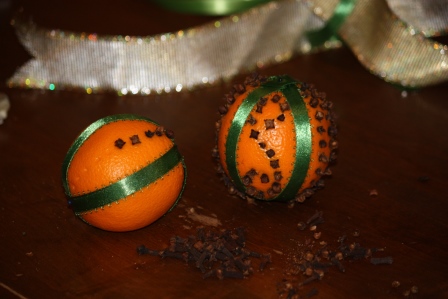
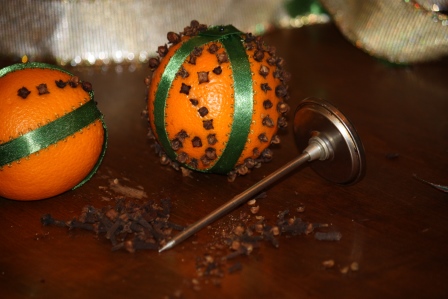
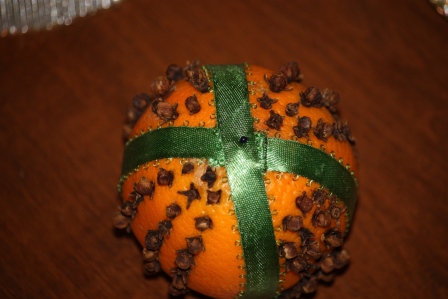
Last week I went to a fabulous craft fair.  There were hundreds of very talented crafts people there.  I thoroughly enjoyed myself and I can’t wait to go again next year! So many wonderful ideas.  One item that I loved was a wreath made from dried limes, oranges and cinnamon sticks.  I tried drying fruit once before, unsuccessfully I might add. So I wasn’t interested in doing that, but I was interested in working with cinnamon.  Cinnamon, cloves, oranges; I was on a mission.  It has been years since I last made a pomander (something aromatic that used to be for scenting linens/clothes). They are quite easy to make.  A simple cooking thermometer can be used to poke small holes into an orange.  This is where you can be creative with different designs!  I did a fancy “S” on two sides, and then rows of three on the other sides.

Cooking thermometer used to make holes in an orange.

The cloves go in easily when using a cooking thermometer to make holes in an orange.

Rows of three on two sides, and a fancy "S" on the other sides.

Rows of three on two sides, and a fancy “S” on the other sides.

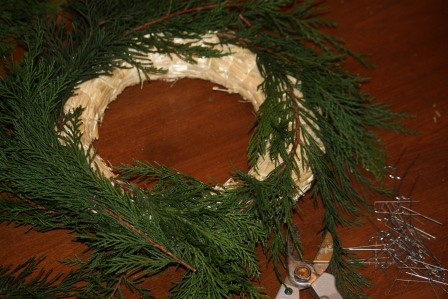
I used a ribbon just to break up the space, and I pinned it on the top and bottom to keep it in place.  Easy enough!  Now, what to do with the pomander?  I decided on making a table wreath arrangement.  I used a straw framed circle wreath, floral pins (or “u” pins), greens and my garden shears.

Straw frame circle wreath

Straw frame circle wreath

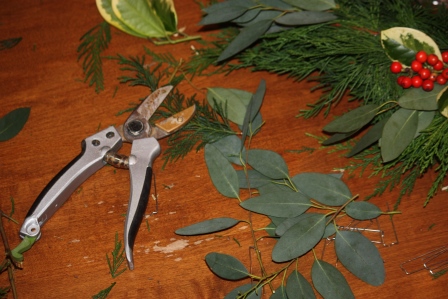
Garden shears, eucalyptus, holly, and evergreens.

Garden shears, eucalyptus, holly, and evergreens

I really enjoy working with my hands and getting a little creative time.  To me, this is the fun part of getting ready for Christmas!  Being given eucalyptus from my neighbor the other day really made me smile.  I’ve added eucalyptus to my “need to buy for the garden” list!  How awesome to have such different textures and colors right there in the back/front yard!  It smells lovely, too!

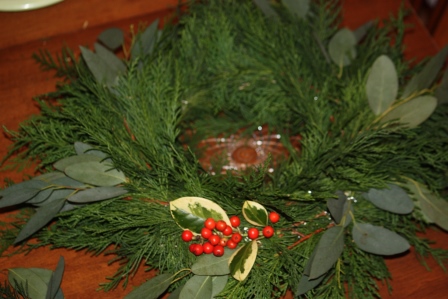
table wreath in process

table wreath in process. (You can see the plastic plate in the center)

clove & orange pomander with cinnamon sticks

clove & orange pomander with cinnamon sticks

I used a small rubber band to keep three cinnamon sticks in place, and then tied them with a ribbon.  I used three oranges, and paired them with three cinnamon sticks.  I had a large pretty white candle that fit in the center of the wreath nicely.  I was delighted that it all just came together.  The arrangement is sitting on a clear plastic plate.

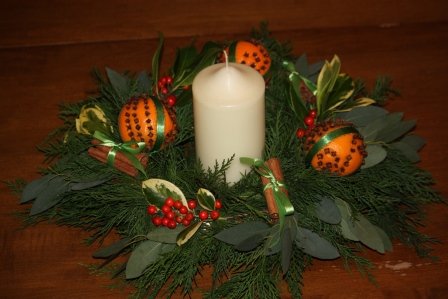
aerial view - groups of threes!

aerial view – groups of threes!

We didn’t have any red berries last year, yet this year there are so many!  I just had to use them.  🙂

Clove & Orange Pomander Wreath

Clove & Orange Pomander Wreath

You can see the lights to our Christmas tree in the background.

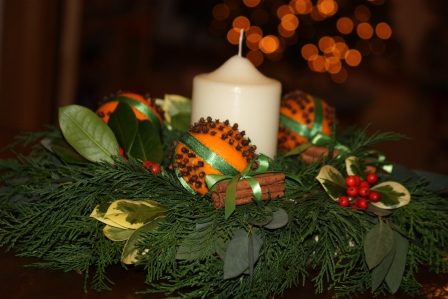
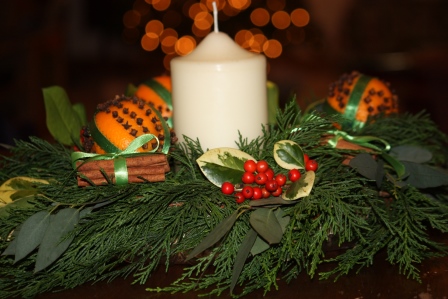
Finished candle table arrangement made of clove & orange pomander with cinnamon.

Finished candle table arrangement made of clove & orange pomander with cinnamon.

I hope your Christmas preparations are going well and that you are able to enjoy the process!  Slowing down is the hardest part for me.  I just need to speed things up for a couple more days and THEN, hopefully, I can slow the pace down!

Merry Christmas!
Dana

The Cake is baked and a Traditional Christmas Wreath is made.

Handmade (not by me) Santa

Handmade (not by me) Santa

It is December 16th and I am feeling a wee bit behind with my Christmas preparations.  The kids have been doing really well with their swimming and Irish dancing, which has kept me busy.  Yes, indeed, I am trying to make excuses/figure out why I am so behind this year!  I had been hoping for an extra week to somehow work its way into my schedule, but alas that has not happened.  So it is time to really get going!  Maybe it isn’t as bad as I think it is.  Sure, I have the Christmas cake baked!

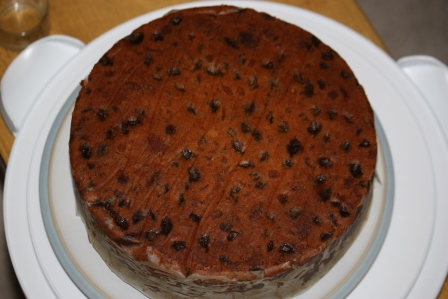
baked Christmas cake (traditional fruit cake)

baked Christmas cake (traditional fruit cake)

The batter tasted delicious!

The batter tasted delicious!

Beer soaked fruit

Beer soaked fruit

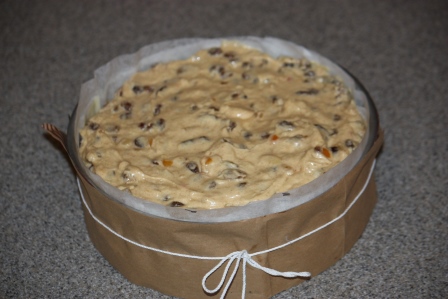
Wrap that baking pan! 2 layers parchment on the bottom and insides, along with w layers of brown paper on the bottom and outside!

Wrap that baking pan! 2 layers parchment on the bottom and insides, along with 2 layers of brown paper on the bottom and outside!

I actually tried to get out of making the Christmas cake this year.  I asked the family if we could just skip it.  All but the littlest one said “no way!”.  I do like it when they enjoy what I make, so it was a nice affirmation that my time is not wasted.  But given that it takes 4 & 1/2 hours to bake, you kinda need time!

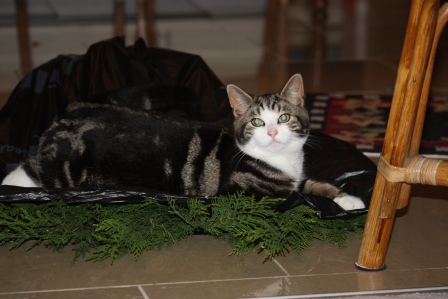
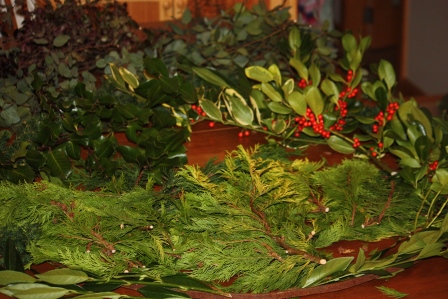
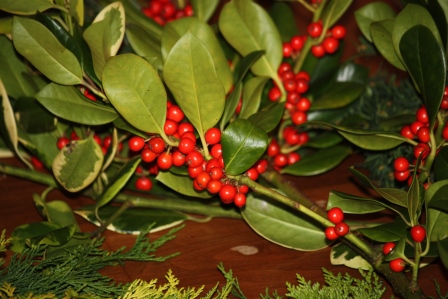
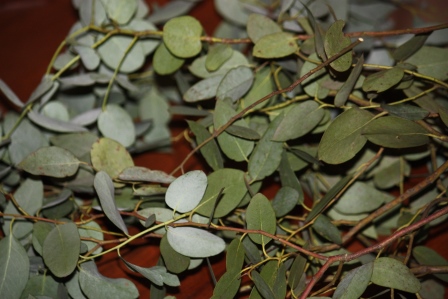
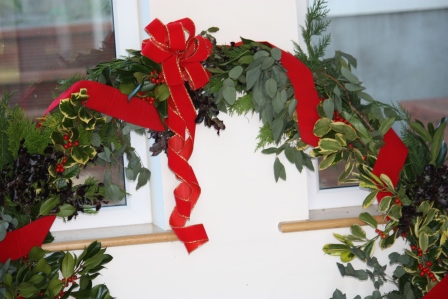
Today I finished making our outdoor wreath.  Never mind the fact that I usually have it hanging up the first or second week of December.  Between my friends Margaret & Fred, I was given the most fabulous greens to use:  eucalyptus, holly with loads of berries, and different evergreens.  I love making our wreath, especially when it smells so fresh!  Our kitty Hobbes had great fun attacking the greens which were obviously quite dangerous sitting in the black bag…

Hobbes helping with the greens.

Hobbes helping with the greens.

the greens

the greens sitting atop the iron wreath frame

loads of berries!

loads of berries!

This eucalyptus smells lovely!

This eucalyptus smells lovely!

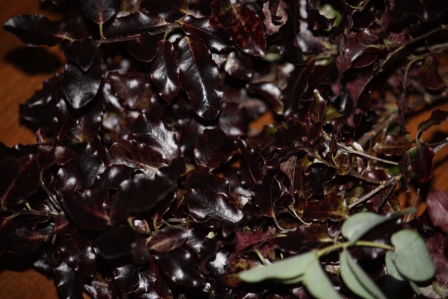
I must get the name of this pretty plant.

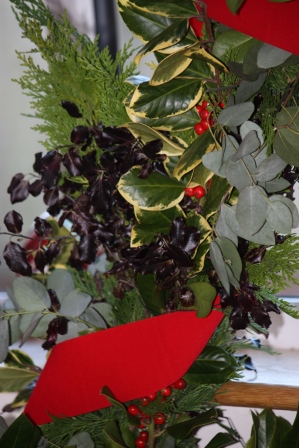
These lovely dark leaves are from a Pittosporum  called “Tom Thumb”.

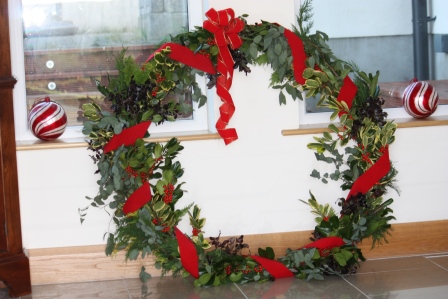
Our finished wreath.

Our finished wreath (waiting to be hung outside…)

I didn’t take pictures along the way.  I really just wanted to get it finished. I first placed everything on my cast iron wreath frame (which was graciously made for us by Fred!). This way I was able to make sure everything was evenly distributed. Then I used floral wire to tie on the bunches of greens.  I went with a simple red bow for garland.  My sister-in-law gave me some fabulous outdoor ribbon and it really worked well on the wreath. (Thank you Gail!)

Making my Christmas wreath 2013

Making my Christmas wreath 2013

I did a quick search on the internet for a video on making bows.  I thought the result wasn’t too bad!  I think it is best to have wire rimmed ribbon for making bows.

Lots of different textures in this wreath.

Lots of different textures in this wreath.

I love working with different greens!

I love working with different greens!

Finished Christmas wreath

Finished Christmas wreath

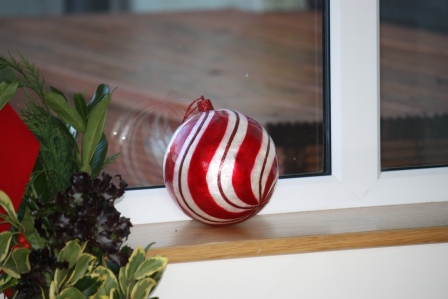
What do you think of this new item I bought?  It is a large red and white Christmas ball.  I like it (that is why I bought it!), but the family isn’t so sure about it.

New addition this year. (Huge) Red Christmas ball.

New addition this year. (Huge) Red Christmas ball.

Large Christmas ball.

Large Christmas ball.

But there is still so much more to do!  I have to run!  I hope all of your preparations are going well!

Merry Christmas 🙂
Dana

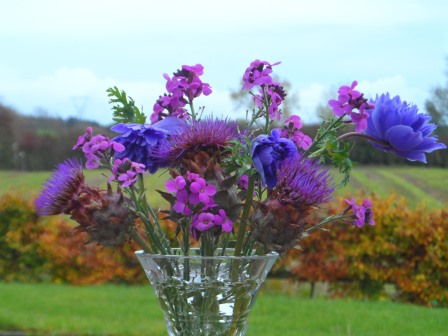
Fall flowers from a pink & purple palette!

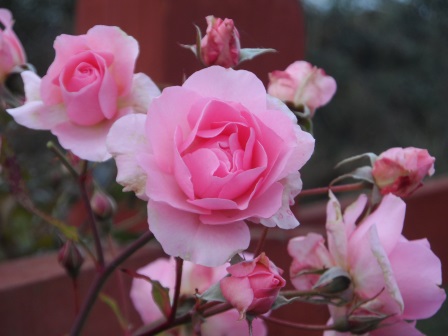
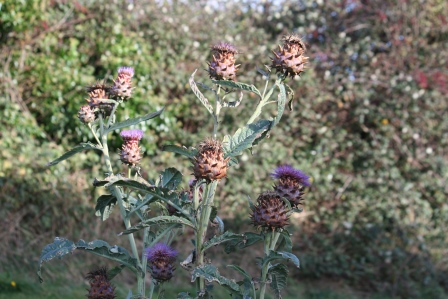
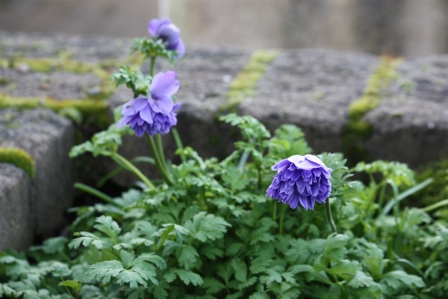
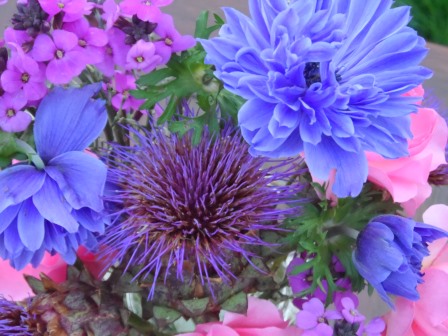
Artichokes, Mr. Fokker anemone, erysimum (bowles' mauve), and pink roses

Artichokes, Mr. Fokker anemone, Erysimum (bowles’ mauve), and pink roses.

These pictures of the flowers in the vase were taken on November 9th, 2013.  I had to write that as it seems crazy to have such pretty flowers in November!  Granted, only the roses look nice on their own in the garden now, but when I put them all together they really did look nice!

My roses at the front gate.

My roses at the front gate in November.

My roses are doing O.K., despite having had black spot this summer.

My favorite color: pink.

My favorite color: pink.

The artichokes and anemone don’t look quite as pretty today.

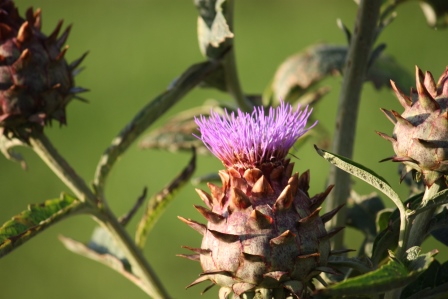
Globe artichoke flowers in November.

Globe artichoke flowers in November.

Mr. Fokker anemone in November.

Mr. Fokker anemone in November. These guys get beaten by the wind in our yard!

But just a few weeks ago in October, they were stunning!

Globe artichoke in October.

Globe artichoke in October.

Globe artichoke with erysimum in October.

Globe artichoke with Erysimum bowles’ mauve in the background  in October.

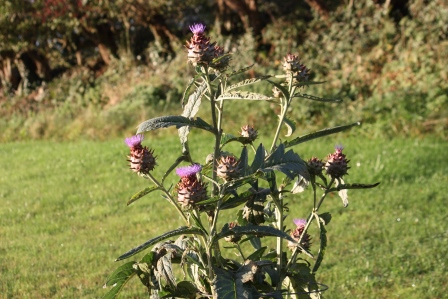
A globe artichoke plant in full bloom.

A globe artichoke plant in full bloom in October.

Erysimum bowles' mauve in October.

Erysimum bowles’ mauve in October.

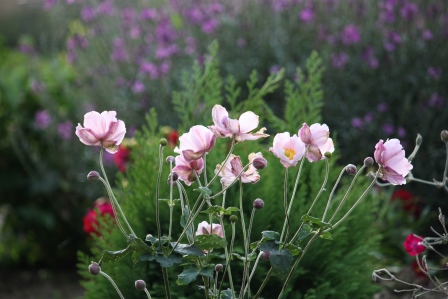
Pink Japanese anemone with dahlia and Erysimum bowles' mauve in background.

Pink Japanese anemone with dahlia and Erysimum bowles’ mauve in background. These anemone have been terribly beaten by the wind at this stage! So they didn’t make it into my bouquet.

It seems that I had lots of pretty pictures of these lovely plants and I just had to share them with you!  But back to November:

A vase of flowers in November.

A vase of flowers in November (before I added roses). Our beech hedging is changing color.

We had company this weekend, and I wanted to have something pretty on the table.  I went into the garden to see what I could put together and was delighted with my little bouquet!

Fall bouquet albeit pink & purples...

Fall bouquet albeit pink & purples…

Taking pictures of flowers works best outside.  I was really pushing my luck as it was very late in the afternoon when I finally got around to my fun “work” of getting flowers!  I had the very last bit of sunlight to take the pictures!

Artichokes, Mr. Fokker anemone, Erysimum (bowles' mauve), and pink roses

Artichokes, Mr. Fokker anemone, Erysimum (bowles’ mauve), and pink roses.

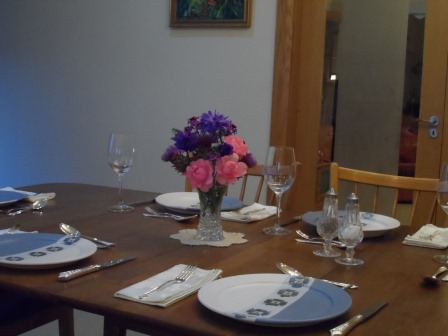
The bouquet indoors.

The bouquet indoors.

But maybe it doesn’t look that much different inside.

The table is set for company.

The table is set for company.

A little bit of the garden brought inside.

A little bit of the garden brought inside.

It was nice having friends over to visit.  I made Guinness stew, per request.  I was able to use our own onions, and potatoes.   My 13 year old daughter was very kind and made brown bread (which was delicious) to go with dinner.  While the bread was baking, she also made us flour-less chocolate cake!  It, too, was fabulous!  I should really do a post about the brown bread. It is an easy recipe, and authentic as it is my mother-in-law’s recipe!  I will post about it the next time we make it.

And that, my dear people, is my 100th Mom in the Garden post!  I’ve also hit the big “10,000 views” for my wee little blog!  I am chuffed to have had so many visitors, likes, and wonderful comments to my blog!  Thank you!  I realize this pace isn’t going to break any records, but blogging is something I truly enjoy and I do it for that enjoyment.

Thank you for joining me on my blogging journey!

Happy fall!
Dana

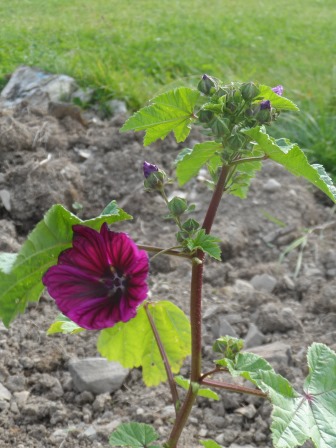
A surprise in the garden: A Malva plant!

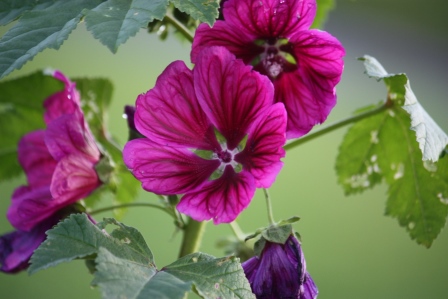
Malva Sylvestris Mauritanicus "Windsor Castle"

Malva Sylvestris Mauritanicus “Windsor Castle”

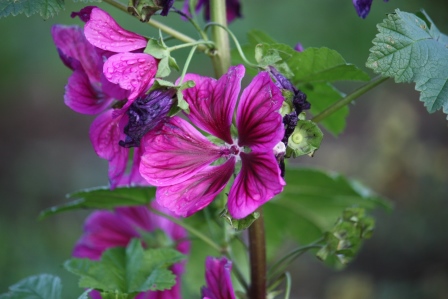
A surprise in the garden?  Well, it was a surprise to me since I hadn’t planted it.  This lovely little plant appeared late this summer.  With some help from my on-line gardening community friends from The Irish Garden (http://www.garden.ie) it was identified as a malva plant.  I believe it is Sylvestris Mauritanicus “Windsor Castle”.   It is also known as Common Mallow, and is a leafy biennial-perennial.  It will (hopefullly!) re-seed itself, and will grow to 3 or 4 feet in height.

Malva in the early days

Malva in the early days

Of course I took pictures as it grew.  In the early days I was thinking it was a pretty weed!  The new buds are a dark purple, yet the flowers are a wine color.

Malva in the early days

Malva in the early days

Malva Sylvestris Mauritanicus "Windsor Castle"

Malva Sylvestris Mauritanicus “Windsor Castle”

Malva

Malva

The only down side of this story is that it is in my white and yellow garden!  Given how lovely this color is, I think I can live with one more addition to the color scheme of my center garden.

Malva & Potentilla

Malva in front of my yellow Potentilla

I have to say I’m really happy about this plant growing in my garden!  Such a lovely surprise. 🙂

Malva

Malva

Have you had any nice surprises lately?

Happy fall!
Dana

The vegetable garden’s summertime review

Organic Pea Karina

Organic Pea Karina with a sweet pea flower

Life has seriously gotten busy recently, so I do apologize for having neglected my blogging, and for not having visited your blogs as well.  I am very much looking forward to sitting down and reading what all of my gardening and cooking blogger friends have been up to!  When exactly that is going to happen is another story…

My last post was about my summertime flowers.  I feel I have split loyalties, between my flowers and my vegetables.  I do love having both of them, but when it comes to taking pictures the flowers are just a wee bit more glamorous.  And I love taking pictures!  I’ll do my best to show off my vegetables looking fab (which might just be covered in muck!).

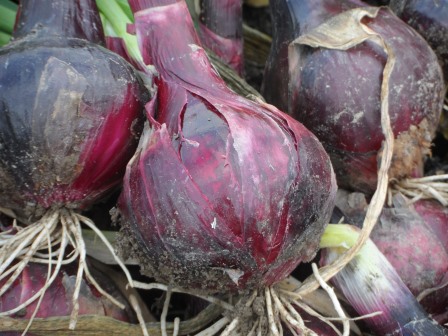
Red Robejla organic onions

Red Robejla organic onions

My red onions did very well this season.  That picture above is of them before I dug them out.  They were very nearly out of the soil already.

Red Robelja organic onions

Red Robelja organic onions

I think I will try and grow more next year.  There doesn’t seem to be a lot there!

A nice size Robelja onion.

A nice size Robelja onion

Red Robejla organic onion

Red Robejla organic onion

After the stems started to dye down, I dug them out and placed them atop of my garlic bed which had already been cleared.  We were lucky enough to have some dry weather so I left them there for a week or so.  They are now finishing their drying in my back room.

My onions drying out

My onions drying out

I’ll throw in a picture of my potatoes for good measure. They are not glamorous, but they did taste good!  Sarpo Mira is the variety, which is blight resistant. I’ve grown them for 2 years now.  I think next year I will be adventurous and try a different variety.

Peeled spuds

Peeled spuds (Sarpo Mira)

I have only one picture of my carrots and it is not pretty!  They are good large, sturdy carrots ( organic yellowstone), not like the orange ones you typically see.  But they taste good!

Organic Yellowstone carrots.

Organic Yellowstone carrots.

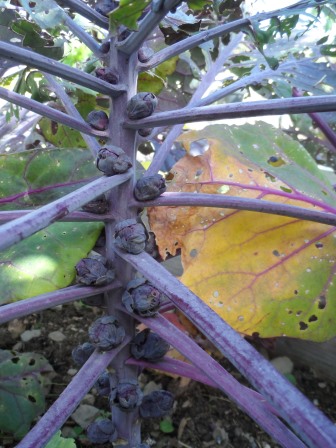
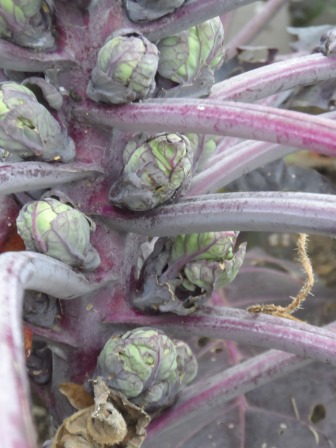
Organic Brussels Sprouts Rubine Red

Organic Brussels Sprouts Rubine Red

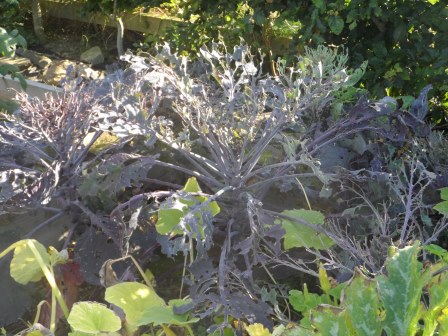
Talk about winning the prize for the least glamorous vegetable!  My Brussels Sprouts were completely covered with caterpillars on a regular basis.  What I’m sure would be beautiful leaves if left uneaten by those critters, is simply ugly after all of that destruction.

Organic Brussels Sprouts Rubine Red

Organic Brussels Sprouts Rubine Red

We do have sprouts!  I’m really not sure if they will be worth it though. That process of picking off caterpillars is really for the birds.

Organic Brussels Sprouts Rubine Red

Organic Brussels Sprouts Rubine Red

Did the critters leave anything for us?

Organic Brussels Sprouts Rubine Red

Organic Brussels Sprouts Rubine Red

Another view of the least glamorous vegetable in the garden.

Another view of the least glamorous vegetable in the garden.

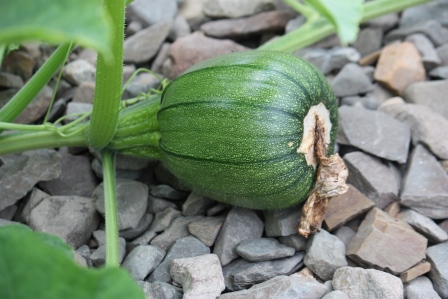
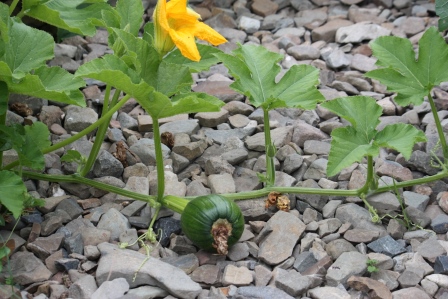
Let’s talk pumpkins!  We planted pumpkins in a few different spots, but they thrived in one bed in particular.  Guess I know which bed had the best soil! Pumpkins like a lot of food.  Also, to get bigger pumpkins, you can cut the vine after the pumpkins are formed which will force all of the energy to go into growing the pumpkin and not on growing the vine and further pumpkins on the vine.  The problem is, I really like the flowers!  🙂

IMG_0701Not to worry, I did get some pumpkins and their size will do just fine for me.  They are baking pumpkins, actually, so would be on the smaller size anyway. I have quite a few photos because I thought it was neat to see how the color changes.  I only have a couple that are orange, but the rest are on their way.

In the beginning...

In the beginning…

A long, long time ago...

A long, long time ago…

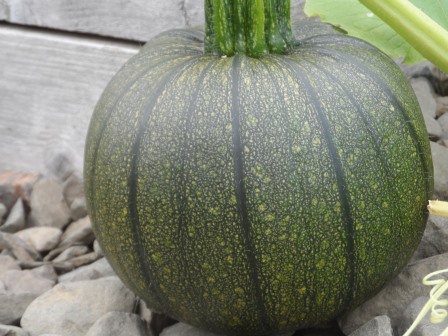
My favorite pumpkin with a perfect shape!

Phew!  Finally a size that is respectable!  My favorite pumpkin with a nice round shape.

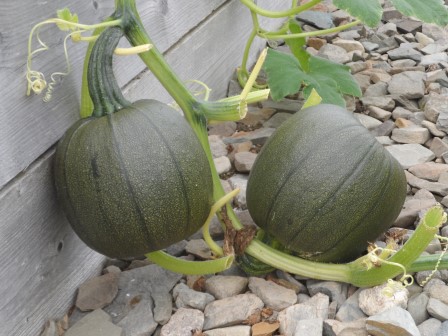
Two hangin' together.

Two hangin’ together.

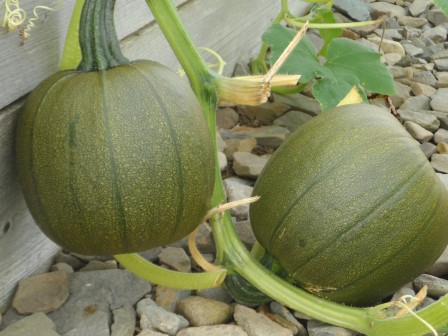
The two hangin' changing color!

The two hangin’ and changing color!

Love the speckled look.

Love the speckled look.

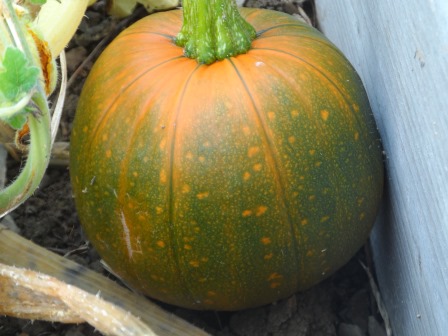
One orange pumpkin!

One orange pumpkin!

This is the same orange pumpkin, but with my foot in the picture which shows you how small it is! (the pumpkin, not my foot)

This is the same orange pumpkin, but with my foot in the picture which shows you how small it is! (the pumpkin, not my foot)

Can you believe how many photos of pumpkins I've taken?

Can you believe how many photos of pumpkins I’ve taken?

I’m moving on from pumpkins. I have a feeling you’ll be seeing more of them in my blog throughout the fall.  I bought a globe artichoke plant in May and I am so glad I did.  I didn’t manage to eat any of the artichokes, but the benefit of that is that they form really interesting flowers!

Globe artichoke Cynara Scolymus

Globe artichoke Cynara Scolymus before blooming.

Oh but wait, it gets much better!

Globe artichoke Cynara Scolymus

Globe artichoke Cynara Scolymus in bloom.

Globe artichoke Synara Scolymus

Globe artichoke Synara Scolymus

The entire plant is coming into bloom!

The entire plant is coming into bloom!

Globe artichoke Cynara Scolymus. Something interesting to look at.

Globe artichoke Cynara Scolymus. Something interesting to look at!

The globe artichoke plant is so different from anything else in the garden, and I love that.  I must show you how that particular garden has really shaped up this past year.  That will be for my next post!

But before I go, I’ll leave you with some more flower pictures.

I hope your schedule is less hectic than mine has been!

Dana

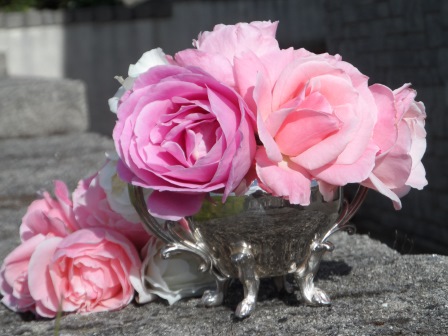
Fall roses in my silver sugar bowl.  Just because.

Fall roses in my silver sugar bowl. Just because.

Fall roses tumbling down!

Fall roses tumbling down!

Fall flowers from the garden in my Polish Pottery vase.

Fall flowers from the garden in my Polish Pottery vase.

Fall flowers in the evening sunlight.

Fall flowers in the evening sunlight.

Oh yes, I definitely favor flowers to veggies for pictures! 😉

A final farewell to summertime flowers

Echinacea Salsa Red

Echinacea Salsa Red

It really was such a lovely summer.  I have so many pictures that I’ve taken that I want to share!  There have been a few new additions to the garden.  The Salsa Red Echinacea is one of my favorites!  A red cone flower, it has been blooming since I bought it in late summer.  I have it near my Black eyed Susan flowers.

Black eyed Susan (Rudbeckia)

Black eyed Susan (Rudbeckia) in evening sunlight.

Butterfly enjoying the Black eyed Susan

Butterfly enjoying the Black eyed Susan

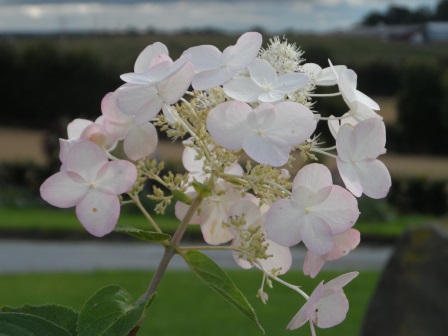
Paniculata hydrangea

Paniculata hydrangea

The Paniculata hydrangea is another new addition to my garden and another one of my favorites! 🙂  I bought it late in the season while it was still mostly white. But as it ages, it turns pink, and mine turned quite pink in the end.  It is just about ready for me to give it a really good pruning. I’d like to give it a nicer shape for next year as it is quite gangly at the moment.  But the blooms were so lovely and delicate!

Paniculata hydrangea

Paniculata hydrangea – reminds me of lace.

Paniculata hydrangea

Paniculata hydrangea

The Paniculata hydrangea likes lots of sun.  Other varieties of hydrangea don’t require as much sunlight as this one does.  It can grow to about 8 to 10 feet tall and wide, but can be kept at the size you want with regular pruning.  Pruning can be done at any time of year as it does not affect the blooms like other varieties of hydrangeas.  I’m excited to see how this one does in our sunny front yard!

End of season Paniculata hydrangea with its new pink color.

End of season Paniculata hydrangea with its new pink color.

Speaking of pink!  My roses are going for another round of showing off!  We had really bad black spot this year, and I was away when it should have been looked after.  I am still trying to find organic ways to prevent/treat black spot. (Please let me know if you’ve found something that works!)  I’ll be growing something from the onion family in the rose garden next year. But I think I’ll need to find some kind of spray, too, as the conditions for black spot are simply too perfect here.  In the meantime, I’m enjoying the (rose) show!

Floribunda rose Queen Elizabeth (fragrant) with about a million flower buds!

Floribunda rose Queen Elizabeth (fragrant) with about a million flower buds!

Floribunda rose Burgundy Ice

Floribunda rose Burgundy Ice

Floribunda rose Burgundy Ice

Floribunda rose Burgundy Ice

Hybrid tea rose Pink Peace (fragrant)Hybrid tea rose Pink Peace (fragrant)

A tiny stemmed rose bouquet.

A tiny stemmed rose bouquet.

Dahlia.

Dahlia

I’ve planted a yellow Dahlia next to my Asters which have a bright yellow center, or at least they will when they finally bloom later in the fall.  This little plant is very cheerful right now!

Dahlia

Dahlia

This redish Dahlia plant I received at the same time as the yellow one.  It seems to be much happier in its location as the plant size more than doubled in a very short amount of time!

A very happy Dahlia plant.

A very happy Dahlia plant covered in blooms.

Blue hydrangea

Blue hydrangea

Sure it wouldn’t be summer without a  blue hydrangea picture! This plant is growing just down the road from me at my neighbor Jerry’s house.  I couldn’t resist taking a picture of it, as the color is so lovely!

Pink hydrangea

Pink hydrangea

Things in my yard tend to grow pink!  This hydrangea is in my yard.  That is ok with me.

Autumn Joy sedum

Autumn Joy sedum

My Autumn Joy sedum is turning a pretty shade of pink.  The butterflies like it too!  I cut this plant down early in the season so that it wouldn’t be so leggy.  That worked great and I think it’s now neater.

Old fashioned geranium

Old fashioned geranium

Geranium on a foggy morning.

Geranium on a foggy morning.

Marigold

Marigold

A snapshot of a perfect summer day ... already behind us.

A snapshot of a perfect summer day … already a distant memory.

I love sharing my pictures of flowers with you!  I hope you’ve enjoyed the look back on summer.  I next have to show you a look back on the vegetables from the summer!

Happy end of summer 🙂
Dana

Strumpet City (1913 Dublin) & St. Stephen’s Green Park, Dublin 2013

You could say we like to read...

This is one of our bookshelves.  You could say we like to read…

The libraries of Dublin City have chosen James Plunkett’s Strumpet City as their One City, One Book for 2013.  This summer my book club decided to join in and read it too. I am so glad we did!  What an incredible story.

100 years is really not all that long ago.  1913 Dublin City.  Workers worked, yet weren’t paid enough to live on.  Families lived in deplorable conditions.  There could be 100 people living in the tenement houses (which were meant for much less than 100 people).  Finally, in August 1913,  the workers had had enough, and demanded more of what they deserved.  The employers answered by locking them out of work – for four months.  Strumpet City tells the story of the lockout through the lives of its characters; the very rich, the very poor, and the very misguided.

I loved learning about the history of the lockout.  There were characters to love and definitely characters to hate in the book.  It was sad to learn how some working class people couldn’t pick themselves up from the life of poverty.  Even more sad were the rich people who felt superior to those in poverty.    …  I wonder, how much has changed in 100 years?

If you have the time (it’s a big one! 550 pages are divided between three books) I would highly recommend reading Strumpet City.

I thought this post would tie in nicely with my recent visit to Dublin’s St. Stephen’s Green Park.  You know, the book takes place in Dublin, and the park is in Dublin. I think that works! 🙂 I took a lot of photos.  It is a beautiful park, and it was a beautiful day. The park was filled with both locals and tourists.  O.K., lots of tourists!  But lots of locals were also enjoying the park and the beauty it has to offer.
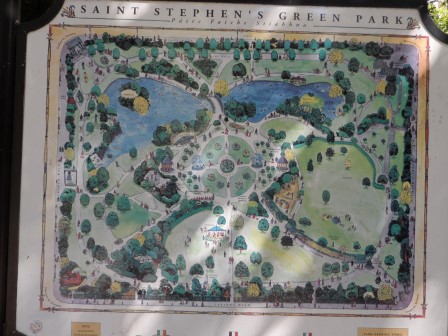
St. Stephen's Green Park map.

St. Stephen’s Green Park map.

At 27 acres, this Victorian park is a beautiful reprieve from the fast pace of Dublin.  The Office of Public Works have a brochure about the park that I found fascinating.  Here are some facts about the history of the park which I’d like to share with you:  The name comes from a church which used to be in this area (that goes back to the 13th century!).

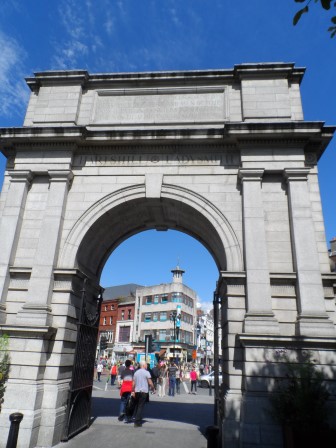
One of the entrances to the park.

Fusiliers Arch built in 1907. Gateway arch into the park located at the top of Grafton Street.  It was built in dedication to the men of the Royal Dublin Fusilier’s who died in the Boer War in South Africa (1899 – 1900).

In 1635 a law was passed which made the park open and available to the public to use.  The first paid gardeners started tending the park in 1670.  This part of Dublin has always been “the place to be”.  Even going back to 1708 which is when Grafton Street opened, this is where the fashionable of society were seen.  The Dawson Street opening followed in 1723, as much sought after properties were also built in the area at that time.
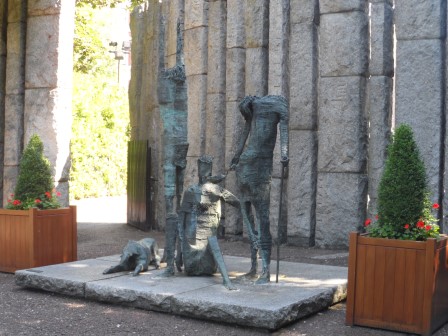
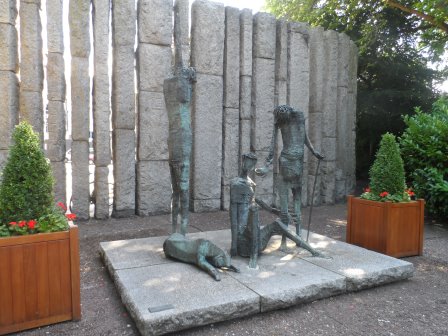
 Irish Famine Memorial at St. Stephen's Green Park.

The Irish Famine Memorial is on the north-east corner of St. Stephen’s Green, the background consisting of a semicircle of rough stone pillars.

The Irish Famine memorial is on the north-east corner of St Stephen's Green, a semicircle of rough stone pillars.

The Irish Famine memorial.

Unfortunately, by 1814, the park was in need of an overhaul.  Thankfully, this was seen to, with new ornate Victorian railings built around the perimeter of the park, new walks were constructed, and trees and shrubs were planted.  Ignoring the law of 1635, the Commission closed the park to the public and made it available only to those who could afford to rent keys to the park.

Statue of  the Three Fates, presented to Dublin in 1956 by West Germany in gratitude for Irish aid after WWII.
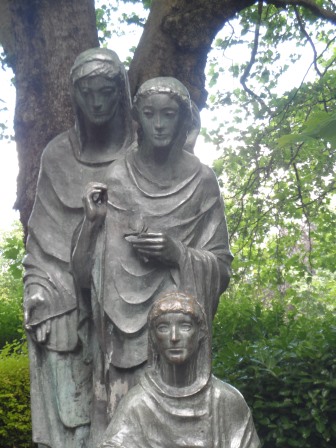
Statue of the Three Fates, presented to Dublin in 1956 by West Germany in gratitude for Irish aid after WWII.

Statue of The Three Fates.

Close-up of the statue of The Three Fates.

The general public had to wait until 1877 to have free access to the park again.  Having grown up in the area of St. Stephen’s Green, Sir Arthur Guinness, also known as Lord Ardilaun, purchased the Green from the Commission, paid off all the outstanding debts, and opened it to the public. Not surprisingly, he and his family were well known for their generosity.  The revamping and designing of the park was begun, and Sir Arthur was very much a part of this process.
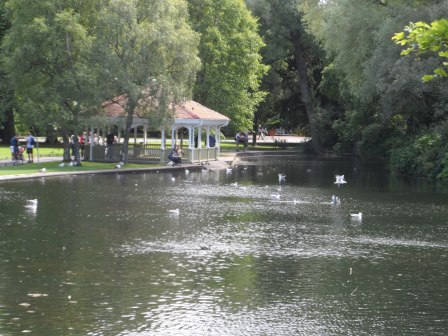
The man-made lake.

The man-made lake.

Another view of the water.

Another view of the water.

A 3 acre man-made lake, a bridge, formal flower beds, and fountains were all a part of the new design. The landscape of the park today very much reflects that work from 1880.  The center of the park is designed as a formal garden with symmetrical patterns of paths, lawns, and flower beds.  There are two granite fountains at the center of the design.

The formal central part of the park.

The formal central part of the park.

Perfectly manicured.

Perfectly manicured beds.

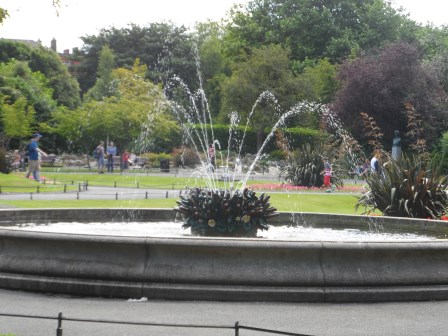
One of the fountains.

One of the two fountains.

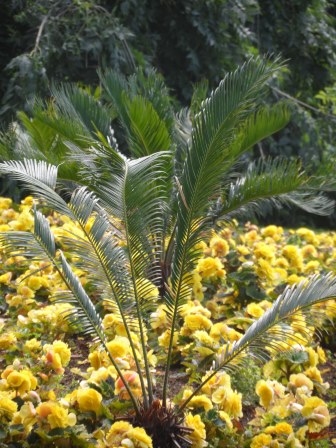
So this picture is just to show you the palm tree.  Funny enough to me as I associate palm trees with really warm weather, but there are lots of them in Ireland!

This picture is just to show you the palm tree. Funny enough to me as I associate palm trees with really warm weather, but there are lots of them in Ireland!

An herbaceous border can also be found in the park (near Leeson St. gate).  Also notable of what is in the park:  The Bog Garden, Garden for the Blind, The Children’s Playground, and The Bandstand.

Monarda (bee balm).

Monarda (bee balm).

Helenium 'Waldtraut'

Helenium ‘Waldtraut’.

More photos of the herbaceous garden.

More photos of the herbaceous garden.

Different colors along the path.

Different colors along the path.

There are over 750 trees!  The park is able to keep out much of the traffic noise of the city, not to mention pollution,  from the many trees planted along the border.
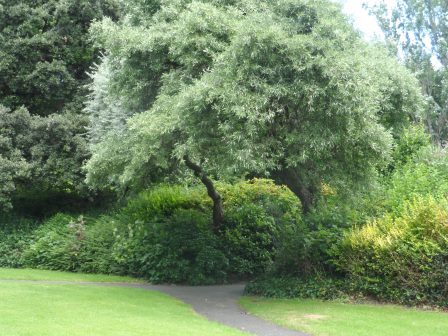
This path leads to the W.B. Yeats memorial.  Careful or you'll miss it!

This path leads to the W.B. Yeats memorial. Careful or you’ll miss it!

Memorial to W.B. Yeats by Henry Moore.

Memorial to W.B. Yeats by Henry Moore.

Hidden away behind trees is this area that is used for drama productions (or so I've been told!).

Completely hidden away behind trees is this area that is used for drama productions (or so I’ve been told!).  It is in this area (behind me when I took this picture)  which the W.B. Yeats memorial stands.

I do have lots of pictures of trees. I love trees. Especially really big, old ones! I will just show you my favorite one!

(I'd love to just write the caption "tree"!)

(I’d love to just write the caption “tree”!)

It is such a lovely park.  It is well worth a visit.  And after you visit the park you can go shopping!

Stephen's Green Shopping Center.

Stephen’s Green Shopping Center beautifully adorned with flowers.

The shopping on Grafton Street is always good, too! I love to see the flower stalls.

Flower stall on Grafton Street.

Flower stall on Grafton Street.

I hope you’ve enjoyed my little tour of St. Stephen’s Green.  There are really so many things to do in Dublin (it is a great city to visit!).  For me, on that day in the park I enjoyed both walking along the paths and sitting down on the benches (people watching!).  It was a day to savor!

I hope you’ll come and visit!
Dana

Harvesting Garlic & a Clematis’ improved health
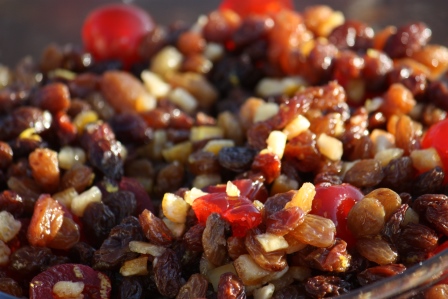
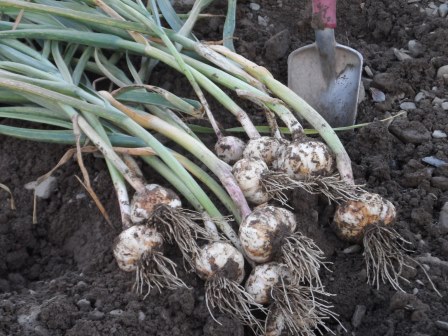
Freshly dug garlic.

Freshly dug garlic (Cristo).

Some things in the garden seem to grow fairly easily.  Garlic is one of those things!  We’ve grown garlic the past two years and have been very happy to have done so.

Garlic in June.

Garlic (Cristo) in June.

They don’t require special attention, really, and like well drained, fertile soil.  I watered them when we had quite dry weather so the soil wouldn’t dry out, but that was it.  They are ready for harvest when the greens die back.  Then I hang them in our back room to dry out completely.  This year I am planning on planting some in the winter, too.  I think it is more typical to grow it then.  That will be my first attempt at winter gardening!

Freshly dug garlic.

Freshly dug garlic.

I was pretty happy with the quality of the soil as I was digging up the garlic.  We’ll be adding our compost to the beds as we continue to harvest the different vegetables, and fruit. It really does help the soil!  As for quality of soil, I have another story to tell.

Garlic & Geraniums

Garlic & Geraniums

Cristo garlic.

Cristo garlic.

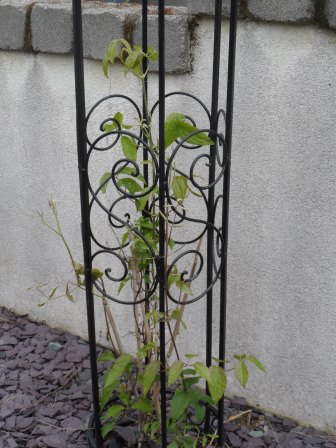
My obelisk a few months ago.
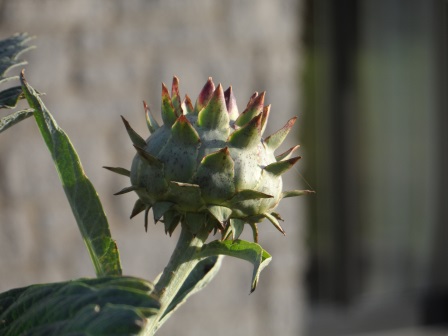
My clematis starting to climb the obelisk a few months ago.

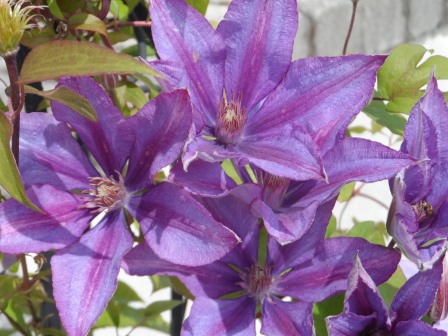
Back in March I posted about an obelisk which I set up for my clematis.  (You can read about it here: https://mominthegarden.wordpress.com/2013/03/06/my-showy-hellebores-an-obelisk-and-a-chocolate-pudding-recipe/ ) My clematis, ‘Bagatelle’ (Dorothy Walton), had one single flower last year!  We had moved it the year before as it was in a terrible position.  Fearing wilt after all of the rain we had last year, we needed to do something.  The soil in which it was planted really needed some extra attention. We dug it up and added compost, aerated the soil, fed it, and hoped for the best.  The difference in the plant this year is amazing.

Late blooming clematis early in the season.

My clematis early in the season.

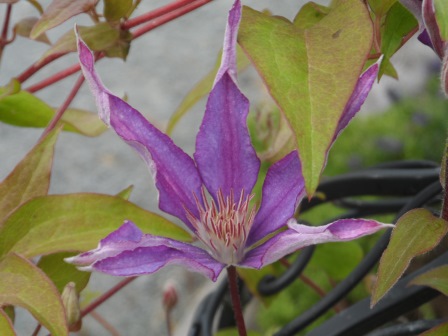
This was the first flower this season. It has really thin petals (they get bigger as it develops).

Clematis after some rain.

Clematis (‘Bagatelle’ Dorothy Walton) after some rain.

Clematis in full glory!

Clematis in full glory!

There are a few different types of clematis. Mine is a late season variety.  So in February I will be pruning it back to about 12 inches from the ground, just above an old leaf joint.  That way I will continue to have flowers all along the plant, and not just at the top.

The obelisk is getting covered!

The obelisk is getting covered!

The plant climbed up the obelisk, and then right back down again! I’ve seen plenty of clematis that would have taken over this little obelisk!  But for now, this one will work for us.

'Bagatelle' Dorothy Walton Clematis

The flowers of the ‘Bagatelle’ Dorothy Walton Clematis face the morning sun.

I took this picture yesterday. There are still new blooms!

I took this picture yesterday. There are still new blooms!

Now that the clematis is doing so well, I’m thinking of getting another one. 🙂

Which is your favorite variety of clematis?
Dana