Visiting Dorothy Clive Gardens in Staffordshire, England

Dorothy Clive Gardens Visitor's map

Dorothy Clive Gardens Visitor’s map

Two of my children are Irish dancers, and for the past year they have been working really hard towards the goal of dancing at the World Championships in London.  Those championships were last week and dance they did!  It was a wonderful experience for all of us, and their teams danced really well (spectacular, really!). I know I mentioned it before, but proud mama moment here: My sons’ team is 1st in the World for under 16 mixed ceili, and my daughter’s team is 3rd in the world for the Under 11 mixed ceili!
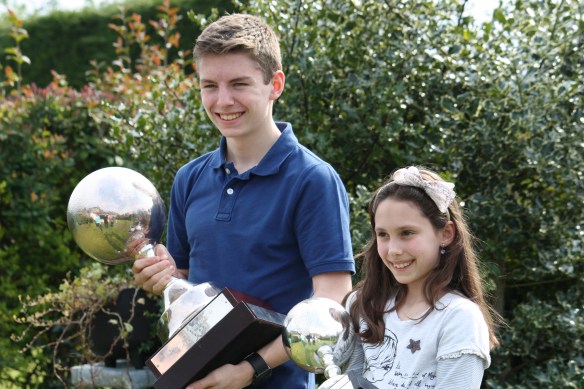
My son & daughter holding their Irish dancing teams' globe trophies! (1st & 3rd place)

My son & daughter holding their Irish dancing teams’ globe trophies! 1st & 3rd place

As part of our “going to London” family vacation experience we took time to drive through some beautiful English countryside.   It was so lovely!  It really is a simply enjoyable experience seeing the different style country houses and gardens.  The brick houses are so pretty, and just that bit different than what we would see in the Irish countryside.  Our first day we stayed at Slater’s Country Inn in Newcastle, Staffordshire which was lovely and cozy  http://www.slaterscountryinn.co.uk/ and fit the bill perfectly for us. The restaurant provided delicious traditional English food with a personal touch.  Best of all, it was just up the road from the Dorothy Clive Gardens which is where we were heading the next day.

Slaters Country Inn Newcastle, Staffordshire, England

Slater’s Country Inn in Newcastle, Staffordshire, England

I was very lucky. The weather was mild and sunny.  I’m not sure how amiable my kids would have been if we’d brought them to gardens in the rain!  But given the day that was in it, they happily enjoyed going around the garden (and playing a bit of chase).  There were some visitors there who I’m sure would have preferred them to walk quietly.  But sometimes you just have to give a little.

Pond at entrance to the gardens

Pond at entrance to the gardens

The gardens! Dorothy Clive Gardens are in Staffordshire ( http://dorothyclivegarden.co.uk/ ) .  The entrance fee was 6 pounds 75 cents per adult and 2 pounds per child which I found to be a reasonable price.   There are 12 acres of gardens to roam through.  I loved so much about it!  For starters, I like the rustic fencing and beech hedges of the entrance.
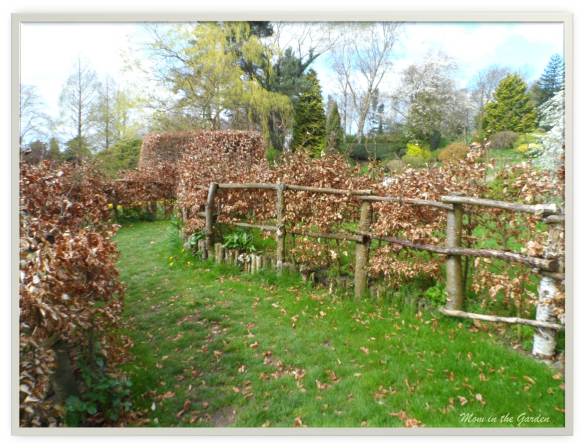
Entrance into the gardens

Entrance into the gardens

Plant supports

Plant supports

Here are some natural and rustic looking plant supports.  I like how this blends in with the garden.  This actually is in the formal part of the gardens. One section is now hosting tulips and hyacinth.

Tulip walkway

Tulip walkway

Tulip garden

Tulip garden

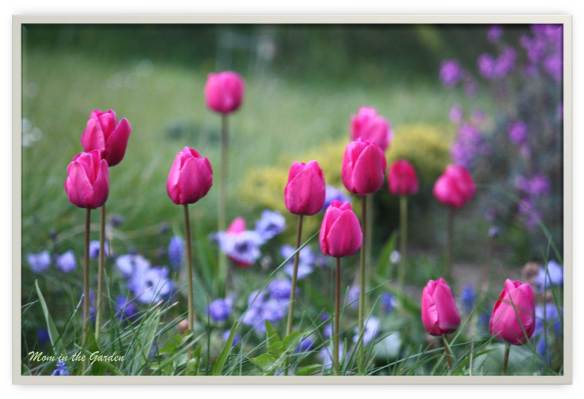
The tulips were spectacular!  They definitely made me want to plant MANY more tulips in my garden!

Tulip garden

Tulip garden

I’m getting ahead of myself here! Before we even reached the tulips, as we were walking up the hill, we could smell the sweet smell of hyacinth. They lined both sides of the walkway and were lovely to see.
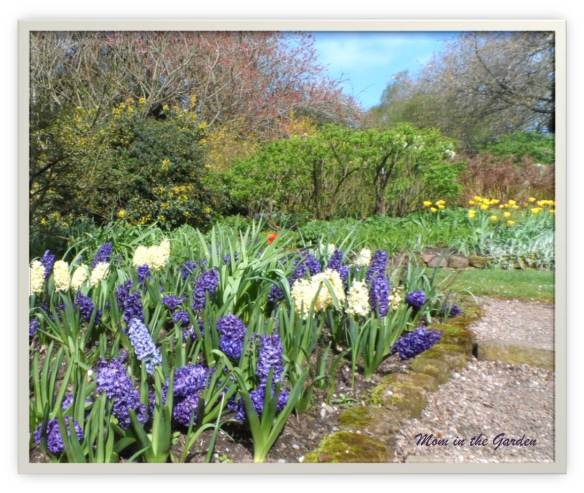
Hyacinth

Hyacinth

More of the formal gardens

More of the formal gardens

There were a few benches that the pathways lead to. Here is one that I really liked:
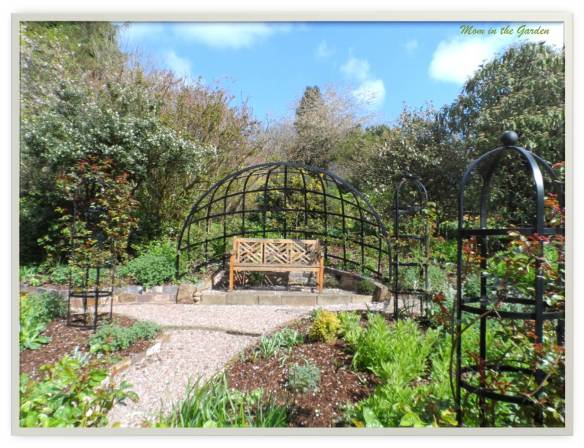
Pathway to a rest-stop!

Pathway to a rest-stop!  Imagine the plants that will shade that bench!  The matching obelisk are lovely, too.

Another part of the formal garden included a beautiful Laburnum arch.  It is at it’s best (in bloom) for about two weeks at the end of May. I thought it looked quite pretty even now. Those allium are going to be fabulous when they bloom all around the arch!
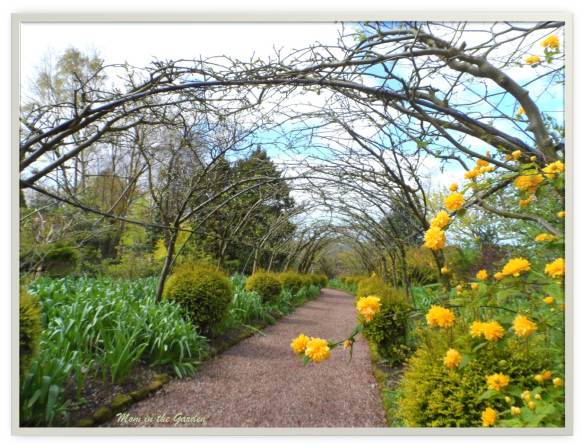
Dorothy Clive Gardens (Laburnum Arch)
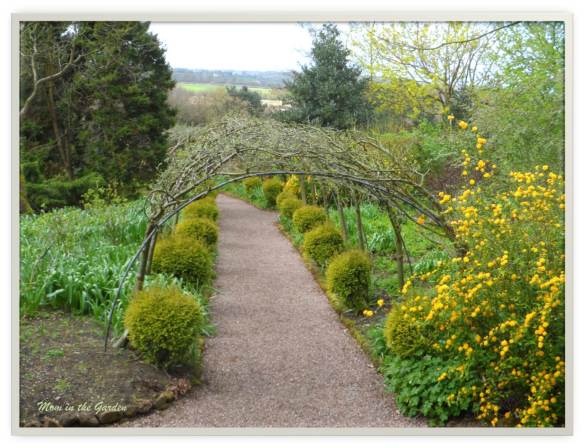
Dorothy Clive Gardens (Laburnum Arch)

Archway

Archway

Leaving the perfectly manicured section of the garden, we entered  the woodlands.  Such a completely different feel to the garden, very relaxed and “messy” yet so beautiful in a completely different way.
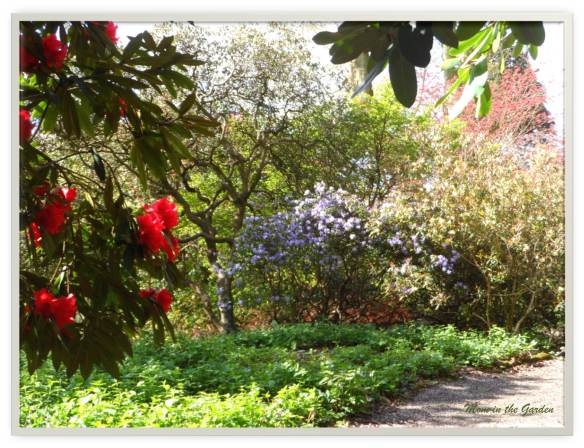
Walking among the rhododendron

Walking among the rhododendron

I had a harder time capturing the overall feel to the woodlands, than of individual flowers.  But take my word for it, please, that it was beautiful!

Red rhododendron

Red rhododendron

Pink rhododendron

Pink rhododendron

Rhododendron and azalea are growing throughout the entire garden!  Yeah, so I tried to get a shot of every color…  I hope this isn’t too much rhododendron for you!
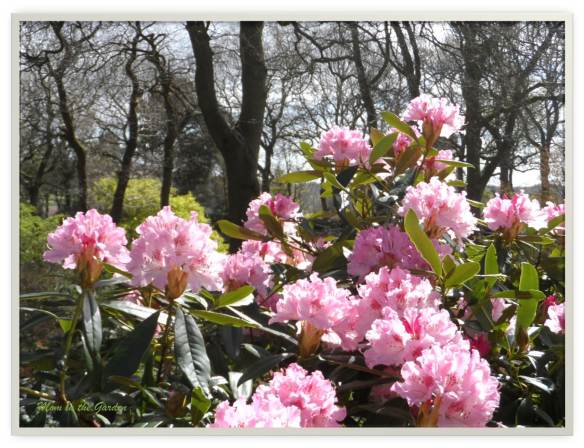
Light pink rhododendron

Light pink rhododendron

pink stripe rhododendron

pink stripe rhododendron

A bench to sit and enjoy the view

A bench to sit and enjoy the view

White rhododendron

White rhododendron

Woodlands walk

Woodlands walk

Rhododendron weren’t the only plants, though. There were lots of camellia – more than 50 varieties. This is down from the 125 varieties which were planted during the 1970’s!  Harsh weather has brought the number down to what it is today. They were still beautiful even as they near the end of their blooming season.

Camellia (we called star camellia)

My favorite Camellia (we called it the star camellia)

Camellias
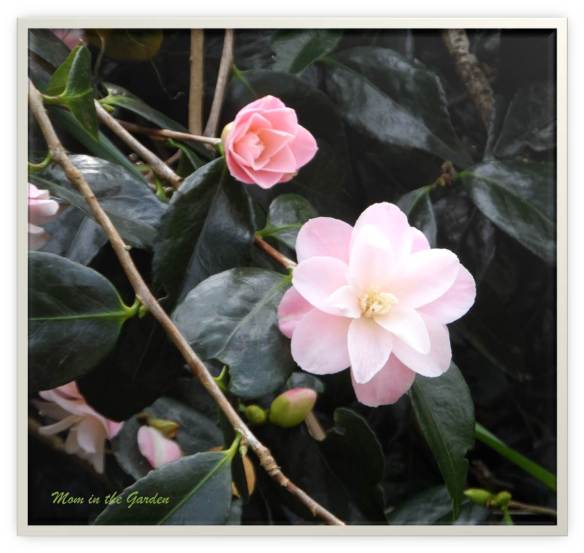
Camellias

Light pink camellia

Light pink camellia

pink camellia

pink camellia

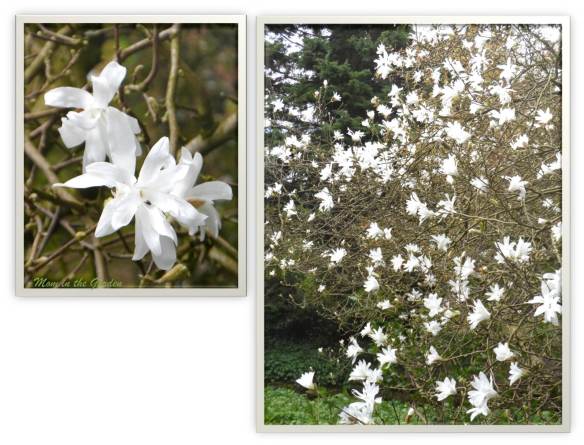
Magnolia

Magnolia

There were plenty of paths to choose from. We wandered for quite a while.  If you keep going up, these are the views you’ll see:

View from the very top of the gardens

View from the very top of the gardens

View from the very top of the gardens

View from the very top of the gardens

We really did enjoy our time in the gardens.  After making our way down the hill, we came upon the more kid focused section.  They had an amazing Insect Hotel!
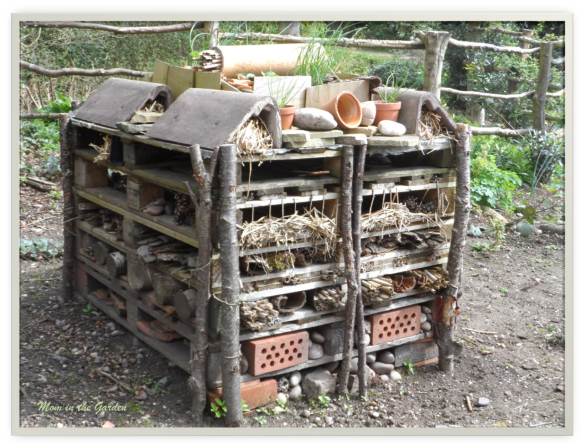
Insect hotel

Insect Hotel

The kids were enticed to try some of the edible garden!

Edible garden

Edible garden

There was a small cafe & gift shop (of course!) too.  I was so glad we had visited this garden.  It was a lovely day out for our family.

I hope you have enjoyed my garden tour, too!
Dana


grape hyacinth

grape hyacinth


Growing garlic is easy peasy!

Organic Cristo Garlic (2013)

Organic Cristo Garlic (2013)

If you know me, you’ll know that I try to provide healthy food for my family.  While it was available to us, we were a part of an Organic Food Co-op during our years of living in Central New York. It was wonderful to get fresh, local, organic produce!  I do try to buy organic when possible (and not outrageously expensive).  My garden is one way I can provide fresh, healthy food for us.  I have to admit that I also try to encourage those around me to make healthy choices and choose organic when possible!  Along those lines, one item that I would encourage you to grow is garlic.  Do you know where your garlic comes from???  All I am going to say is that the healthiest garlic is sourced locally, and organically.  The best part is that garlic is very, very easy to grow!

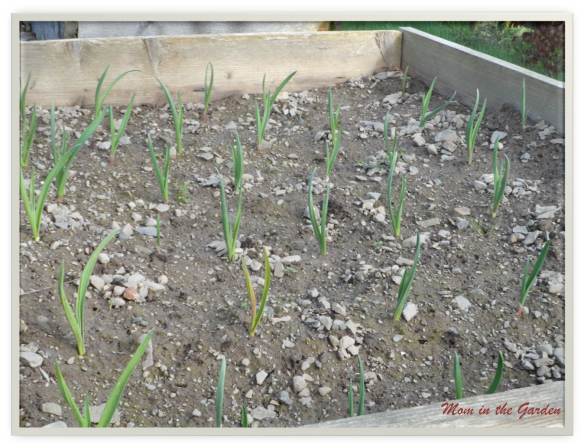
Garlic in February

Garlic in February in very stony soil

Like my stony soil? There is a never ending supply of tiny stones in our soil!  Doesn’t seem to bother the vegetables, thankfully. … Back to the topic of Garlic! This year I planted my garlic in November. I first posted about it here: https://mominthegarden.wordpress.com/2013/11/08/fall-plantings-of-green-manure-its-just-rye-organic-vallelado-garlic/   The variety I received from a very helpful organic center called Fruit Hill Farm in Cork http://www.fruithillfarm.com/  was Vallelado, which is good for our Irish weather.

Organic Vallelado Garlic in February 2014

Organic Vallelado Garlic in February 2014

It was almost daily that I’d wander into the garden to see if the garlic was growing.  I wasn’t quite convinced it would grow in such cold weather! But grow it did.  Actually, I learned that garlic needs 6 weeks of cold weather (below 10 degrees Celsius or 50 degrees Fahrenheit) for the bulb to split into individual cloves.  Cold is good!  And some of you might be laughing and thinking “that isn’t cold”!

Garlic in March

Garlic in March

Here is the lowdown on growing garlic:

  • Source your garlic from an organic center near you.  They should have varieties suited to your climate.
  • Garlic needs full sun and well drained soil. It does best with soil that has compost worked in.
  • Space the cloves at least six inches apart. Place the cloves in the soil 3-4 cm (1 & 1/2  inches) below the surface with the pointy end facing up.
  • Keep the garlic moist until about a month before harvesting.
  • Weed regularly. Garlic like mulch.  Mulch will keep the weeds down and is especially helpful in colder climates.
  • Harvest when the stems go yellow.   Waiting for the stems to fall is too late!  It’s better to have dry bulbs at that stage, hence the stepping back from watering those last few weeks.  Dig gently around the bulb, shaking off any excess soil.
  • Keep the stems on to help keep the garlic fresh.  These can be braided, too, to hang the garlic in an open airy place. Dry outdoors if the weather is good, or inside if weather is wet.

According to Anne Gibson http://themicrogardener.com/5-step-guide-to-growing-gorgeous-garlic/ garlic shouldn’t be grown near peas or beans.  Do any of you have experience with that???  On the flip side (companion planting), as they are part of the Allium family they do well with raspberries, beetroot, strawberries, tomatoes, lettuce, & roses.
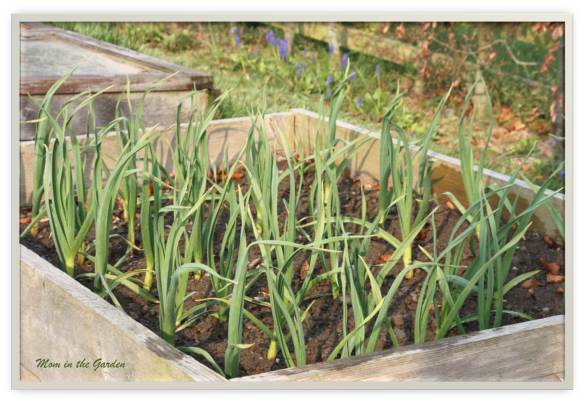
Garlic in March

Garlic in March

Organic Vallelado Garlic in April

Organic Vallelado Garlic in April

The garlic has given some life to the garden over the winter, which is so nice to see.  I know I haven’t harvested yet, but based on everything so far I would definitely plant in November again and keep it as my winter crop.

Organic Vallelado Garlic in April

Organic Vallelado Garlic in April

Easy, right?  If you don’t grow it already, I do hope you’ll give it a try!  Or the next best thing would be to buy from your local organic farmer 🙂

Here’s to living a healthy lifestyle!
Dana

Easter Blessings! and perfect weather for tulips.

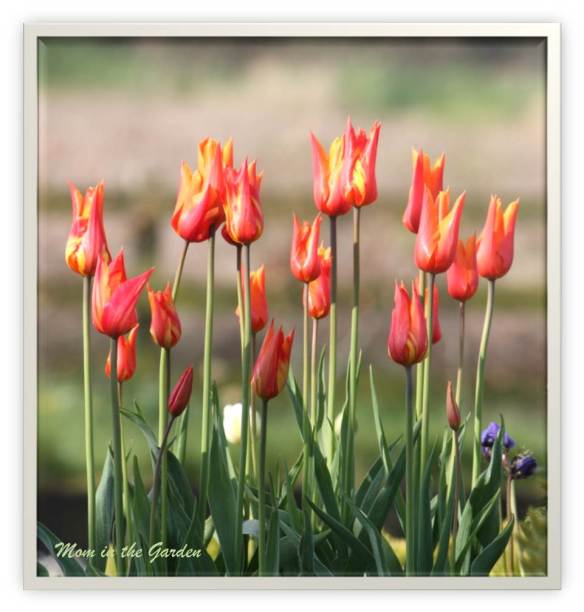
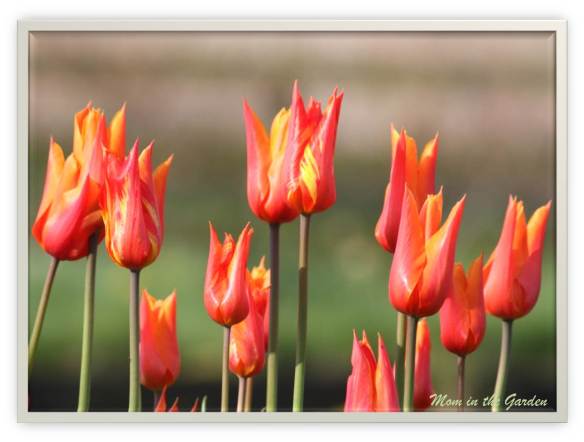
Ballerina Tulips

Ballerina Tulips

“Happy Easter!”  says she who is going to pop back into blog land with no fan-fare or hoopla, but a simple blog post filled with pictures of my tulips. 🙂  I’ve missed posting,  and visiting blogs and all that goes on in the virtual world.  I had a wee break, but I’m back now. I have so much to show you from my garden and travels!
Ballerina Tulips

Ballerina Tulips

I’ve gone a little crazy with pictures of my tulips this year.  We live in an exposed area that is surrounded by fields on three sides. There is always wind, even on a calm day!  So normally my tulips, actually all of my flowers, get quite a beating.  It is rather unusual to see all of my tulips standing and their blooms intact!

Ballerina Tulips

Ballerina Tulips

We were in London this past week for the Irish Dancing World Championships (yay for my kids’ teams placing first and third!!!). Ahem, trying to stay focused here after a very fun filled Irish dancing week…  During our time away, the tulips not only came up but filled out perfectly.  The weather here must have been as nice as it was in London!

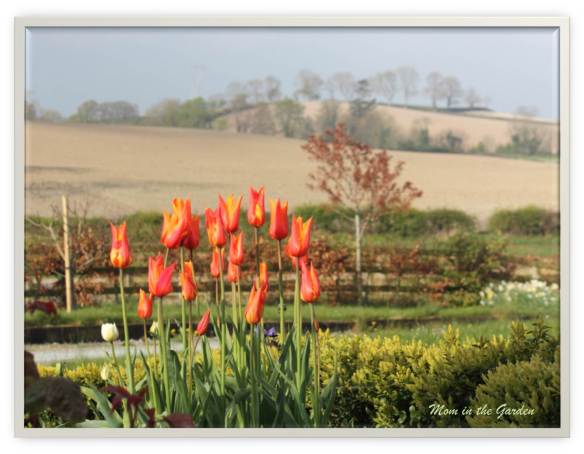
Ballerina Tulips & (rather dry) fields

Ballerina Tulips & (rather dry) fields

I love tulips. 🙂  O.K., I love all flowers.

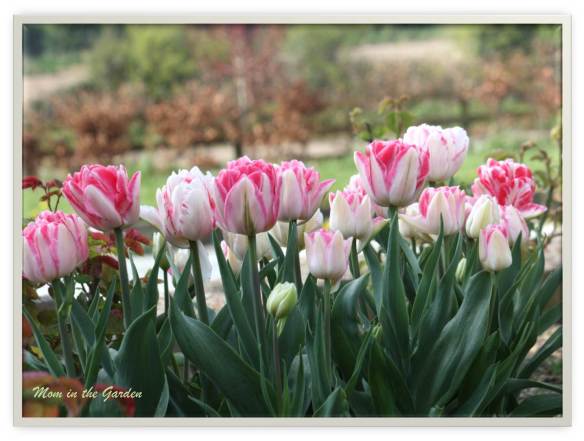
Innuendo Tulips

Innuendo Tulips

These Innuendo tulips are supposed to be a more solid pink color on the inside, and white on the outside.  I only know what they are because I marked it in my book, because they sure don’t look like the picture on the bulb bag!    I think they are lovely all the same.

Innuendo Tulips

Innuendo Tulips

Group shots of all of the tulips are harder to get just right. I prefer the individual close-ups.  But because all of them were still standing and looking so darn good I had to capture them all!

Innuendo Tulips

Innuendo Tulips

Blueberry Ripple Tulips

Blueberry Ripple Tulips

Blueberry Ripple Tulips – isn’t that the best name?  Again with these tulips the color is not a match for the lovely picture on the bulb bag – mine are more burgundy-ish instead of true purple.  I’m O.K. with that.

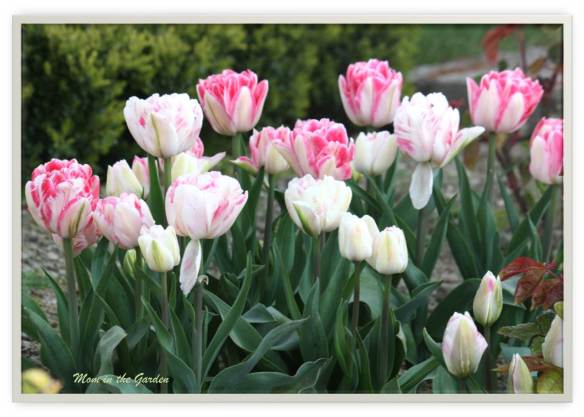
Tulips group photo (in the rose garden)

Tulips group photo (in the rose garden)

If I were to be critical of this garden, I would have to say that color cohesion is lacking.  My problem is that I love all o the different colors and styles of tulips!  I would like to try and bring in a deep pink color throughout this garden instead of in a group.  I’ll be thinking about that until the fall!

Deep pink tulips

Deep pink tulips

Deep pink/purple like these tulips!  That would also tie the two gardens together.  Oh the possibilities…

Deep pink tulips with Mr. Fokker Anemone

Deep pink tulips with Mr. Fokker Anemone

We moved into our house four years ago.  My husband bought these tulips for me on a trip to Holland shortly after we moved in.  They were one of the  first bulbs we planted.  I love little thoughtful things like that.  He even picked pink for me!    The Erysimum bowles’s mauve in the back on the right goes really well with them too, don’t you think?  Mr. Fokker Anemone are probably going to be the one plant throughout my entire yard because it is just so easy and pretty!

Two front gardens

Two front gardens

Here’s a look at the two front gardens with all of the tulips.  I still can’t believe how well all of the tulips have done this season!

mystery tulip

mystery tulip

This last tulip is blooming where I planted Double Late Mount Tacoma tulips, but it certainly doesn’t look like that variety.  I’ll have to see as it comes into full bloom.

Dorothy Clive Gardens, England

Dorothy Clive Gardens, England

This last picture is from a garden we visited while en-route to London last week.  The Dorothy Clive Gardens were simply lovely, and well worth a visit.  I will definitely share the tons of pictures I took there in another post!

Happy Easter to my friends and family and fellow bloggers!  Here is to new beginnings!
Dana


Character in the garden with Leycesteria formosa (Himalayan Honeysuckle)

Leycesteria formosa

Leycesteria formosa

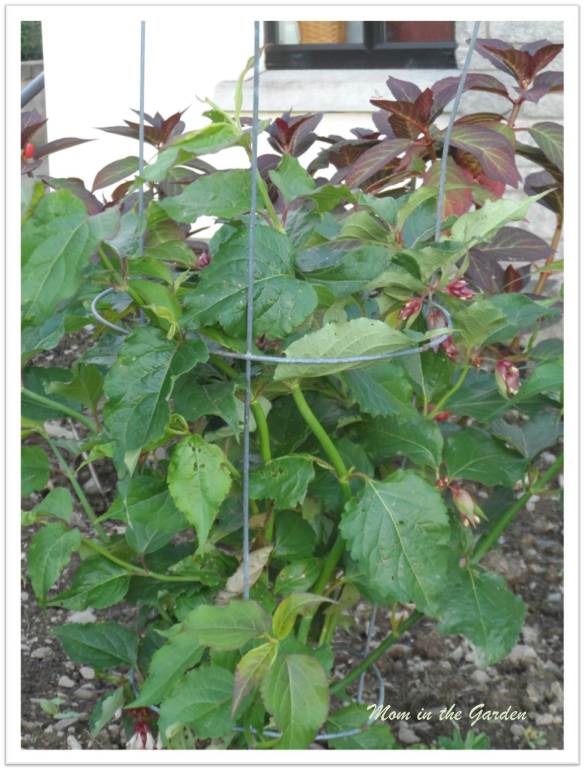
Having something interesting to look at in the garden during the winter is something that most gardeners set out to achieve.  One plant that gives character to a garden throughout the summer and winter is the Leycesteria formosa, also known as Himalayan Honeysuckle or pheasant berry.  I hadn’t heard of, or taken notice of this lovely plant before seeing it in my friend Susan’s garden.  It’s funny what happens sometimes when you compliment someone’s garden … they just might share some of it with you!

A young Leycestria formosa plant

A young Leycestria formosa plant

When I first planted the Leycestria formosa, it appeared to be just a stem with some roots.  I was not sure how it was going to survive. Not only did it grow, but it has done well in my very windy garden.

Leycesteria formosa supported

Leycesteria formosa supported

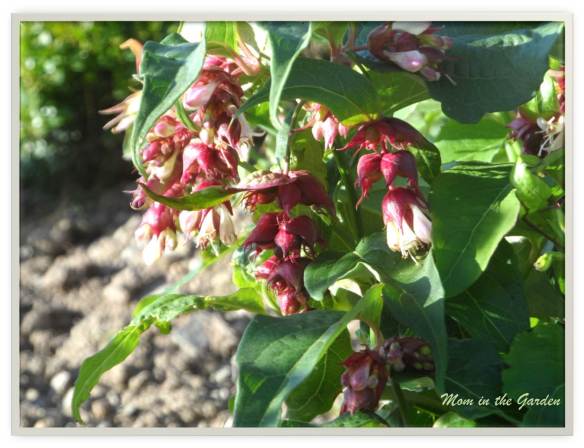
The flowers are pretty, and hang down in clusters.

a cluster of drooping flowers

a cluster of drooping flowers

Still young Leycesteria formosa

Still young Leycesteria formosa

After the flowers are finished, the plant is adorned with lovely berries.

Berries late in season of Leycesteria formosa

Berries of Leycesteria formosa late in the season

While walking through a park in Dublin this past July, I noticed some mature Leycesteria formosa plants. They were beautiful and nearly as tall as me!

Mature plants in the park

Mature plants in the park

Close up in the park

Close up in the park

At the time, I was still unsure of the name so I appreciated the tag. For this post I’ve typed the name what feels like a hundred times so hopefully now I will remember it! 🙂

ID tag

ID tag

The plant still has character in the winter.  Look at these stems:

Close up of the stems

Close up of the stems

Winter garden

Winter garden

They remind me of bamboo.  The stems are hollow and can grow as tall as 6 feet (1.8 meter) in one season.  The plant grows in moist, fertile soil.  As for maintenance, it should be cut back to the ground in the spring.

Late summer garden

Late summer garden

The Leycesteria formosa is on the left in the full garden photo above.  I’m really happy with it and how it changes throughout the seasons.

Are there any plants that you like to share?  I was able to share some of my strawberry plants recently.  What a great feeling, especially knowing that they are appreciated. A special thank you goes to Susan who has shared so much of her garden with me!

I hope your garden has lots of winter character.
Dana

Winter Blooms in my Irish Garden (An anemone steals the show!)

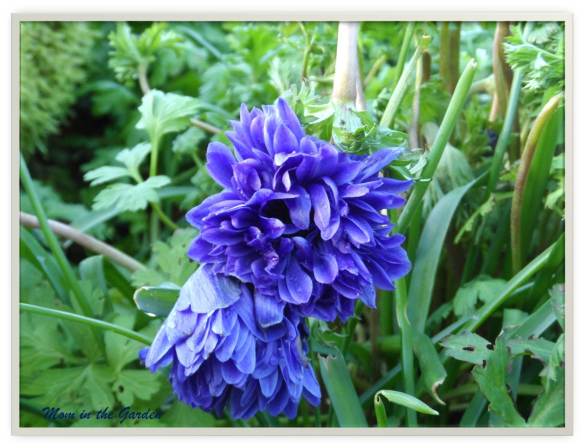
Mr. Fokker Anemone

Mr. Fokker Anemone

When I think of winter certain things come to mind:  snow, cold temperatures, skiing, sledding, ice skating, hot chocolate!  Living in Ireland has changed that idea a bit for me. Our winters are usually fairly mild, with only a quick cold snap.  Snow is unusual. Cold is cold, but not like what I’d be used to while living in Central New York. And the winter is short. Really short if I look back to my days of having snow around until March!  I do miss the snowy side of winter.  But the tradeoff is having flowers in my garden even in January.

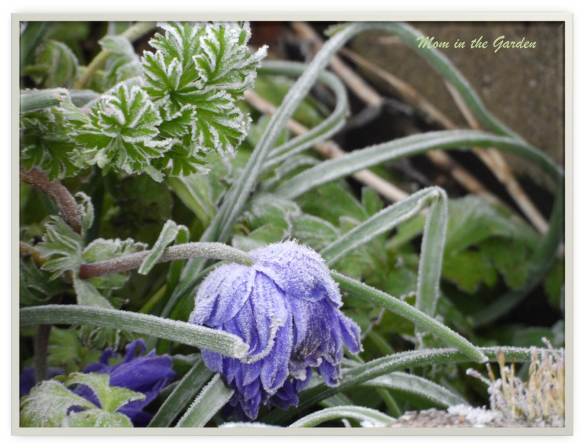
A frozen anemone

A frozen anemone

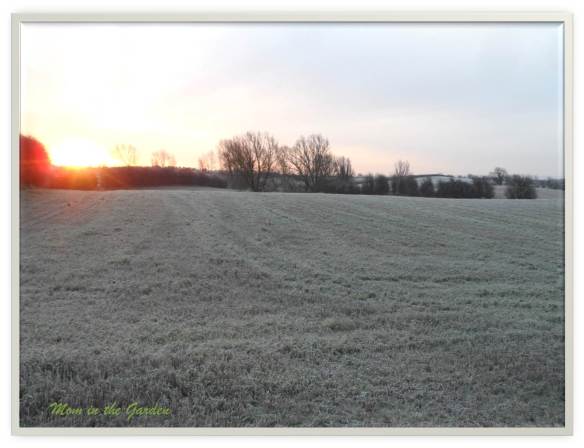
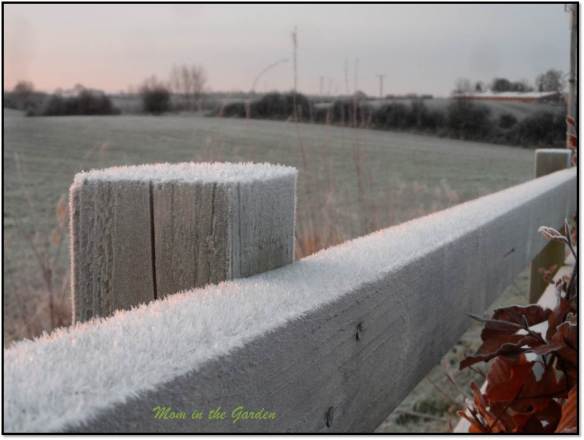
We had a deep freeze the other day: -5 degrees Celsius. I took some pictures in the morning, and by the afternoon the rain had come and everything thawed out!

First morning light over the frosty field

First morning light over the frosty field

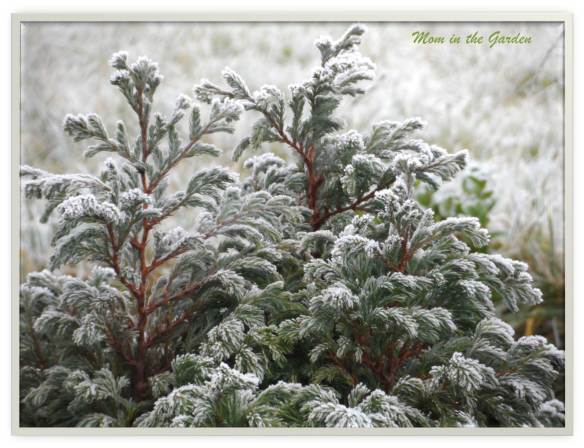
This close-up of the crystals is my favorite

This close-up of the crystals is my favorite

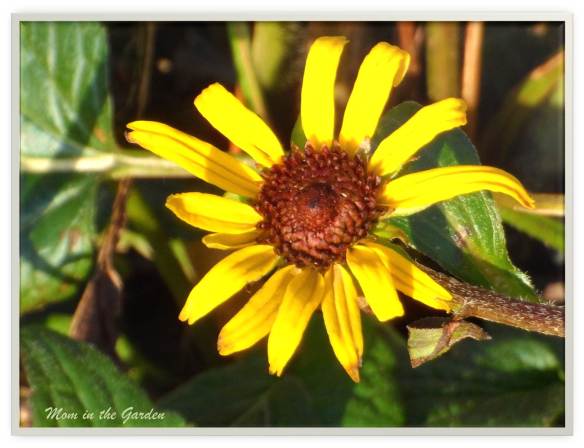
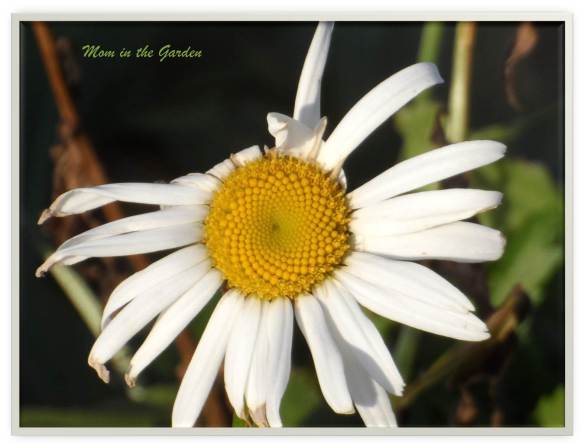
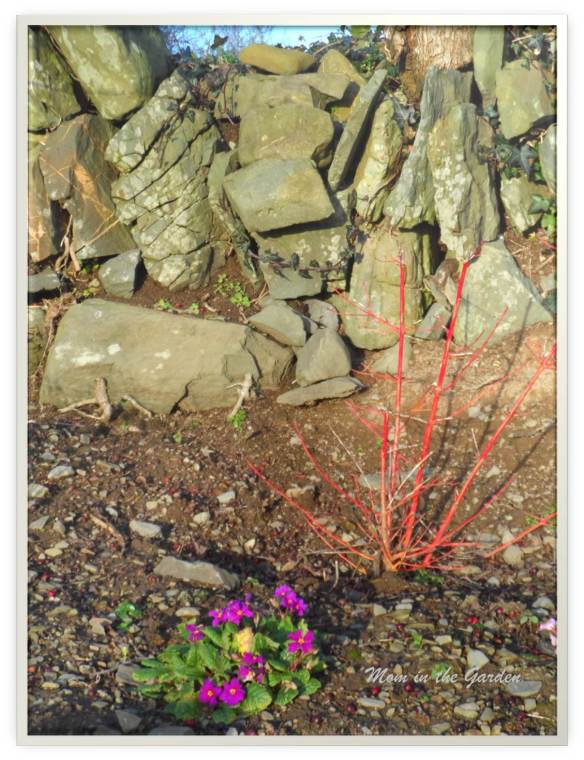
Frosty evergreenToday was yet another mild day, 8 degrees Celsius, and sunny.  I am not complaining, I just hope it has been cold enough to keep the slugs at bay!  My garden has a few flowers which are blooming. The anemone have multiplied over the past few years. They don’t seem to mind that it is January.  Also giving some color in the garden are a few daisies and a black-eyed Susan plant!  I think they are simply confused. The primrose are a lovely bright color. There is also a lot of green in my ditch wall garden from poppies. Lots and lots of poppies!

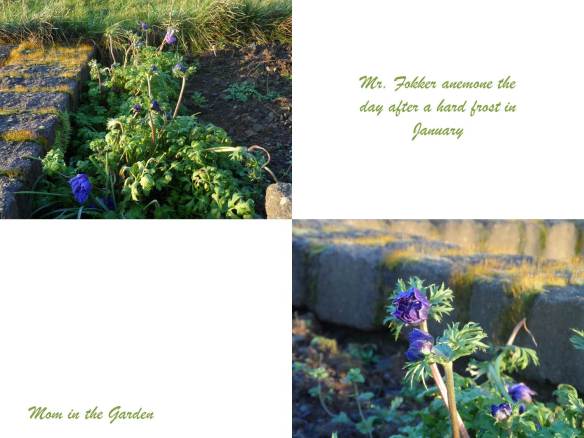
The day after the frost

The day after the frost

This is flowering in January.

This is flowering in January.

A sunny winter day

A sunny winter day

January in the garden

January in the garden

Dogwood plant

Dogwood plant  has lovely red branches

Our area has really been very fortunate with the weather.  Even just seeing the sun for a bit of the day is refreshing to the soul.

Evening view from the front yard

Evening view from the front yard

The very last rose.

The very last rose.

Do you have any flowers growing in your winter garden?
Happy winter!
Dana

Pruning Roses in my new Bradley’s Gloves

Summertime blooms

Summertime blooms

My roses had a spectacular year in 2013.  They had beautiful blooms all throughout the summer and into the fall.  I confess that I didn’t prune them last year. While I’m confessing, I’d might as well add that I had no idea how to prune them.  So this year I decided to figure it out.  Really, Google makes learning new things so much easier.

Roses throughout the summer

Roses throughout the summer

A garden full of roses

A garden full of roses

It is funny how some things just fall into place. I was at a craft fair in December where I picked up a fabulous pair of pruning gloves, at an even more fabulous price.  I love a bargain!  That was the final push to prune the roses.

Leather Bradley pruning gloves

Leather Bradley’s pruning gloves

The leather for the hands is so soft. I love them! You can buy a pair here: http://www.bradleysthetannery.co.uk/gardening/gloves/leather-pruning-gloves

Bradley pruning gloves

Bradley’s pruning gloves

Here’s a look at the roses before I started:

Rose bush before pruning

Rose bush before pruning

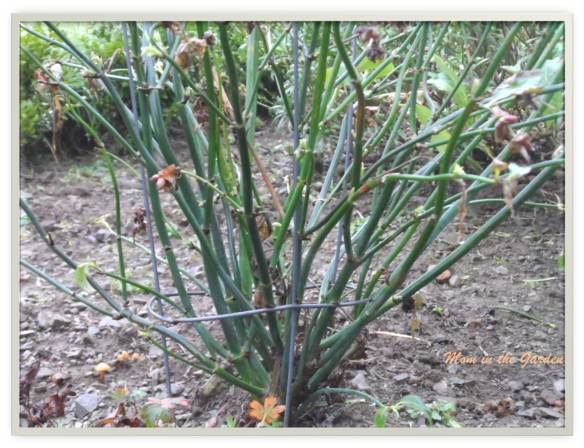
They looked really bad.  They should be pruned every year, during their dormant time; late fall through February for me.  Here’s the hard part, I had to cut… a lot.  I found it quite daunting!  From what I learned on-line (via Steve McShane’s Nursery), I first cut-off any dead branches.  Then I cut the branches at a 45 degree angle about 6 to 8 inches from the base of the plant.  There should only be between 3 and 5 canes when finished pruning (that is the hard part!).

Rose plants before being pruned

Rose plants before being pruned

There was a great deal of cutting to do!  I just had to think positive that it is good for the plants. 🙂  What a difference in how they looked after I had finished.

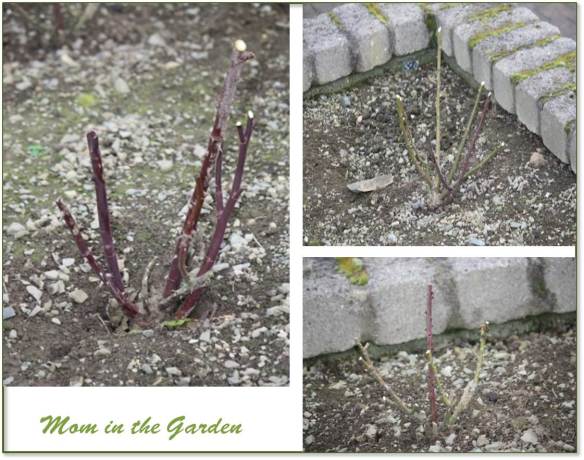
Three pruned rose plants

Three pruned rose plants

Pruned to 6-8 inches above the base

Pruned to 6-8 inches above the base

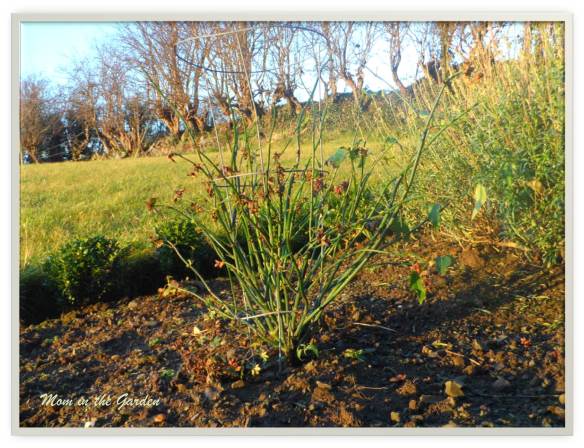
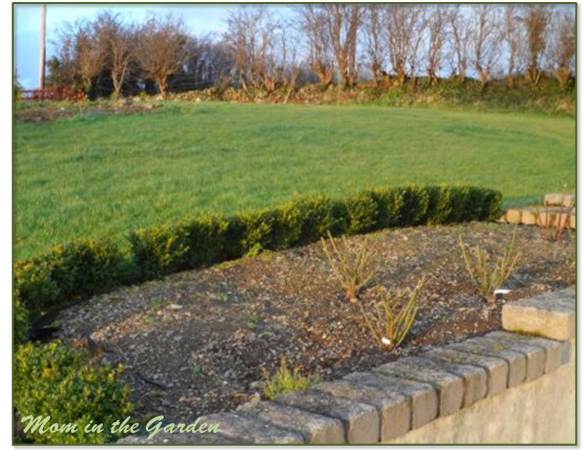
After pruning them, I finished clearing away all of the leaf litter.  The plants had black spot this year, so it is really important that I clear everything away.  I still need to add an organic fertilizer to finish this up.  But for now, I’m happy with how the plants look.

Pruned rose plants

Pruned rose plants

Pruned rose garden

Pruned rose garden

There will be another post on organically treating of rose plants in early spring, before any signs of black spot appear. This will be a new adventure for me, which I am looking forward to since I really don’t like the use of harmful chemicals! But that is another blog post…

I hope you enjoyed seeing my roses again.  Going through all of my photos from summer just reminds me of how quickly the seasons change. Before we know it, it will be spring again!

Happy New Year!
Dana

Roses to look forward to...

Roses to look forward to…

A Thanksgiving look at the garden

A fine fall afternoon.

A fine fall afternoon.

Wouldn’t it be nice to sit back, relax, and just enjoy the nice fall weather we’ve been having?  I have to confess that I don’t do that nearly enough! But today is our American Thanksgiving.  So today, especially, is a day to take note of all of our blessings, each and every one of them.  For this blog post I’m just going to focus on my garden (my family and friends, of course, would come ahead of the garden!).

The last slice of zucchini (courgette) bread.

The last two slices of zucchini (courgette) bread.

Time for a relaxing cup of tea with some zucchini bread.  These two slices were taken from the last loaf from our freezer.  Good thing I now have pumpkins to make some pumpkin bread.  My kids enjoy the breads for their after school snack.   You can find the recipe for zucchini bread here:  https://mominthegarden.wordpress.com/2012/09/01/time-for-a-cuppa-zucchini-bread-with-crumb-topping-is-perfect-for-your-break/

If you’ve been following my blog for a while, you’ll know how thankful I am for my garden.  I find my time in the garden to be peaceful and sanity saving.  Even if I sneak in just a little bit of time here and there, it rejuvenates me.  I love it.  Honestly, it isn’t a spectacular garden. But I’m creating it, nurturing it, and continually growing and changing it; all as organically as I can.

The last of my potatoes being dug out of the bed.

The last of my potatoes.

My potato bed had just a few spuds left in it. Since I wanted to plant some rye in the bed, to protect the soil and benefit the soil as well, I dug them up. I think the potatoes were my favorite veggie in the garden.  They really were very good potatoes.  Even so, next year I am going to try a different variety. It’s nice to try something new!

The last of the spuds (Sarpo Mira).

The last of the spuds (Sarpo Mira).

Let me show you how well the rye is growing. I know, it is crazy, but stuff like this just makes me all happy!

Rye from just a few weeks ago.

Rye from just a few weeks ago.

Remember my post on rye at the beginning of November? https://mominthegarden.wordpress.com/2013/11/08/fall-plantings-of-green-manure-its-just-rye-organic-vallelado-garlic/   It is already taking off and doing great!

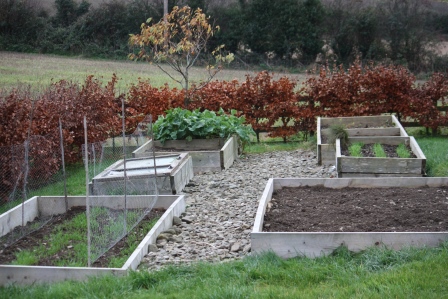
The front bed on left (with the chicken wire) and middle bed on the right have rye growing already.

The front bed on left (with the chicken wire) and middle bed on the right have rye growing already.

In the two beds above, I planted the rye in rows.  Yeah, I think it doesn’t matter, but for the potato bed, and my newest bed (can’t be seen in this picture)  I scattered it.  Really, I don’t think it matters… Says she to herself, to convince no one in particular…

Blueberry bush in November

Blueberry bush in November

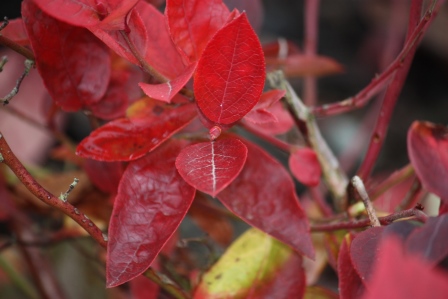
What does the rest of my garden look like on Thanksgiving?  My blueberry bushes are a vibrant red!  What is not to love about that color?

November look at the garden

November look at the garden

Organic Brussels Sprouts Rubine Red

Organic Brussels Sprouts Rubine Red

My Brussels sprouts are still growing.  I like the purple look to the plants.

Organic Brussels Sprouts Rubine Red

Organic Brussels Sprouts Rubine Red

I’m being a bit impatient as it really feels like they are taking forever to grow!

Organic Brussels Sprouts Rubine Red

Organic Brussels Sprouts Rubine Red

The top of a Brussels Sprout plant

The top of a Brussels Sprout plant

My littlest one is hoping they never get picked from the garden. But the rest of us really like Brussels sprouts. I can’t wait to try them!

Fall harvest with quite a few pumpkins

Fall harvest with quite a few pumpkins

Here is a peek at some of the pumpkins from our garden.  Look! They are all orange!  Remember when they were green?

Green pumpkins sitting on the wall in October

Green pumpkins sitting on the wall in October

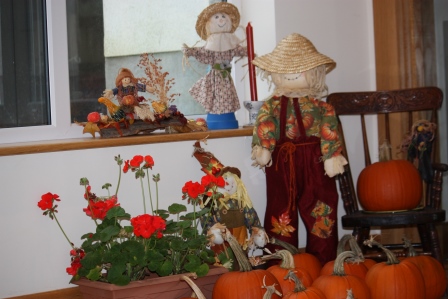
They all turned orange after I brought them inside. Our front hall is rather chilly, but it was warm enough to turn them orange, and cool enough so they aren’t going rotten (thankfully).  My geraniums are quite happy in the hall, too.

Geraniums looking happier inside than they did outside!

Geraniums looking happier inside than they did outside!

Most of my fall decorations are in my front hall.  They just seem to fit nicely there. Lots of fall colors, scarecrows, and pumpkins!  I’ll be sad to take them down this weekend. But I’m looking forward to decorating for Christmas! But really, one holiday at a time please.

My scare-crow was given to me by a special friend.

My scare-crow was given to me by a special friend.

Shine on Harvest Moon!

Shine on Harvest Moon!

A lovely sunset in November.

A lovely sunset in November.

SAM_4899

Give Thanks

Give Thanks

Happy Thanksgiving!

Happy Thanksgiving!

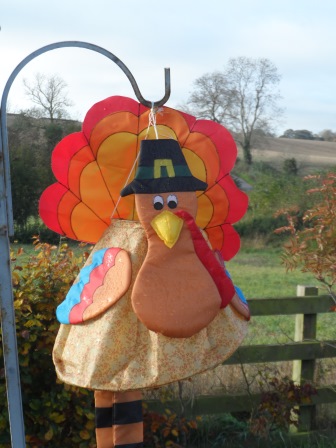
Oh now isn’t that turkey just what you’d expect to find in my garden?  I hang it for the kids. And for me.  🙂

Happy Thanksgiving, to my friends, family, and blogging friends!

In peace,
Dana

Preparing the Asparagus bed for winter

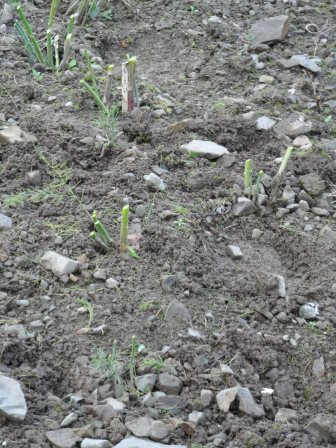
Asparagus peeking through.

Asparagus peeking through this past spring.

Sometimes, picking what to plant in the garden is easy.  We love to eat asparagus.  Asparagus is not common here in Ireland.  It is therefore on the pricey side in the market, and I haven’t even seen any local organic asparagus.  So there you go, decision made: let’s try our hand at growing asparagus!

Asparagus in June.

Asparagus in June.

I posted about our asparagus plants earlier this year: https://mominthegarden.wordpress.com/2013/06/27/end-of-june-roses-poppies-but-wait-asparagus-brussels-sprouts-too/   We planted some crowns last year, but only a few took.  So this past spring we really primed the bed well, adding our own compost, as well as good quality mushroom compost.  The results were amazing!  Every crown took.  Asparagus like well drained soil, and in our case of having heavy soil it is essential to have a well prepared bed. It is also important to keep the bed well weeded.  Careful with a hoe, though, as the roots are very close to the surface.

Asparagus plants' first year of growth. November 2013.

Asparagus plants’ first year of growth. November 2013.

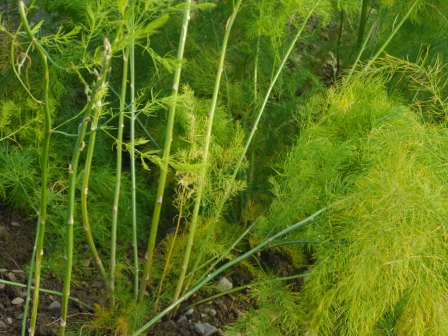
A close-up of over grown first year asparagus plants grown from crowns.

A close-up of over grown first year asparagus plants grown from crowns.

Planting crowns allows you to harvest the asparagus after one season. When planting from seed, it is recommended to wait until the second season to begin harvesting.  I think it is worth paying a bit more for the crowns to save that year of waiting! After planting the crowns, then watching them grow, we had to wait until November to finally cut down all of the stems and feathery fronds.  Those fronds are important for nourishing the roots, so it is good to wait until they start to turn yellow before cutting them off.  I added all of these cuttings to my compost pile.

Asparagus greens atop the freshly added leaves  in the compost.

Asparagus greens atop the freshly added leaves in the compost.

If I take the advice from Monty don in The Complete Gardener,  I will only take two cuttings next spring.  The following year I will stop cuttings on June 1st.  After that, we don’t have to keep track anymore!

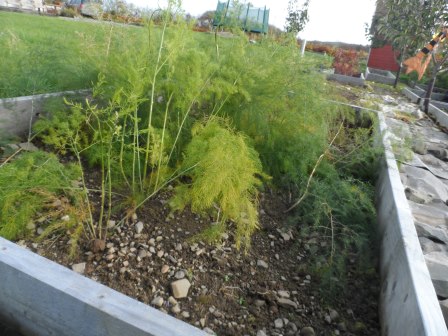
The freshly cut asparagus bed.

The freshly cut asparagus bed.

A lovely bouquet of asparagus fronds!

A lovely bouquet of asparagus fronds!

To harvest, it is best to cut the stem just below the surface of the soil, about an inch down.  The stems grow quite quickly during their spring season.  But that is jumping ahead a bit. Let’s get through this fall and winter, before talking about our spring harvest!

November 16, 2013

November 16, 2013.

Such beautiful weather we’ve had!  I am simply pulled outside to work in the garden…

Capturing the changing colors.

Capturing the changing colors.

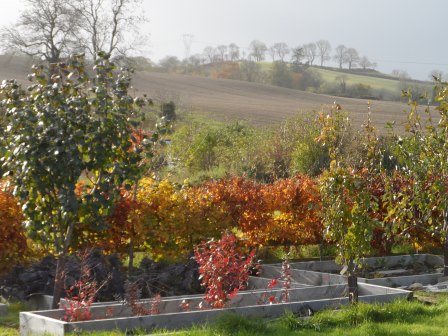
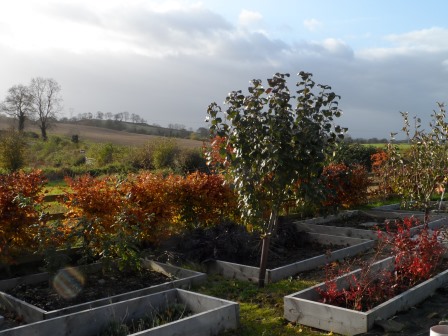
My blueberry bushes turn a lovely red in the fall, while my beech hedges turn from green, to yellow, to brown for the winter.

Look how the sunlight completely changes this picture!

The sunlight completely changes the picture to me.

Thank you for visiting. I hope you enjoyed reading about growing asparagus!

Happy Fall!
Dana

Fall flowers from a pink & purple palette!

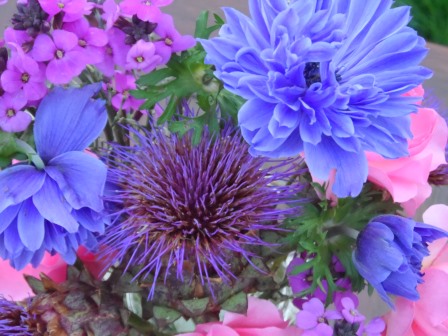
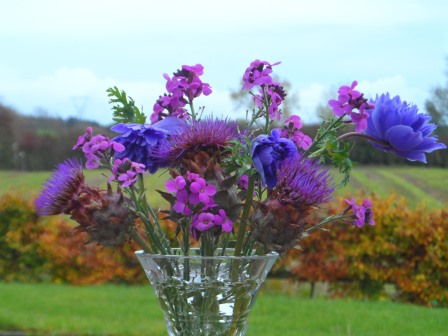
Artichokes, Mr. Fokker anemone, erysimum (bowles' mauve), and pink roses

Artichokes, Mr. Fokker anemone, Erysimum (bowles’ mauve), and pink roses.

These pictures of the flowers in the vase were taken on November 9th, 2013.  I had to write that as it seems crazy to have such pretty flowers in November!  Granted, only the roses look nice on their own in the garden now, but when I put them all together they really did look nice!

My roses at the front gate.

My roses at the front gate in November.

My roses are doing O.K., despite having had black spot this summer.

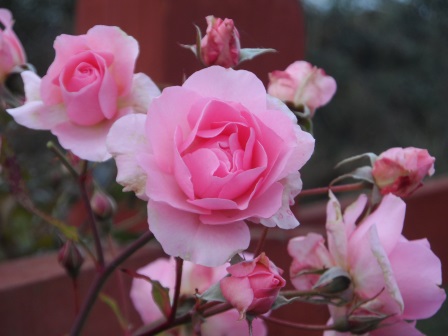
My favorite color: pink.

My favorite color: pink.

The artichokes and anemone don’t look quite as pretty today.

Globe artichoke flowers in November.

Globe artichoke flowers in November.

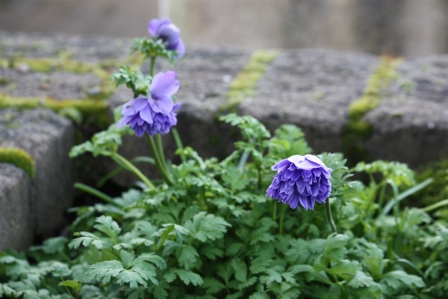
Mr. Fokker anemone in November.

Mr. Fokker anemone in November. These guys get beaten by the wind in our yard!

But just a few weeks ago in October, they were stunning!

Globe artichoke in October.

Globe artichoke in October.

Globe artichoke with erysimum in October.

Globe artichoke with Erysimum bowles’ mauve in the background  in October.

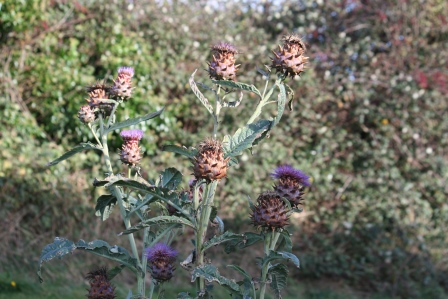
A globe artichoke plant in full bloom.

A globe artichoke plant in full bloom in October.

Erysimum bowles' mauve in October.

Erysimum bowles’ mauve in October.

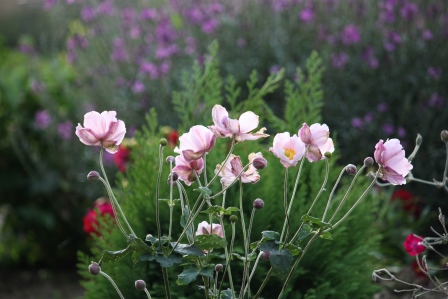
Pink Japanese anemone with dahlia and Erysimum bowles' mauve in background.

Pink Japanese anemone with dahlia and Erysimum bowles’ mauve in background. These anemone have been terribly beaten by the wind at this stage! So they didn’t make it into my bouquet.

It seems that I had lots of pretty pictures of these lovely plants and I just had to share them with you!  But back to November:

A vase of flowers in November.

A vase of flowers in November (before I added roses). Our beech hedging is changing color.

We had company this weekend, and I wanted to have something pretty on the table.  I went into the garden to see what I could put together and was delighted with my little bouquet!

Fall bouquet albeit pink & purples...

Fall bouquet albeit pink & purples…

Taking pictures of flowers works best outside.  I was really pushing my luck as it was very late in the afternoon when I finally got around to my fun “work” of getting flowers!  I had the very last bit of sunlight to take the pictures!

Artichokes, Mr. Fokker anemone, Erysimum (bowles' mauve), and pink roses

Artichokes, Mr. Fokker anemone, Erysimum (bowles’ mauve), and pink roses.

The bouquet indoors.

The bouquet indoors.

But maybe it doesn’t look that much different inside.

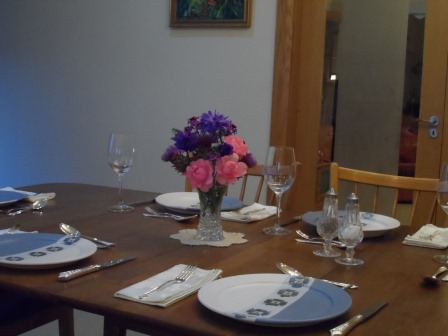
The table is set for company.

The table is set for company.

A little bit of the garden brought inside.

A little bit of the garden brought inside.

It was nice having friends over to visit.  I made Guinness stew, per request.  I was able to use our own onions, and potatoes.   My 13 year old daughter was very kind and made brown bread (which was delicious) to go with dinner.  While the bread was baking, she also made us flour-less chocolate cake!  It, too, was fabulous!  I should really do a post about the brown bread. It is an easy recipe, and authentic as it is my mother-in-law’s recipe!  I will post about it the next time we make it.

And that, my dear people, is my 100th Mom in the Garden post!  I’ve also hit the big “10,000 views” for my wee little blog!  I am chuffed to have had so many visitors, likes, and wonderful comments to my blog!  Thank you!  I realize this pace isn’t going to break any records, but blogging is something I truly enjoy and I do it for that enjoyment.

Thank you for joining me on my blogging journey!

Happy fall!
Dana

Fall plantings of Green Manure (it’s just Rye!) & Organic Vallelado Garlic

Rye

Rye

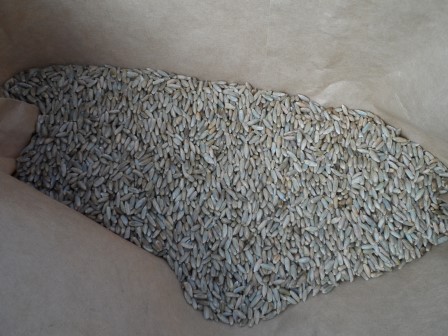
Green manure? “What’s that?” was my thought just a few months ago.  A very simple explanation is that green manure is a crop which is planted to protect the soil from eroding and losing nutrients, while adding to the goodness of the soil.  🙂

Rye (green manure)

A whole bag of Rye (green manure)

I am learning this as I go along!  I spoke with a very helpful gentleman at Fruit Hill Farm in Cork http://www.fruithillfarm.com/ .  I loved how patient he was with me, and how he seemed to really enjoy sharing his knowledge.  He suggested planting rye given the time of year and when I want to plant again.  Planting it in the fall after my summer harvest, I can leave it for a few months.  When it reaches about 18 inches high I should cut it back (so it doesn’t go to seed).  Then in February/March it should be dug deep into the soil.  The bed will then be “good to go” in April.

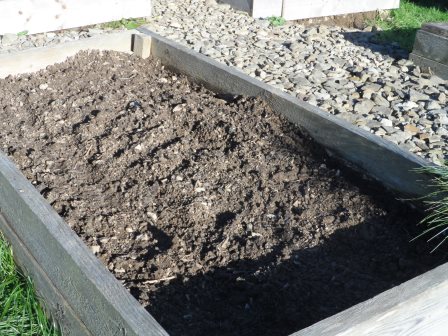
One of the beds after digging up the soil and planting rye.

One of the beds after digging up the soil and planting rye.

“The Complete Gardener” by Monty Don gives a great description of the scientific process of what is actually going on in the soil. (note to self: return Susan’s book to her!) Yeah, what I understand is that nitrogen is added to the soil, which is good, and the organic material of the rye plant is broken down by the healthy organisms in the soil, which is good for the soil structure.  So there is no need to add compost to the soil after this process.  The plan is that the rye will grow in place of weeds which would inevitably grow.  Win. Win. Win.

A new bed planted with rye.

A new bed planted with rye.

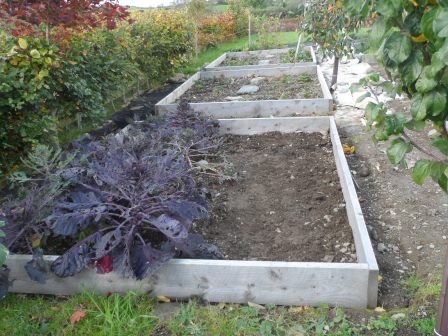
Fall look at the veggie beds.

Fall look at the veggie beds.

Well, let’s just wait and see (with fingers crossed)!  The beds looked nice after I dug up the soil and planted.  That is rather funny to re-read.  Nice lookin’ soil there!

Rye planted in the garlic bed.

Rye planted in the former garlic bed.

I was also planting garlic.  It is more common here to plant garlic in the fall than in the summer.  So this is the year I’m going to give it a try.  What also helped to spur me on is that I told another blogger that I’d do it! Thanks Claire from Promenade Plantings!

Organic Autumn Planting Garlic -  Vallelado (in front bed)

Organic Autumn Planting Garlic – Vallelado in front bed. Swede (turnip) are in the back bed.

I didn’t actually take any pictures of the garlic itself. Hmm, that was silly.  But the above photo is where I planted it – a lot of it!  🙂  With every planting I always have that teeny tiny bit of doubt! But I try to overpower it with lots of hope!

Organic Autumn Planting Garlic -  Vallelado planted next to the Brussels Sprouts.

Organic Autumn Planting Garlic – Vallelado planted next to the Brussels Sprouts.

Rowan tree

Rowan tree

I have a Mom in the Garden facebook page (of course!) and posted a couple of pics of our Rowan tree.

Rowan tree.

Rowan tree.

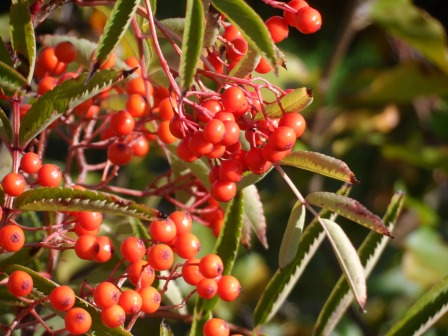
It has orange berries that really stand out at this time of year!

Rowan berries from October.

Rowan berries from October.

Rowan berries from November.

Rowan berries from November.

A quick on-line search reveals all sorts of recipes for making Rowan berry jellies & jams & wine!  We’ll have to see about that … another day.

November look at the garden.

November look at the garden.

We’ve had some beautiful weather lately.  I hope you have too!

Happy fall!
Dana